For a portable device, the connection has to fit more than the circuit. It also has to fit the environment in which the product is carried, docked and cleaned. An accessible magnetic face and a sealing arrangement developed with the enclosure can be an appealing combination for that kind of equipment.
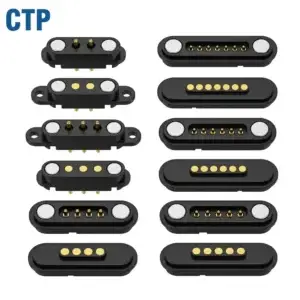
CTP offers magnetic interfaces for custom projects with those requirements, including a configurable 2–8 pin dual-row series and several compact mating formats. Magnetic connector waterproofing is developed for the selected assembly, with mated and unmated use considered separately. This gives the project a way to combine convenient attachment with an environmental design suited to the actual device.
A magnetic connection can suit the way portable equipment is handled
A handheld device may spend part of its day in use and part of it in a charging cradle. Its cable is attached and removed, and its outside surfaces may need wiping between uses. The connection is therefore both an electrical interface and a visible part of the enclosure. Its shape and accessibility matter alongside its sealing design.
A magnetic mating format offers a removable head with a defined contact face. The installed part can be considered with the panel opening and enclosure boundary, while the removable part is developed for convenient attachment. This gives the design team a useful starting point when a deep socket or awkward plug does not suit the intended product interaction.
The advantage is the ability to develop the complete interface, rather than treating environmental protection as a label added to the connector afterwards. The contact insert, housing, mounting and selected seal all have a role. CTP’s product options let those parts of the discussion begin with a real structure and a defined supply scope.
The 2–8 pin family combines circuit choices with a perimeter sealing approach
The CTP 2–8 pin dual-row series offers several contact-count configurations for custom power and signal interfaces. The selected structure includes spring-contact and target halves, an insulating insert, housing and a perimeter sealing arrangement developed with the enclosure. It is a useful family to consider when the device needs both a removable connection and a defined environmental boundary.
The choice of contact count allows the interface to follow the electrical task. A focused charging connection has different needs from a dock carrying identification, controls and several signals. The series gives the team options to compare without separating the power-and-signal discussion from the mounting and sealing arrangement.
A connector selected around the complete enclosure
For outdoor electronics, the surrounding panel and cable route are part of the use case. The selected model can be reviewed with those features, including where the device stops as the pair seats. The magnetic structure assists attachment and retention, while the mechanical geometry establishes the contact and seal positions.
This coordinated approach is the useful part of custom development. The team can consider the circuit functions and external connection together with the surfaces that protect the inside of the device. The final protection claim belongs to that defined, tested assembly; a series covering several structures is not one universal IP result.
An FPC module connects the external face to electronics inside
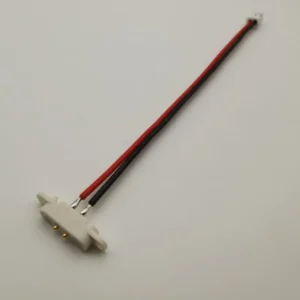
For a device that must stay protected with its lead removed, the installed carrier and its enclosure mounting deserve particular attention. The CTP-P3916 seven-contact FPC module gives that carrier a flexible route to the electronics. Its face can be developed with the housing boundary while the main board remains farther inside the device.
For a portable device, this can give the enclosure designer more freedom around the battery, supports and board position. The external connection does not need to sit directly over the controller PCB. The FPC route can be considered with the internal space, while the carrier and housing establish where the mating face sits.
Where the project has sealing requirements, that installation is reviewed as a whole. The contact carrier’s relationship to the enclosure and the route into the internal space are part of the boundary. The benefit of discussing the module early is that the flex route, mounting and environmental design can develop together instead of competing for the same small region later.
A contact face that can be reached is useful for a wipe-down product
The CTP four-contact ring pair exposes its mating surfaces when the halves are separated. For a product with an agreed cleaning process, that visible face gives the team a clear area to consider for access, materials and reconnection. It is a different design discussion from reaching into a deep connector cavity.
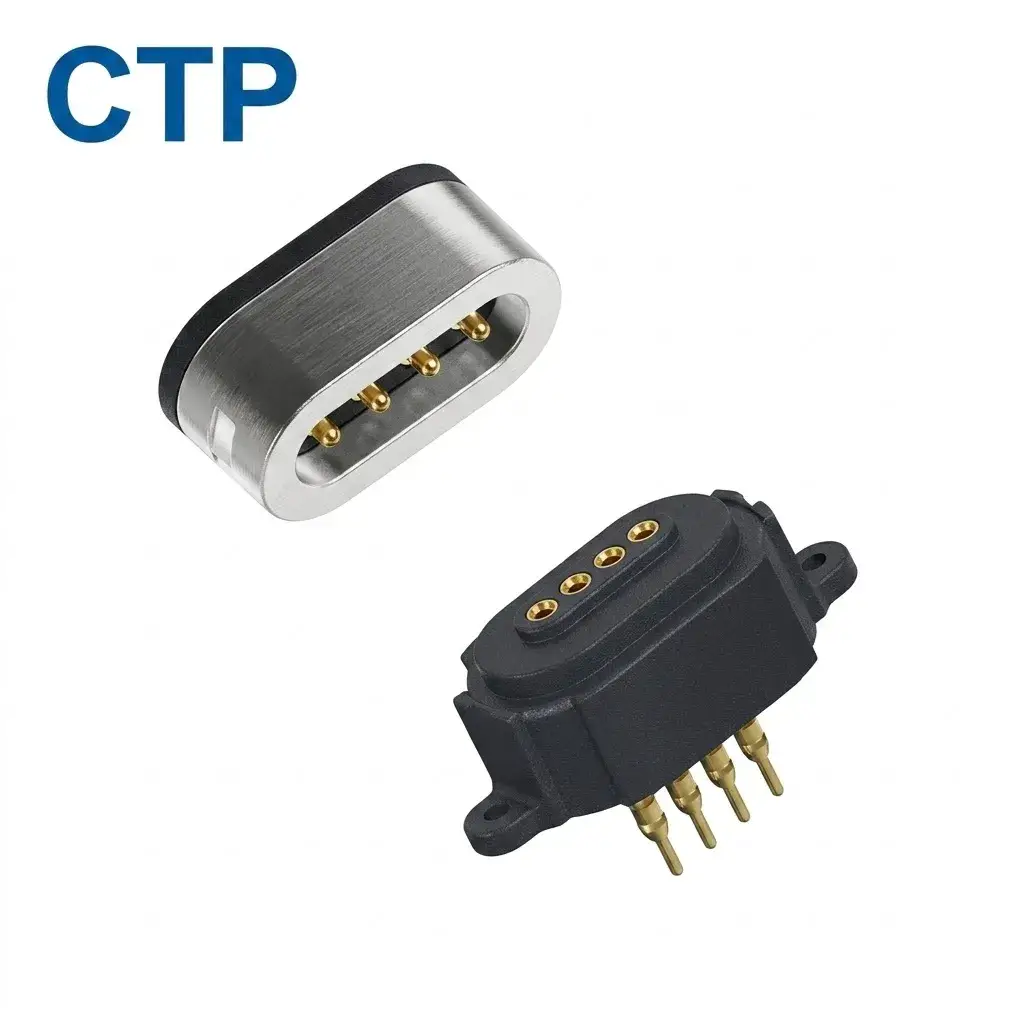
Accessibility is a practical benefit, but the actual process still depends on the selected materials and finish. The product team defines the cleaning exposure and establishes compatibility for the device. That allows the connection’s convenient form to be used accurately, without claiming that an IP result approves every chemical or wiping method.
For a handheld instrument cleaned between uses, the connection can be developed with the same care as the rest of the outside surface. The lead is removed in the intended way, the accessible region is treated according to the validated process and reconnection follows the device’s requirements. The interface becomes part of a coherent product routine.
Compact round and two-contact formats provide other enclosure choices
A circular interface for a focused set of circuits
The CTP-MC-R10-3P-S01 round three-contact pair gives the designer a circular mating format. It is worth considering where a round opening suits the product and three project-defined paths cover the electrical task. The installation and sealing boundary are then developed for that selected pair and enclosure.
The outside shape is useful to discuss because the connector is part of the product’s visible surface. A circular opening may fit naturally on a rounded accessory, while its rear mounting and termination determine how it fits inside. Considering both views helps the team develop an interface that belongs to the complete housing.
A small DC pair for power-only equipment
The CTP-P4269 two-contact DC pair offers a focused supply-and-return format. Its published 2.54 mm pitch and separate male and female dimension references provide an initial basis for evaluating the device side and removable head. It is useful when the product does not need a broader signal interface at that connection.
For a compact power accessory, that focused format keeps the connection’s electrical role straightforward. The environmental requirements still belong to its actual mounting and circuit, including which contacts can be energised while the head is absent. CTP’s range lets the project choose the useful physical format first, then establish the appropriate installed protection.
What mated and unmated waterproofing mean for the product
Can the device remain protected when the magnetic lead is removed?
It can be designed with that requirement, but the answer comes from the installed boundary. A connector feedthrough may help protect the inside while its front face is exposed. Another arrangement may rely on the mating half or a fitted cap. The selected configuration and its evidence identify which condition the device supports.
Does a mated IP result cover the exposed contact face?
A fully connected assembly and a bare disconnected face are different states. The official IEC 60529 description explains the IP Code as a classification of enclosure protection. The relevant result must represent the assembly and condition used by the device. It also does not, by itself, authorise charging through wet exposed contacts.
How do contact pressure and sealing work together?
The final seat needs to suit both the contact’s working compression and any seal that relies on compression. The housing stops and mounting establish that relationship, with the magnets assisting the mating action. Developing the geometry together lets the spring contacts and sealing arrangement serve the same installed position.
Develop the connection for the environment the device actually sees
An outdoor instrument and an indoor wipe-down product can need different things from the same-looking connector. Exposure, cleaning, cable movement and the disconnected state all help define the brief. CTP’s component families and FPC routes give the team a choice of structures around which to develop that application.
The waterproof-interface design guide explains the wider installation boundary. The working-stroke guide provides related context for the seated contact condition. These considerations are brought back to the selected model, rather than turning a general product family into an unsupported environmental promise.
When the project moves to a sample, include the intended mating part, enclosure mounting and normal cable or FPC route. That gives the chosen CTP interface a useful setting in which to demonstrate its fit. The agreed sealing and electrical requirements can then be evaluated as properties of the actual assembly.
For a portable product, a convenient magnetic connection and a thoughtful environmental design can belong in the same interface. CTP’s range provides the contact and installation choices; developing them with the enclosure lets the device remain straightforward to connect, suitably packaged and clearly specified for the way it will be used.