Introduction
Pogo pin connectors, widely known in the industry as spring-loaded connectors, have fundamentally changed the architecture of modern electronics. From high-density wearable devices and smartphones to mission-critical medical equipment and industrial automation systems, these compact components deliver reliable electrical connections in environments where traditional stamped-and-formed connectors frequently fail.
However, a critical question often arises among hardware engineers, product designers, and procurement managers: How reliable are pogo pin connectors in long-term use?
In this comprehensive engineering guide, we will dive deep into the mechanical durability, lifespan metrics, environmental influencing factors, and design best practices required to ensure your pogo pin interconnects perform flawlessly over extended lifecycles.
The Anatomy of Pogo Pin Connectors
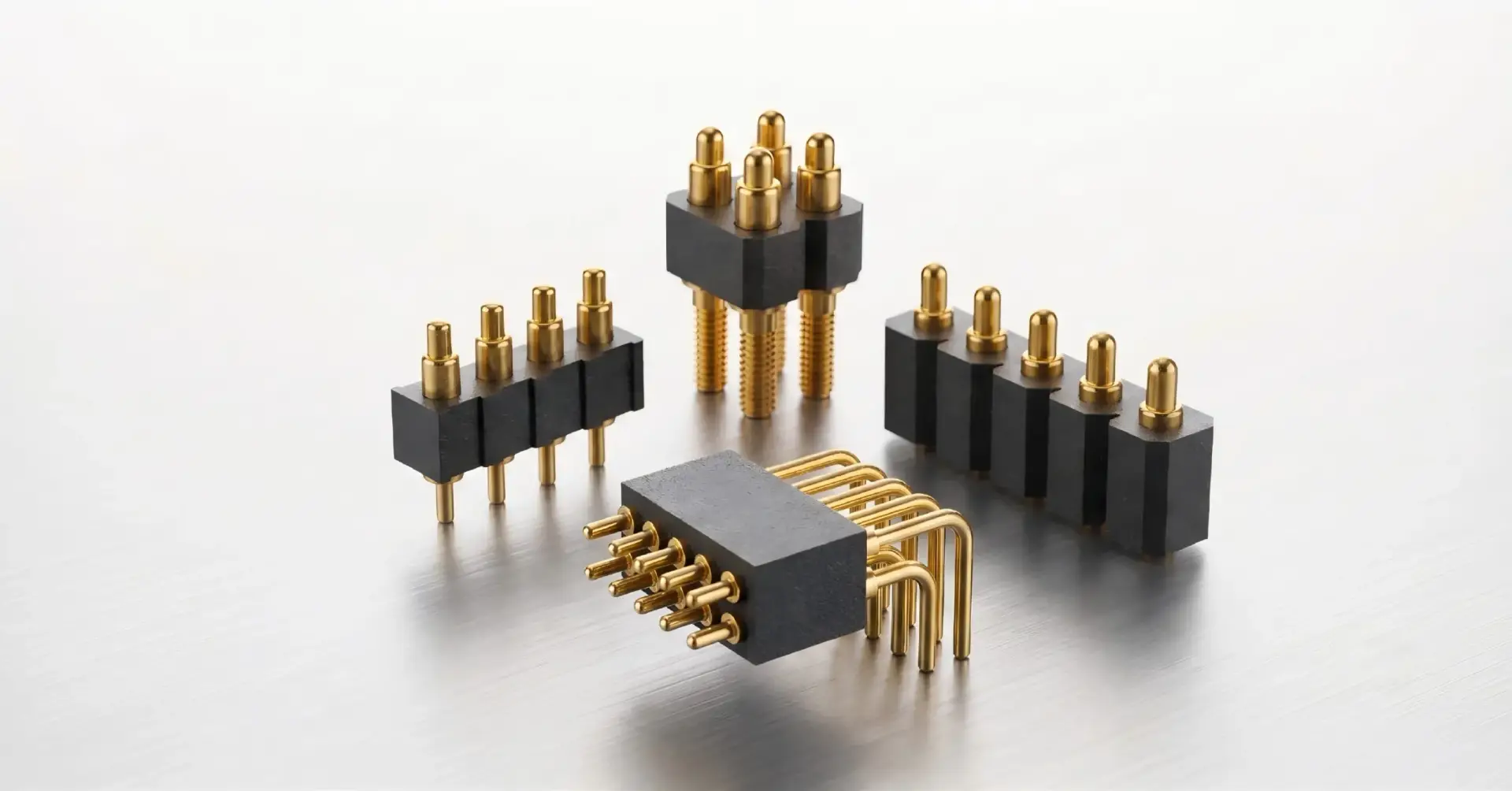
At their core, pogo pin connectors are spring-loaded electrical contacts engineered to maintain consistent normal force between two mating surfaces. This dynamic pressure ensures stable connectivity even under severe shock or vibration.
A standard precision-machined pogo pin consists of three critical components:
- The Plunger (Tip): The moving contact surface. Advanced designs often feature a “bias tail” or slanted internal base to ensure 100% continuous contact with the inner barrel wall, drastically reducing electrical resistance.
- The Spring: The internal engine. Usually made of Stainless Steel or Beryllium Copper (BeCu), it provides the precise gram-force required for the application.
- The Barrel (Tube): The outer housing that encases the spring and plunger, typically precision-machined from Brass alloys for optimal machinability and conductivity.
Why Reliability is the practical Metric
In applications requiring frequent engagement (blind mating, docking stations) or exposure to harsh environmental variables, connector reliability is non-negotiable. Premature connector failure can lead to micro-interruptions, fatal signal loss, increased warranty claims, and severely reduced product lifespans. In industries like healthcare, aerospace, and defense, this reliability must be mathematically predictable.
How Reliable Are Pogo Pin Connectors? (Key Metrics)
1. Exceptional Mechanical Durability (High Cycle Life)
Unlike traditional pin-and-socket connectors that suffer from friction wear (galling) with every insertion, pogo pins compress vertically. A standard commercial pogo pin is typically rated for 10,000 to 50,000 mating cycles. High-end and custom-engineered pins can easily surpass 1,000,000+ cycles with virtually zero mechanical degradation.
2. Ultra-Stable Electrical Performance
Thanks to the internal spring tension, pogo pins absorb tolerance stacks in PCB assembly. They maintain a Dynamic Contact Resistance (DCR) typically below 30mΩ to 50mΩ, ensuring reliable high-speed data transmission and minimal power loss.
3. Vibration and Shock Resilience
The continuous spring force acts as a natural shock absorber. When engineered with the correct spring rate, pogo pins can sustain extreme vibration (e.g., 10-2000 Hz) with no electrical discontinuity greater than 1 microsecond.
4. Natural Self-Cleaning Mechanism
During the compression stroke, the plunger tip generates a slight wiping action against the mating contact pad. This micro-friction effectively breaks through surface oxidation and removes microscopic debris, enhancing long-term conductivity.
Critical Factors Affecting Long-Term Reliability
1. Material Selection & Plating Quality
The standard for reliable long-term use is Hard Gold Plating (Au) over a Nickel (Ni) underplate. The Nickel acts as a crucial barrier layer, preventing the brass substrate from migrating to the surface and oxidizing, while the Gold ensures supreme conductivity and corrosion resistance.
2. Environmental Degradation
- Humidity & Salt Spray: Unprotected pins can corrode. High-reliability applications require pins subjected to 48h-96h salt spray testing.
- Dust & Contaminants: Airborne particles can jam the plunger.
- Temperature Extremes: High heat can cause spring relaxation (loss of force) if standard music wire is used instead of high-temp alloys like BeCu.
3. Mechanical Misuse (Side-Loading)
Pogo pins are designed for vertical compression. Exposing the plunger to lateral forces (side-loading) during mating can bend the plunger, damage the internal plating, or cause the pin to bind inside the barrel.
4. Over-Compression
Compressing a pogo pin beyond its Recommended Working Height can crush the internal spring (solid stack), permanently destroying its elasticity and rendering the connector useless.
5. Current Overload
Standard micro-pogo pins typically handle 1A to 2A. Pushing 5A through a standard pin will cause thermal runaway, melting the internal spring. For high-power needs, highly specialized high-current pogo pins must be specified.
Best Practices to Maximize Lifespan
- Design for Proper Stroke: Always design your device housing so the pogo pin operates at its specific “Working Travel” (usually 2/3 of the maximum stroke). Never allow it to bottom out.
- Utilize Guiding Mechanisms: Incorporate plastic housings, alignment pegs, or magnetic guidance to ensure the mating force is strictly vertical, eliminating fatal side-load forces.
- Specify the Right Plating: If the product is used outdoors or against human skin (like smartwatches), specify a thicker gold plating (e.g., 10μ” to 30μ”) to prevent sweat-induced galvanic corrosion.
- Partner with Reputable Manufacturers: Ensure your supplier utilizes precision CNC turning (holding tolerances to ±0.01mm) rather than cheap stamping processes.
Real-World Applications
- Consumer Electronics: TWS earbuds, smartphones, and AR/VR headsets rely on pogo pins for space-saving charging and data transfer.
- Medical Devices: Patient monitoring equipment utilizes spring-loaded contacts for safe, reliable, and easily sterilizable connections.
- Industrial & Testing Equipment: Automated test jigs (ATE) use thousands of pogo probes to test semiconductor chips and PCBAs millions of times.
- Automotive: Infotainment systems and advanced diagnostic ports use ruggedized pogo pins to survive constant vehicular vibration.
FAQs: Pogo Pin Long-Term Reliability
1. How long do pogo pin connectors practically last?
Under optimal design conditions, commercial pogo pins last between 20,000 to a model-specific cycle-life target validated under defined test conditions. Custom heavy-duty designs can exceed 1,000,000 compressions before failure.
2. Are pogo pins suitable for harsh outdoor use?
Yes, but the system must be engineered properly. The connector housing should be designed to Project-Specific IP Target waterproof standards, and the pins must feature heavy gold plating to resist environmental corrosion.
3. Do pogo pins lose their electrical conductivity over time?
High-quality pins with proper gold-over-nickel plating maintain highly stable conductivity over their entire lifecycle. Loss of conductivity only occurs if the plating is worn off due to extreme side-loading or improper mating targets.
4. Can pogo pins handle high-current charging?
Yes. While a standard tiny pogo pin handles about 2A, specialized high-current spring-loaded connectors (using ball-bearing internal designs or thickened walls) can continuously carry 10A, 20A, or even up to 30A.
5. What is the cause of pogo pin failure?
The most common cause of premature failure is mechanical abuse, specifically side-loading (lateral friction) and over-compression (crushing the spring beyond its limits).
Conclusion
Pogo pin connectors remain one of the most reliable and versatile interconnect solutions for long-term use—provided they are selected, designed, and integrated correctly. Their exceptional cycle life, stable dynamic resistance, and self-cleaning actions make them far superior to traditional connectors in dynamic environments.
Ultimately, long-term reliability is not just about buying a pin; it’s about proper engineering integration. By understanding material limitations, adhering to stroke specifications, and preventing lateral forces, engineers can supports millions of stable connections.
Are you designing a new device and need to verify your connector reliability?
Contact our engineering team for a deep-dive consultation on precision spring-loaded solutions and instant DFM support.