
How to Choose a Custom Magnetic Data Cable Manufacturer for OEM Projects
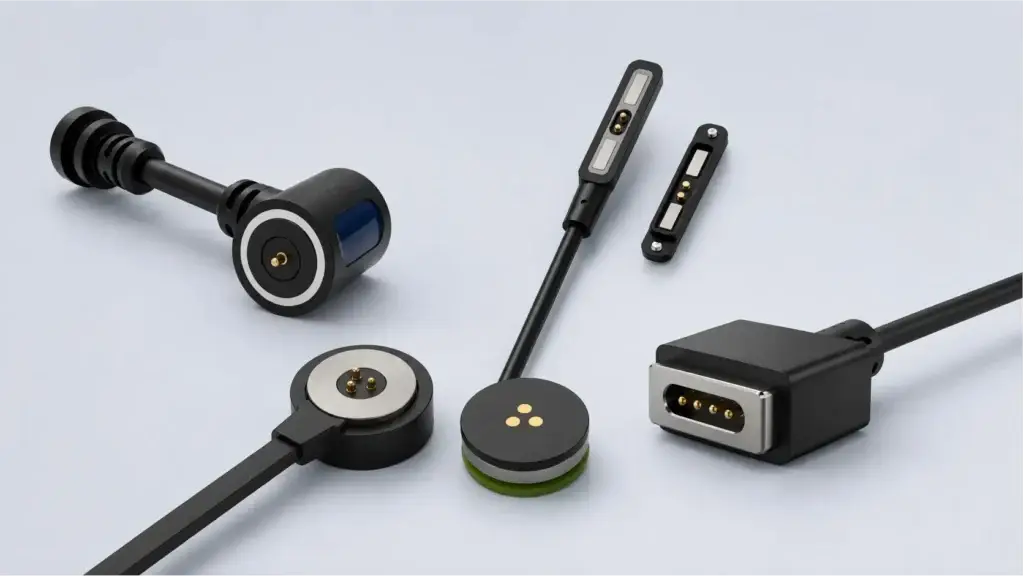
Choosing a custom magnetic data cable manufacturer requires more than comparing quotations. Learn how OEM teams evaluate interface design, Pin Map definition, cable construction, prototype evidence and production readiness.
Magnetic Cable Design: How Strain Relief and Cable Exit Control Reliability
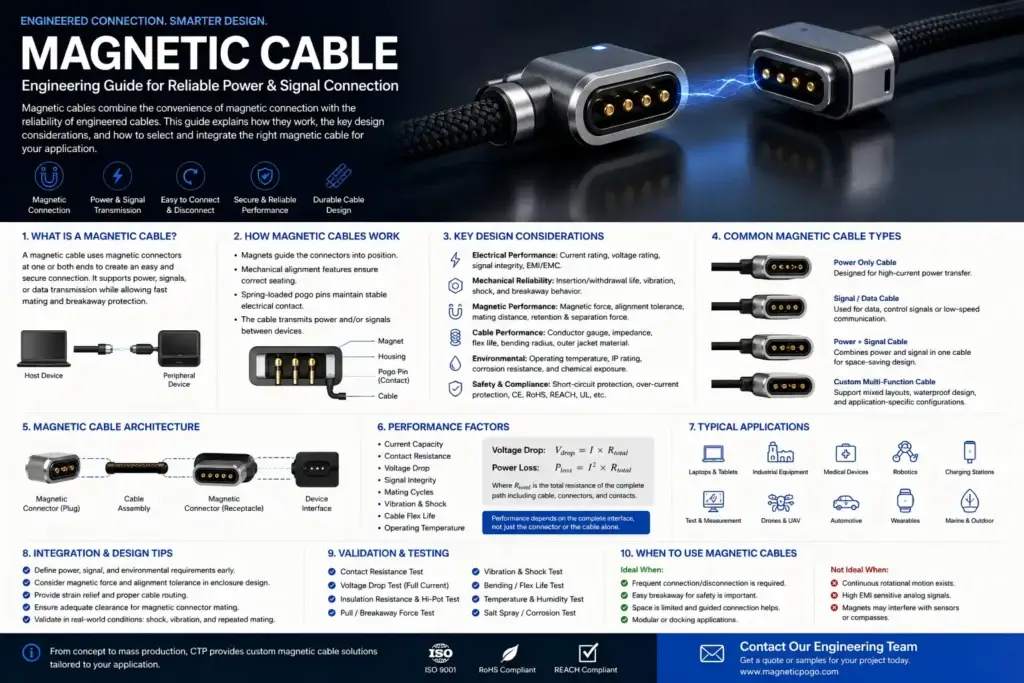
A magnetic cable is a complete mechanical load path, not just a connector head attached to a wire. Learn how cable exit direction, strain relief, overmolding, routing and repeated movement affect termination and mating reliability.
Pogo Pin Manufacturer: From Custom Requirements to Mass Production
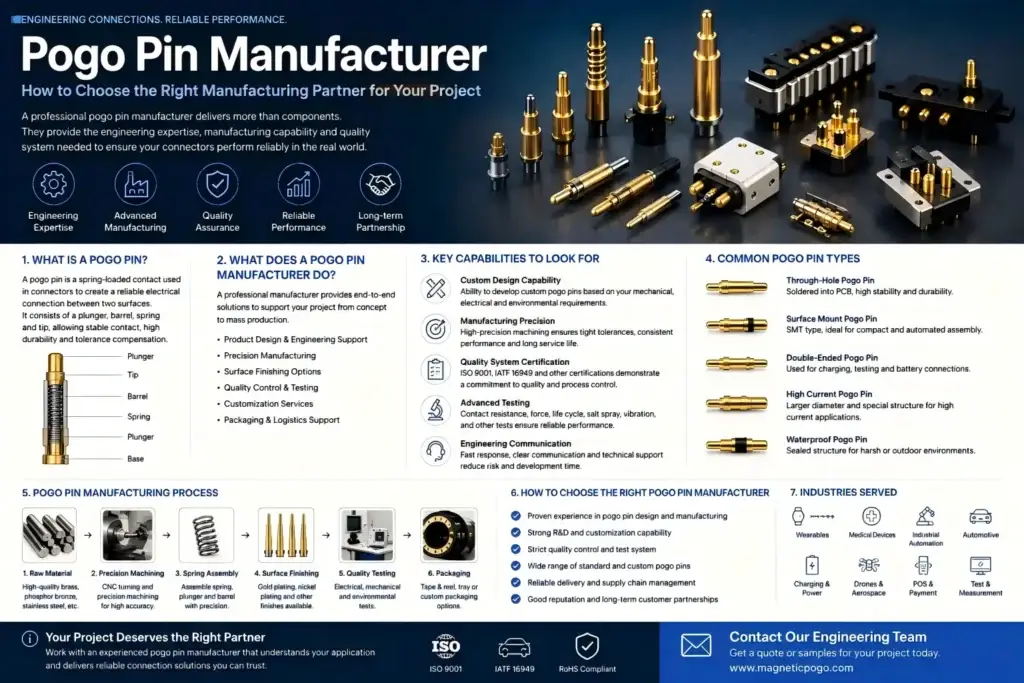
Working with a pogo pin manufacturer requires more than sending a diameter and current target. This guide explains how OEM engineers translate interface requirements into controlled drawings, prototypes, validation evidence and production-ready specifications.
High Current Magnetic Connector: How to Validate Temperature Rise and Current Derating
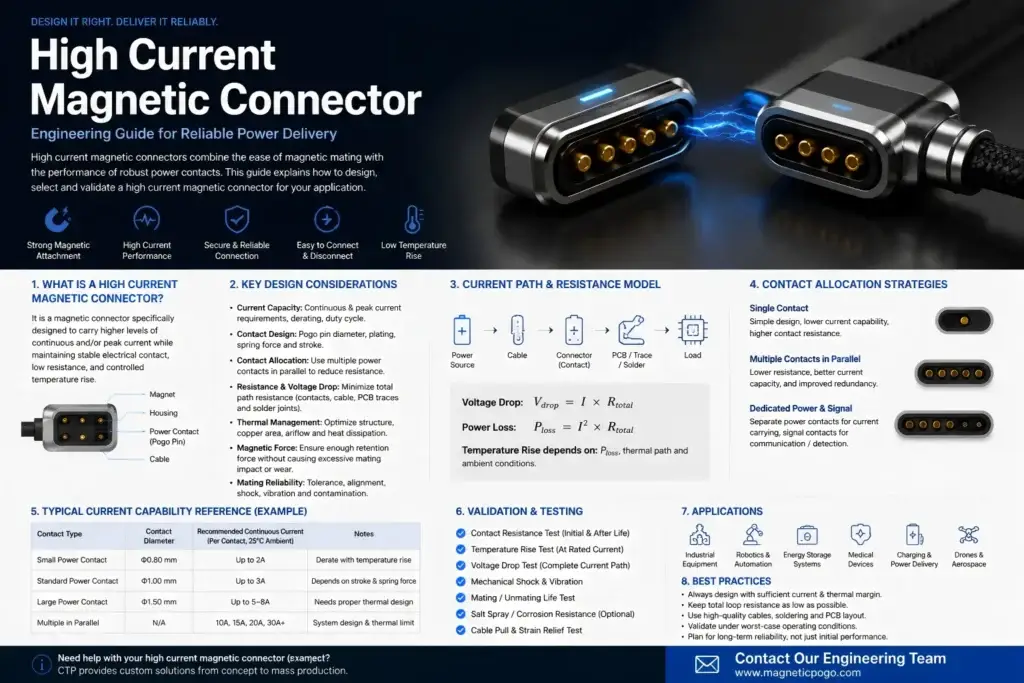
A high current magnetic connector should be qualified as a current-temperature operating envelope, not by an amp rating alone. Learn how resistance, working stroke, ambient temperature, current sharing, mating state and lifecycle testing define usable current.
Magnetic Pogo Pin Connector Design: How Tolerance Stack-Up Controls Working Stroke
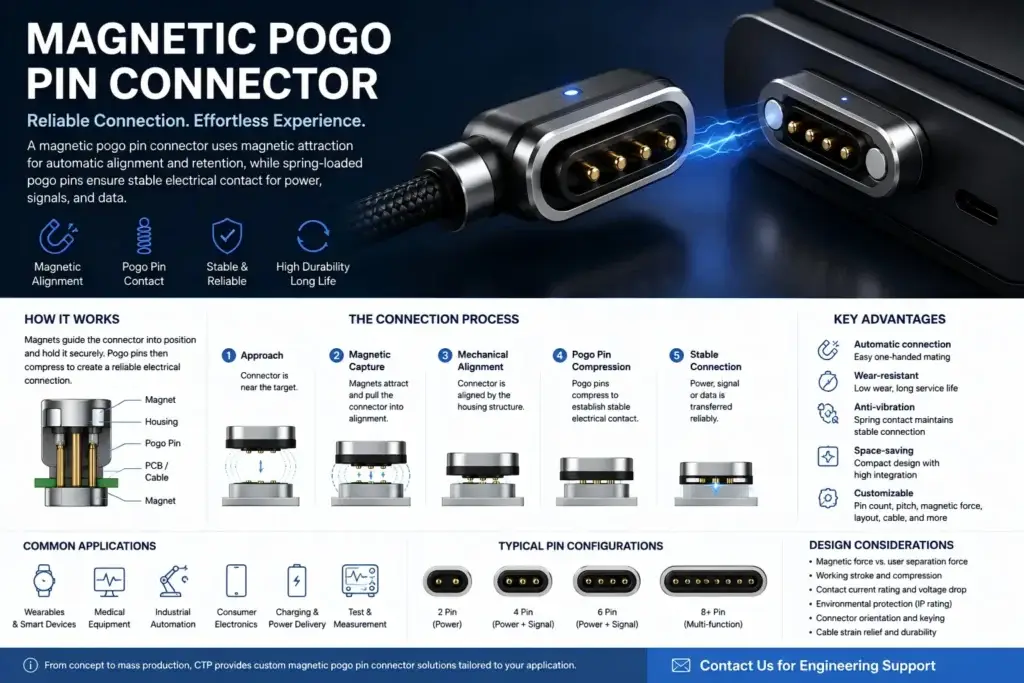
A magnetic pogo pin connector is only as reliable as the product stack-up around it. Learn how datums, working stroke, magnetic air gap, spring reaction and production tolerances control the final mating condition.
Magnetic Power Connectors: How to Design the Complete DC Power Path
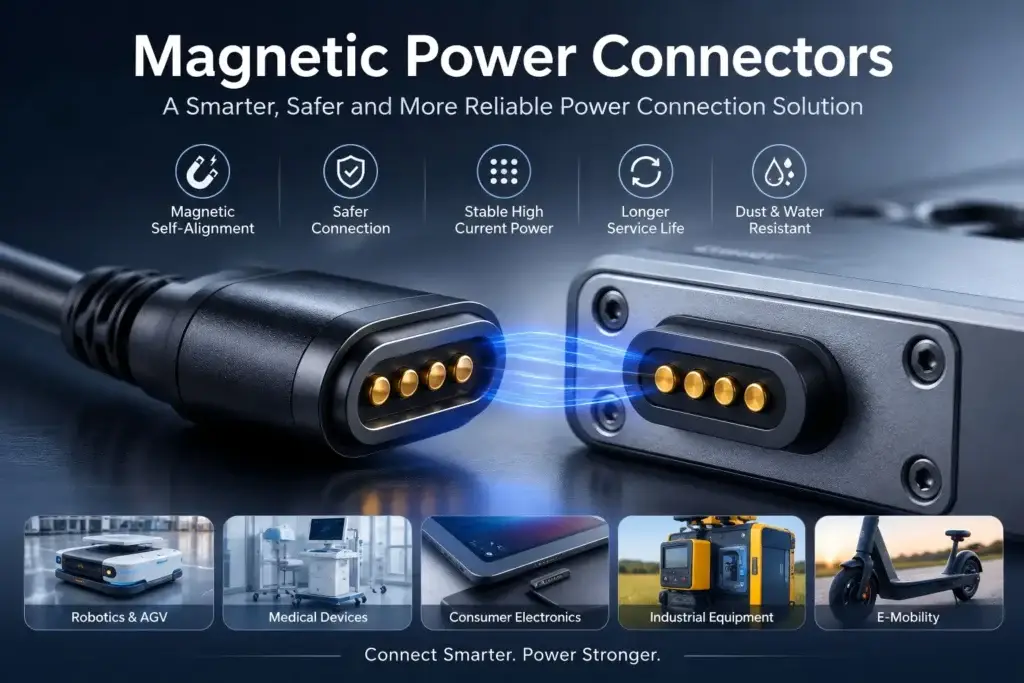
A magnetic power connector must be engineered as a complete DC power path. Learn how contact allocation, working stroke, resistance, voltage drop, temperature rise, partial mating and validation determine real interface performance.
Advanced Guide to Swage Pin Assembly: Engineering High-Reliability PCB Interconnects
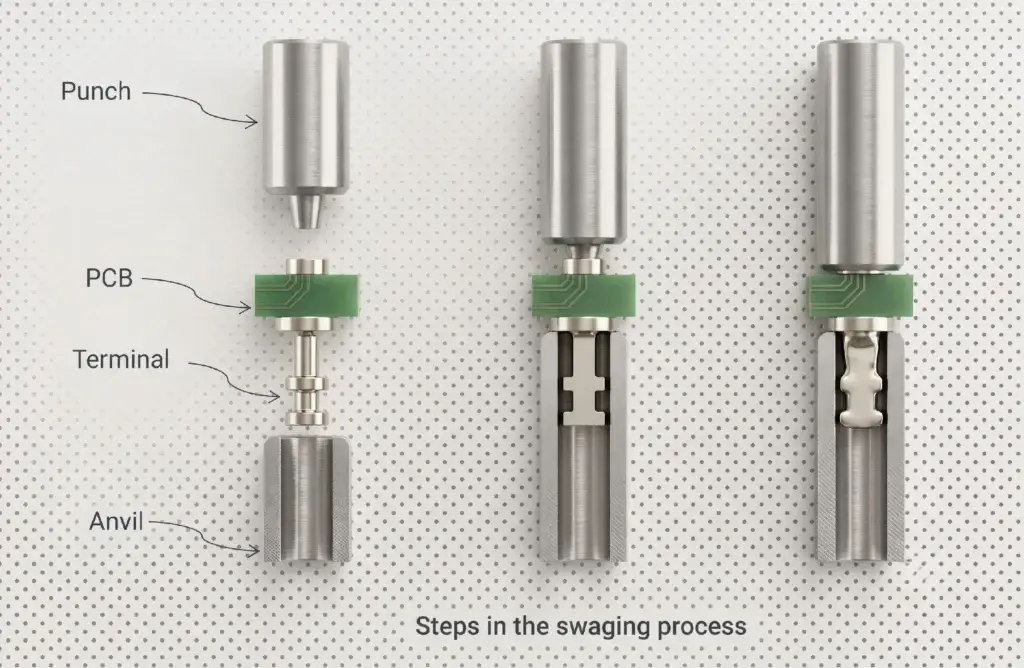
CTP engineering context: Published by Shenzhen Yongtan Electronics for connector selection and project planning. Technical parameters must be confirmed against the applicable model drawing and test conditions. Last reviewed: 24 August 2026. In high-vibration and rugged electronics deployment—ranging from aerospace modules to heavy-duty industrial telemetry—relying solely on surface-mount or standard through-hole soldering often falls short […]
Introduction to Spring-Loaded Pogo Pins & Connectors
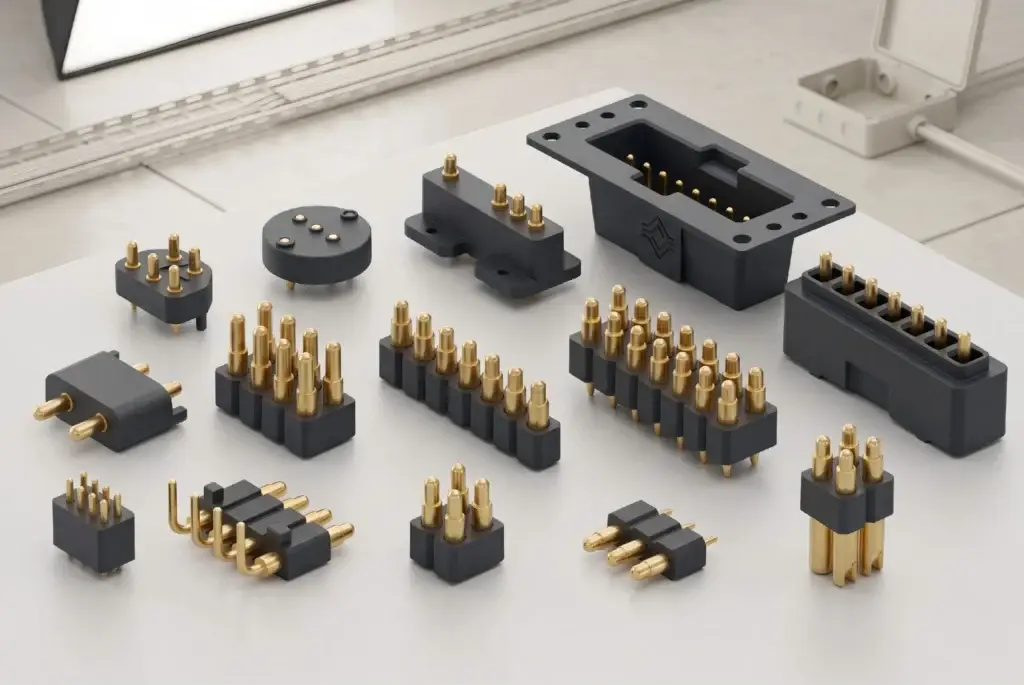
CTP engineering context: Published by Shenzhen Yongtan Electronics for connector selection and project planning. Technical parameters must be confirmed against the applicable model drawing and test conditions. Last reviewed: 24 August 2026. Spring-Loaded pins—widely known as Spring-Loaded Contacts, Spring probes, or Pogo pin—deliver a highly reliable and precision-made interconnect solution for the most rigorous electronic […]
Pogo Pin Connector Reliability: An Engineering Guide to Long-Term Use
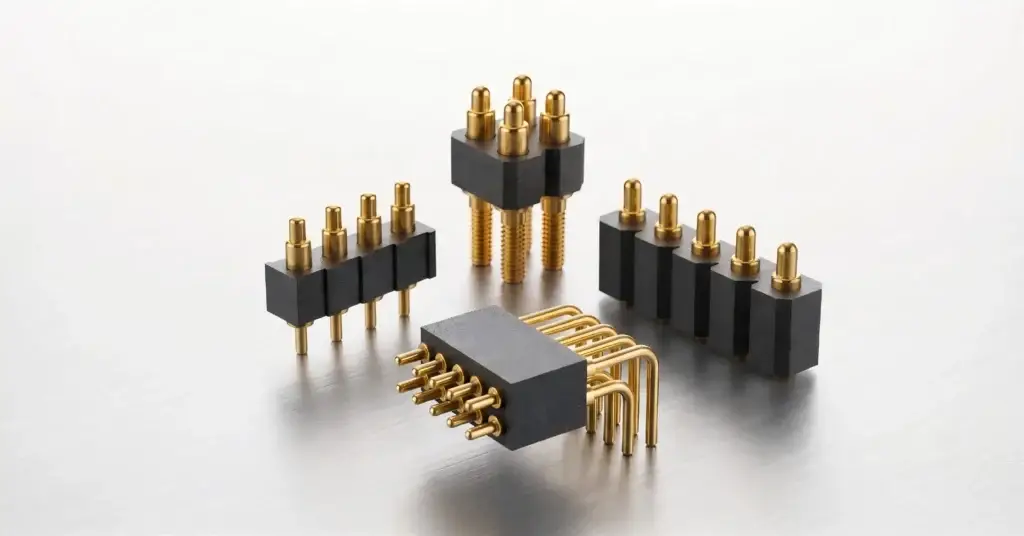
CTP engineering context: Published by Shenzhen Yongtan Electronics for connector selection and project planning. Technical parameters must be confirmed against the applicable model drawing and test conditions. Last reviewed: 24 August 2026. Introduction Pogo pin connectors, widely known in the industry as spring-loaded connectors, have fundamentally changed the architecture of modern electronics. From high-density wearable […]
Precision Machined Pin Receptacles vs. Spring-Loaded Pogo Pins: How to Choose
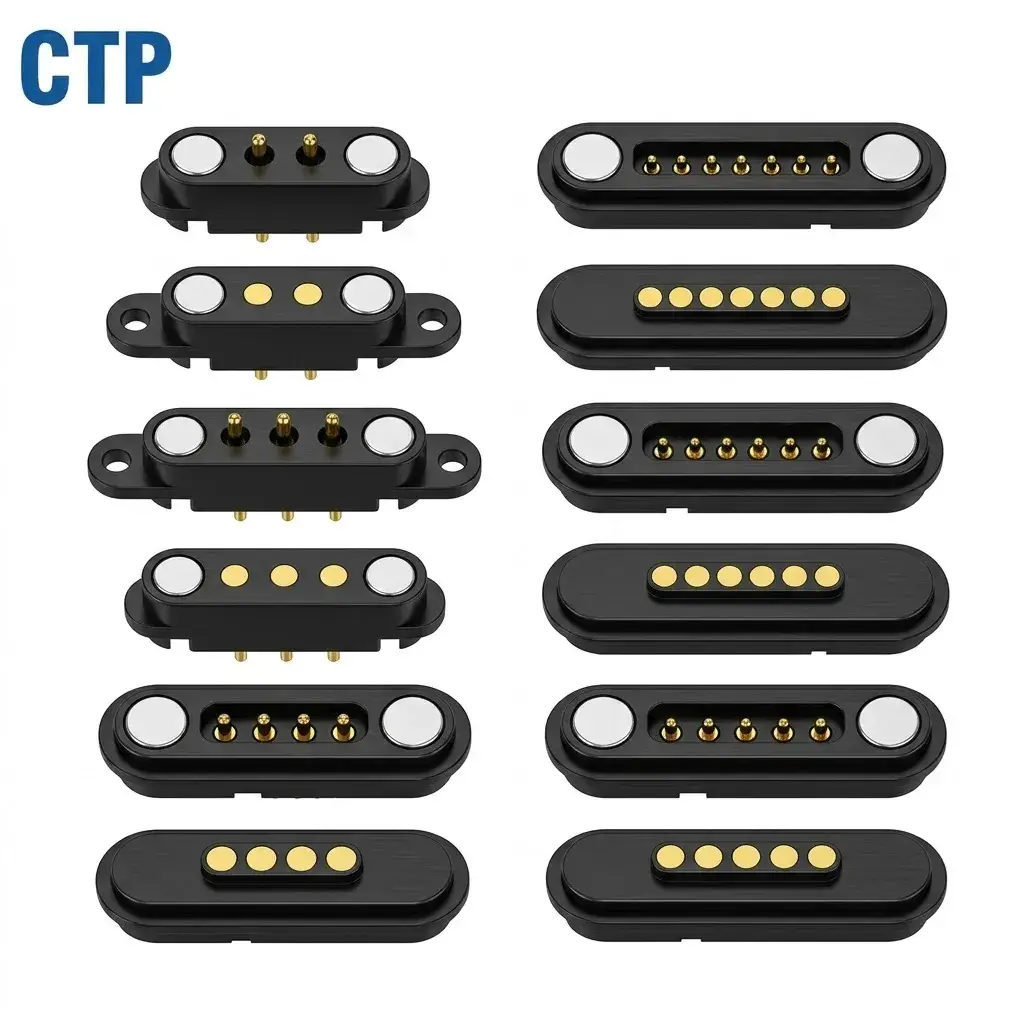
An engineering comparison of precision machined pin receptacles, spring-loaded pogo pins and magnetic connectors, covering structure, mounting and selection.
How Do Magnetic Connectors Work? From Magnetic Capture to Electrical Contact
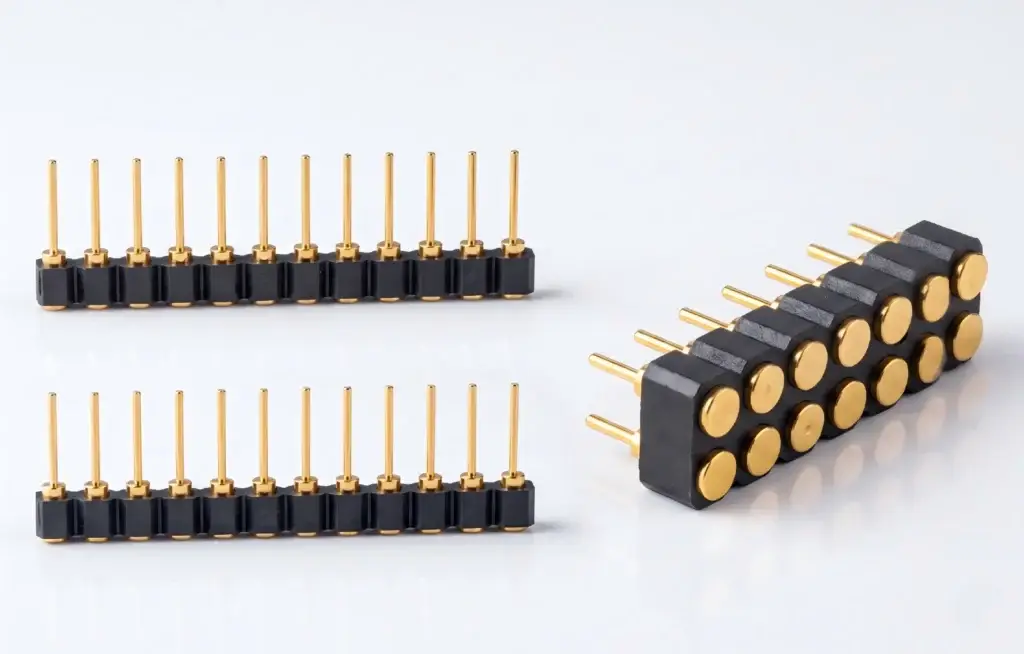
Magnetic attraction is only the first stage of a magnetic connector interface. This engineering guide explains capture, mechanical seating, pogo pin compression, electrical validation, force balance, failure modes, and controlled release.
Pin Receptacles: Engineering Selection, Mating Fit and PCB Integration
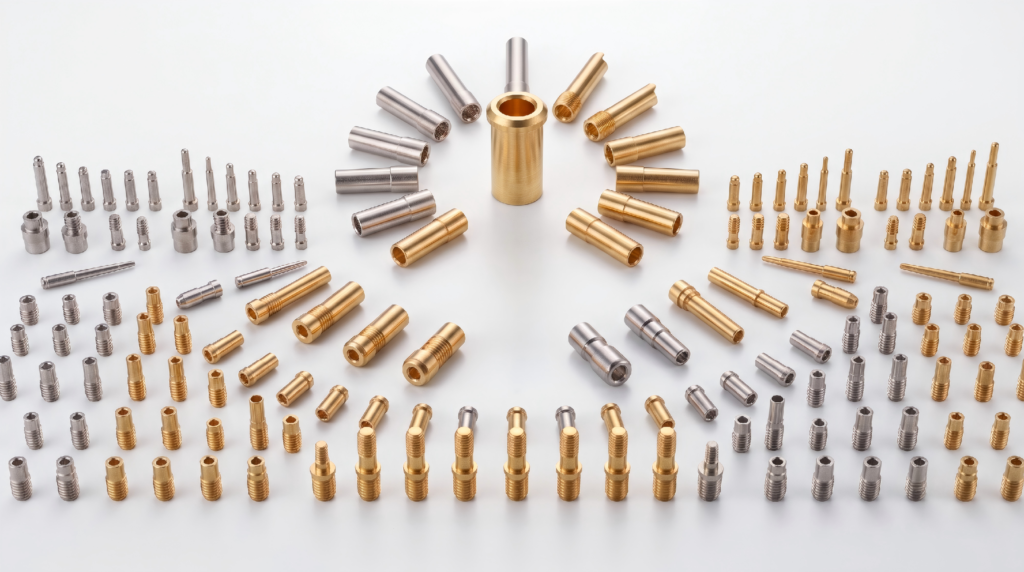
A pin receptacle creates a removable electrical interface between a PCB and a mating pin, component lead or plug-in module. Reliable performance depends on the mating-pin diameter, contact geometry, insertion depth, plating compatibility, PCB mounting method and assembly tolerance. This guide explains how engineers should specify, integrate and validate machined pin receptacles without confusing them with pogo pins or general-purpose sockets.