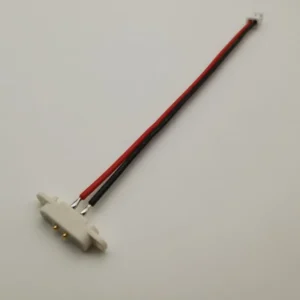
Choosing a magnetic pogo pin supplier in China should not begin with a
generic ranking, factory-size claim or one catalog specification. The right
supplier depends on the connector architecture, Pin Map, working stroke,
electrical load, signal requirements, environmental conditions, lifecycle
target and expected production volume of the actual project. This guide
provides a practical 2026 supplier shortlist together with an engineering
qualification process for moving from initial sourcing to approved
production.
Updated: August 2026. Editorial Note:
This article is a sourcing shortlist rather than an independent
third-party ranking. CTP is presented first because this guide is
published on the CTP website. The remaining manufacturers are included
as companies that OEM buyers may encounter when sourcing pogo pins,
magnetic connectors and related custom interconnect products in China.
Buyers should independently verify the current factory, legal entity,
certificate scope, specifications, capacity and project-specific
capabilities of every supplier before approval.
How Should Engineers Compare Magnetic Pogo Pin Suppliers?
A supplier list becomes useful only when the engineering and procurement
teams know what they are actually comparing.

A custom magnetic pogo pin connector can combine several different
technologies:- spring-loaded electrical contacts;
- custom plastic or metal housings;
- permanent magnets;
- mating targets;
- PCB, FPC, wire or cable terminations;
- custom Pin Maps;
- mechanical datums and alignment features;
- environmental sealing structures;
- project-specific electrical and mechanical validation.
Two factories that both advertise “magnetic pogo pin connectors” may
therefore have very different capabilities for the same project.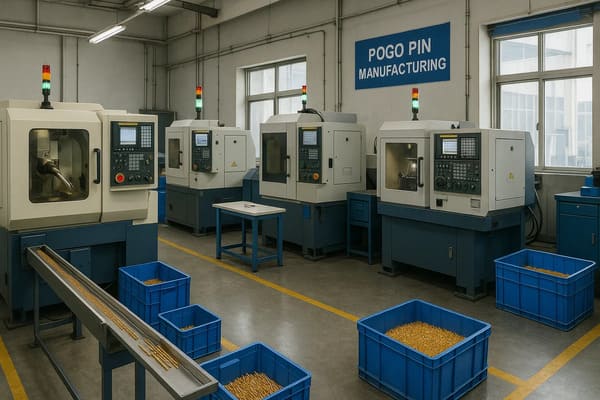
controls required by the actual connector project rather than factory
scale alone.
Start with the Interface Specification, Not the Supplier List
Before contacting ten factories for quotations, define what the connector
must actually do.

Otherwise, every supplier may quote a different interpretation of the
requirement and the resulting prices will not be directly comparable.| Project Input | What Should Be Defined |
|---|---|
| Connector Function | Charging, docking, signal, module, service, test or another use |
| Pin Map | Power, return, detection, identification and signal functions |
| Mechanical Envelope | Available X, Y and Z space |
| Working Stroke | Minimum, nominal and maximum pogo pin compression |
| Electrical Load | Voltage, continuous current, peak current and duty cycle |
| Signal Requirement | Required communication or channel performance |
| Magnetic Behavior | Capture, seated retention and separation requirements |
| Environment | Temperature, moisture, dust, sweat, salt, chemicals or debris |
| Lifecycle | Expected mating profile and end-of-life criteria |
| Production | Prototype quantity, pilot volume, annual forecast and ramp plan |
Without this information, supplier sourcing quickly becomes a comparison
of marketing claims instead of engineering capability.
10 Magnetic Pogo Pin Suppliers and Manufacturers in China to Evaluate in 2026
The following companies can be used as an initial supplier shortlist.
Their order should not be interpreted as an independent performance ranking.
The correct supplier depends on the requirements of the specific project.
1. CTP — Shenzhen Yongtan Electronics
CTP focuses on custom magnetic pogo pin connectors, magnetic charging
cables, pogo pin connectors and precision spring-loaded contacts.

The product structure is particularly relevant to OEM teams that need the
supplier to participate in the complete magnetic interface rather than
supply only an individual pogo pin.

A custom project can involve:- magnetic connector geometry;
- custom Pin Maps;
- multi-pin contact arrays;
- PCB, FPC, wire or cable termination;
- mating-target design;
- working-stroke review;
- magnetic capture and retention;
- project-specific environmental structures.
Useful to evaluate for:
custom magnetic connectors, magnetic charging cables, pogo pin connector
arrays and non-standard OEM interfaces.

Verify before production:
project-specific capacity, approved drawing revision, CTQs, test
conditions, process route and production-control requirements.

Explore

    CTP custom magnetic connector solutions

for different removable charging and docking structures.
2. Dongguan CFE Electronic Co., Ltd.
CFE is a Chinese interconnect manufacturer that OEM buyers may encounter
when researching pogo pin connectors, magnetic connectors, charging cables
and integrated connector modules.

It is worth evaluating when a project extends beyond an individual spring
contact and requires a more complete connector or cable-side assembly.

Useful to evaluate for:
magnetic connectors, pogo pin connectors, magnetic charging cable
assemblies and integrated connection modules.

Verify during sourcing:
exact product revision, material and finish requirements, working-stroke
conditions, environmental-test configuration, tooling ownership and
engineering-change procedure.
3. Shenzhen Top-Link Technology Co., Ltd.
TOP-LINK is another manufacturer that buyers may encounter when sourcing
pogo pins, multi-pin spring-loaded connectors and magnetic connector
assemblies in China.

Its broader spring-contact portfolio can make it relevant when the project
team is comparing individual pogo pins, multi-contact connectors and
magnet-assisted structures.

Useful to evaluate for:
individual pogo pins, multi-pin pogo pin connectors, magnetic spring-contact
interfaces and customized connector modules.

Verify during sourcing:
actual connector geometry, production-site scope, lifecycle-test conditions,
capacity allocation and project-specific qualification requirements.
4. Promax Pogo Pin
Promax is positioned around pogo pin and magnetic pogo pin connector
development and is another supplier that can be considered for custom
spring-contact projects.

Its relevance is strongest when the application specifically requires a
magnet-assisted removable interface rather than a conventional permanent
connector.

Useful to evaluate for:
magnetic pogo pin connectors, project-specific contact layouts and custom
magnetic mating structures.

Verify during sourcing:
the test conditions behind electrical and lifecycle specifications,
tolerance capability, production inspection and the exact connector
revision represented by published data.
5. Dongguan Xinteng Electronics Co., Ltd.
Xinteng is another manufacturer that buyers may find when sourcing pogo
pins, pogo pin connectors, magnetic connectors and magnetic cable
assemblies.

This type of product breadth can be useful when a project includes both a
device-side magnetic connector and a custom cable-side interface.

Useful to evaluate for:
magnetic connectors, magnetic cables, spring-contact assemblies and OEM/ODM
connector projects.

Verify during sourcing:
whether quoted electrical, environmental and lifecycle values apply to the
exact connector being developed rather than a different catalog family. Send CTP your Pin Map, available X-Y-Z space, working stroke, voltage,
current, mating direction and annual demand so the interface can be
reviewed against your actual project requirements.
6. Denentech Electronic Technology
Denentech has a broader connector portfolio that includes spring-loaded
contacts as well as more conventional board and wire connector families.

This can make it relevant when the engineering team has not yet fully
committed to a pogo pin architecture and still needs to compare different
connector types.

Useful to evaluate for:
pogo pin connectors, magnetic spring-contact structures and projects where
conventional connector alternatives are still being considered.

Verify during sourcing:
which processes are performed internally, manufacturing-site scope,
test capability and project-specific quality controls.
7. Cnomax / Dongguan Ruicheng Precision Technology
Cnomax / Ruicheng is relevant to sourcing teams looking at precision
machined parts together with pogo pins, magnetic connector assemblies and
cable-side solutions.

A machining background can be useful for projects with non-standard contact
geometries or metal structural components, but the complete connector
qualification should still be reviewed separately.

Useful to evaluate for:
custom pogo pins, precision machined connector components, magnetic
assemblies and magnetic cable structures.

Verify during sourcing:
process ownership across machining, plating, molding and assembly,
traceability and the inspection route used for the final connector.
8. Richconn
Richconn combines precision machining services with pogo pin and magnetic
pogo pin-related products.

It may be relevant where the spring-loaded contact is part of a larger
precision-machined mechanical assembly.

Useful to evaluate for:
custom pogo pins, magnetic pogo pin structures and precision-machined
connector components.

Verify during sourcing:
lifecycle-test configuration, electrical-test conditions, internal versus
outsourced processes and control of the final assembled connector.
9. SMEconn / Sunmon Electronics
SMEconn / Sunmon is another manufacturer that OEM sourcing teams may
encounter when searching for pogo pins and magnetic connector solutions.

It is relevant to projects requiring a dedicated spring-contact or magnetic
connector supplier rather than a general electronic component distributor.

Useful to evaluate for:
pogo pins, magnetic connectors, custom connector development and
higher-volume production programs.

Verify during sourcing:
project-specific process capability, CTQ control, sample-to-production
consistency and capacity actually available for the program.
10. Shenzhen QH Industrial Co., Ltd.
QH Industrial is another supplier that can be considered for pogo pins,
pogo pin connectors, magnetic connectors and cable-integrated assemblies.

It may be especially relevant where the product interface combines the
connector with custom cable or harness requirements.

Useful to evaluate for:
pogo pins, magnetic connector assemblies, magnetic cables and customized
cable-side interfaces.

Verify during sourcing:
product-specific test evidence, production-site scope, tooling
responsibility, traceability and engineering-change controls.
Do Not Select a Supplier from Website Specifications Alone
Supplier websites are useful for building a shortlist.

They should not replace engineering qualification.

A product page may advertise values for:- current;
- contact resistance;
- mating life;
- temperature range;
- environmental protection;
- corrosion testing.
Those values may have been measured on a specific connector configuration,
mating target, working stroke, cable length, environment or electrical
condition.

Therefore:


    Catalog Specification ≠ Custom Design Specification ≠ Approved
    Production Specification.
Seven Criteria for Qualifying a Magnetic Pogo Pin Manufacturer
1. Can the Supplier Understand the Complete Interface?
A capable custom connector manufacturer should discuss more than pin count
and connector diameter.
The engineering review should cover:
- Pin Map;
- working stroke;
- mating target;
- mechanical datums;
- tolerance stack;
- power path;
- signal path;
- magnetic behavior;
- partial mating;
- environmental exposure.
A supplier that immediately recommends a catalog model without
understanding these conditions may not yet understand the complete project.
2. Can the Supplier Convert Requirements into CTQs?
Prototype performance must eventually be converted into characteristics
that can be controlled during production.| CTQ Area | Example Control |
|---|---|
| Geometry | Pitch, height, coplanarity and datum position |
| Spring Contact | Working stroke and force at defined compression |
| Electrical | Resistance or voltage drop under defined conditions |
| Magnetic | Polarity, orientation and defined retention behavior |
| Mating Target | Geometry, flatness and surface requirement |
| Termination | PCB, FPC, wire or cable requirement |
3. Can the Supplier Measure the Characteristics That Matter?
The number of inspection machines is less important than whether the
factory can measure the characteristics that determine the performance of
your connector.

AOI may help inspect visible dimensions or assembly characteristics, but it
does not by itself validate:- spring force at working stroke;
- internal contact behavior;
- complete-path resistance;
- temperature rise;
- lifecycle degradation;
- magnetic behavior under every load direction.
Ask which inspection or test method is assigned to each CTQ.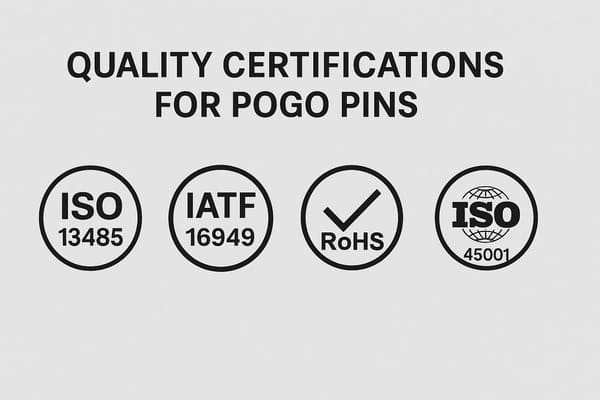
measurement capability rather than the number of inspection machines.
4. Does the Supplier Control the Drawing and Revision?
A physical golden sample can help confirm appearance, fit and user
interaction.

It should not replace a controlled engineering specification.
The approved production package may need to define:
- drawing number;
- revision;
- critical dimensions;
- Pin Map;
- working stroke;
- contact-force requirements where applicable;
- material or finish requirements where necessary;
- mating-target requirements;
- termination;
- inspection requirements.
5. Is the Supplier’s Capacity Relevant to Your Project?
Factory capacity is often misunderstood during sourcing.

Four different numbers should be separated:


    Aggregate Factory Capacity
    →
    Available Capacity
    →
    Project-Specific Capacity
    →
    Reserved Capacity


A manufacturer may advertise a high aggregate monthly output without
telling the buyer:- how much capacity is currently available;
- which line will produce the connector;
- whether the capacity applies to the same connector family;
- whether tooling is shared with other programs;
- how much capacity can be reserved during ramp-up.
A stronger sourcing question is:


    “What validated and reservable capacity is available for this approved
    connector revision?”
6. Are the Supplier’s Certificates Actually Applicable?
A certificate logo displayed on a website should not be treated as the end
of the audit.
Where certification is required, verify:
- legal company name;
- manufacturing-site address;
- certificate number;
- issuing body;
- validity date;
- scope of certification;
- whether the quoted product is produced within that scope.
Quality-system certification and product-performance qualification are also
different issues.
7. How Does the Supplier Control Engineering Changes?
The connector that passed your qualification can change if the supplier
later changes:- spring material;
- contact plating;
- mating-target structure;
- magnet source;
- housing material;
- tooling;
- assembly process;
- manufacturing site.
The commercial and quality agreement should define which changes require
notification, review or customer approval.
A Better Magnetic Pogo Pin Supplier Qualification Process
Instead of requesting ten prices and selecting the cheapest supplier, use a
staged qualification process.


    Supplier Discovery
    →
    Technical RFQ
    →
    Drawing Review
    →
    Engineering Sample
    →
    Validation
    →
    Pilot Production
    →
    Process Review
    →
    Approved Supplier
    →
    Mass Production
Stage 1: Supplier Discovery and Desk Review
Confirm:
- relevant product experience;
- engineering contact capability;
- factory and legal entity;
- basic manufacturing processes;
- quality-system requirements;
- commercial fit.
Stage 2: Technical RFQ
Send every shortlisted supplier the same engineering package.

This creates a much more meaningful comparison of:- technical response;
- connector proposal;
- tooling requirement;
- prototype cost;
- production cost;
- lead time;
- engineering questions.
Stage 3: Engineering Sample
Validate:
- fit;
- mating behavior;
- working stroke;
- Pin Map;
- contact stability;
- power performance;
- signal performance where applicable;
- retention and release behavior;
- project-specific environmental requirements.
Stage 4: Pilot Production
The goal now changes from:

“Can one connector work?”
to:
“Can the process repeatedly produce the approved connector?”The pilot run should help evaluate:
- dimensional distribution;
- force distribution;
- electrical distribution;
- assembly yield;
- inspection capability;
- traceability;
- packaging and handling;
- actual production lead time.
Stage 5: Approved Supplier and Production Control
Once the supplier is approved, continue controlling:- drawing revision;
- CTQs;
- incoming materials where required;
- production process;
- inspection records;
- lot traceability;
- engineering changes;
- capacity and delivery performance.
Magnetic Pogo Pin Supplier Comparison Scorecard
Rather than creating one universal manufacturer ranking, use a
project-specific scorecard.| Evaluation Area | Key Question | Score |
|---|---|---|
| Technical Fit | Has the supplier built a comparable connector architecture? | 1–5 |
| Engineering Support | Can the team review Pin Map, stroke, tolerance and mating target? | 1–5 |
| Prototype Capability | Can the supplier convert requirements into testable samples? | 1–5 |
| Validation Capability | Can required electrical, mechanical and environmental tests be supported? | 1–5 |
| Drawing Control | Are specifications and revisions formally controlled? | 1–5 |
| Process Capability | Can critical dimensions and performance CTQs be controlled? | 1–5 |
| Traceability | Can lots, revisions and critical materials be traced where required? | 1–5 |
| Project Capacity | Can sufficient capacity actually be reserved for the program? | 1–5 |
| Change Control | Will material, tooling or process changes be communicated? | 1–5 |
| Commercial Fit | Do tooling, MOQ, lead time and commercial terms fit the project? | 1–5 |
| Communication | Can engineering questions be resolved accurately and efficiently? | 1–5 |
Send the Same Technical RFQ to Every Supplier
Quotations cannot be meaningfully compared when every supplier receives
different or incomplete input.| RFQ Input | Information to Provide |
|---|---|
| 2D / 3D Files | Available connector envelope and mating geometry |
| Pin Map | Function of each contact |
| Voltage / Current | Continuous, peak and duty-cycle conditions |
| Signal Requirement | Power only, control signals or defined communication channel |
| Working Stroke | Minimum, nominal and maximum requirement |
| Mating Tolerance | X-Y-Z and angular variation |
| Magnetic Requirement | Capture, retention and release behavior |
| Environment | Temperature, moisture, sweat, salt, chemicals or dust |
| Lifecycle | Mission profile and end-of-life criteria |
| Production Volume | Prototype quantity, pilot volume, annual forecast and ramp schedule |
| Compliance | Project-specific material, quality or regulatory requirements |
Red Flags When Evaluating a Magnetic Pogo Pin Supplier
Be cautious when a supplier:
-
quotes current capability without asking about working stroke,
temperature or complete electrical path; - claims a specific data rate only from pin count;
- claims IP68 without defining the tested connector or assembly;
- provides a lifecycle number without explaining test conditions;
- cannot provide a controlled drawing revision;
- cannot identify the connector’s CTQs;
- treats a golden sample as the complete production specification;
- cannot explain whether critical processes are internal or outsourced;
- uses aggregate factory capacity as guaranteed project capacity;
- cannot explain how engineering or material changes are controlled.

produce and inspect the CTQs required by the approved connector design.
Prototype Capability and Mass-Production Capability Are Different
A supplier may produce an excellent prototype using additional manual
selection, adjustment or engineering attention.

The mass-production question is different:


    Can normal production repeatedly reproduce that prototype inside the
    approved tolerance window?
During pilot production, examine:
- dimension distribution rather than one measurement;
- contact-force distribution;
- electrical-test distribution;
- assembly yield;
- rework rate;
- process stability;
- inspection capability;
- lot traceability.
Tape-and-Reel Does Not Automatically Mean SMT-Ready
Some pogo pins and connector assemblies may be supplied in tape-and-reel
packaging.

Packaging format alone does not prove compatibility with the customer's
SMT process.
Engineering review may still need to confirm:
- PCB pad geometry;
- pick-up surface;
- nozzle accessibility;
- component center of gravity;
- coplanarity;
- reflow compatibility;
- solder paste volume;
- post-reflow installed height.
AOI Does Not Replace Electrical and Mechanical Testing
Automated optical inspection can be useful for selected visual and
dimensional characteristics.

However, it does not automatically confirm:- contact force at a defined working stroke;
- internal spring performance;
- contact resistance;
- complete-path voltage drop;
- temperature rise;
- mating lifecycle;
- magnetic retention behavior.
Supplier qualification should therefore map every critical requirement to
an appropriate inspection or validation method.
Do Not Let Factory Capacity Numbers Mislead the Sourcing Decision
A large production number displayed on a company profile can be useful
background information, but it should not be converted directly into a
project delivery guarantee.| Capacity Term | What It Actually Means |
|---|---|
| Aggregate Factory Capacity | Total nominal output across products and lines |
| Available Capacity | Capacity currently not allocated to other orders |
| Project Capacity | Output achievable for the specific approved connector |
| Reserved Capacity | Capacity formally planned or protected for the customer’s program |
These are four different numbers.Should You Qualify a Second Pogo Pin Supplier?
For programs where supply continuity is important, a second-source strategy
can be worth evaluating.

However, two connectors that look identical are not automatically
interchangeable.
Differences may exist in:
- free height;
- working stroke;
- contact force;
- surface finish;
- mating target;
- housing tolerance;
- magnet structure;
- termination;
- production process.
A true second source requires a controlled interface specification and
appropriate validation.
Frequently Asked Questions
Who are some magnetic pogo pin manufacturers in China?
China has multiple manufacturers supplying pogo pins, pogo pin connectors,
magnetic connectors and magnetic cable assemblies. This article provides
ten companies that buyers may evaluate, but it should be treated as a
sourcing shortlist rather than an independent performance ranking.
Who is the best magnetic pogo pin supplier in China?
There is no universal best supplier. The appropriate manufacturer depends
on connector geometry, Pin Map, current, signals, working stroke,
environment, lifecycle, customization depth, production volume and quality
requirements.
How should I compare pogo pin manufacturers?
Compare technical fit, engineering support, validation capability, drawing
control, process capability, traceability, project-specific capacity,
change control and commercial fit instead of unit price alone.
Should I choose the pogo pin factory with the largest capacity?
Not necessarily. Aggregate capacity does not tell you how much capacity is
available or reservable for your specific connector. Ask for
project-specific capacity and ramp planning.
Does a large factory supports better pogo pin quality?
No. Factory scale and connector quality are different. Quality depends on
the approved specification, CTQ control, process capability, inspection,
traceability and engineering-change management.
What test data should I request from a pogo pin manufacturer?
Depending on the project, useful information may include contact resistance,
force at working stroke, voltage drop, temperature rise, lifecycle testing
and environmental validation. The test conditions and acceptance criteria
should be reviewed together with the result.
How do I verify a supplier’s IP68 magnetic connector claim?
Ask which exact connector or complete assembly was tested, the tested
configuration, mating state, applicable test method, sample condition and
acceptance criteria. An IP result from one connector should not
automatically be transferred to another custom design.
How do I verify a high-current pogo pin claim?
Review the complete electrical path and request voltage-drop and
temperature-rise data under representative working stroke, mating target,
ambient temperature and duty-cycle conditions.
Does tape-and-reel packaging mean a pogo pin is SMT ready?
No. SMT compatibility also depends on PCB pad design, pick-up geometry,
reflow compatibility, coplanarity and post-reflow installed height.
Is AOI enough for pogo pin quality inspection?
No. AOI can verify selected visible characteristics, but force, electrical,
magnetic, thermal and lifecycle characteristics may require separate
measurement.
Should I qualify more than one pogo pin supplier?
A second source can improve supply continuity for some programs, but
interchangeability requires controlled drawings and validation. Similar
appearance does not ensure equivalent connector behavior.
What should I send a Chinese magnetic connector manufacturer for a quotation?
Provide the available X-Y-Z space, Pin Map, voltage, current, signal
requirements, working stroke, mating geometry, magnetic behavior,
environmental conditions, lifecycle requirements, production forecast and
available 2D or 3D files.
Request a Magnetic Pogo Pin Supplier Engineering Review
If you are comparing Chinese magnetic connector suppliers for a new OEM
project, start with the interface specification rather than a catalog part
number.

Explore

    CTP custom magnetic connector solutions

for removable charging, docking and modular interfaces.

Review

    CTP pogo pin and spring-contact connector solutions

for different contact layouts and mounting structures.

Learn more about CTP engineering and manufacturing capabilities on the

    About Us page
.

Submit your drawings, Pin Map, voltage, current, working stroke,
environmental requirements and production forecast through the

    Get Quote & Samples page
. Send CTP the same technical package you plan to use for supplier
comparison. Our engineering team can review the connector envelope,
Pin Map, pogo pin working stroke, mating target, magnetic behavior and
PCB, FPC, wire or cable termination before quotation.
Final current capability, signal performance, environmental protection,
lifecycle, production capacity and lead time should be confirmed against
the approved connector revision and project-specific validation plan.