Buyer & Engineering Summary:
A reliable magnetic pogo pin manufacturer should do more than deliver a
prototype that fits and conducts electricity. OEM teams need evidence that
the approved drawing, critical-to-quality characteristics, inspection
methods, production process, traceability, capacity and engineering changes
can remain controlled after the project moves into mass production. The
following five qualification rules provide a practical framework for
evaluating a supplier before design freeze and production release.
A reliable magnetic pogo pin manufacturer should do more than deliver a
prototype that fits and conducts electricity. OEM teams need evidence that
the approved drawing, critical-to-quality characteristics, inspection
methods, production process, traceability, capacity and engineering changes
can remain controlled after the project moves into mass production. The
following five qualification rules provide a practical framework for
evaluating a supplier before design freeze and production release.
What Does “Reliable Manufacturer” Actually Mean?
A magnetic pogo pin manufacturer can produce an impressive engineering
sample and still struggle during mass production.

This happens because prototype success and production reliability answer
two different questions.| Stage | Main Question |
|---|---|
| Prototype | Can this connector design work? |
| Pilot Production | Can the process repeatedly reproduce the design? |
| Mass Production | Can the supplier keep the design, process and quality window controlled over time? |
| Supply Chain | Can materials, capacity, traceability and engineering changes remain controlled? |
Therefore, supplier reliability should not be judged only from:- factory size;
- number of machines;
- prototype appearance;
- catalog current ratings;
- certification logos;
- claimed monthly capacity.
A better definition is:


    A reliable supplier can repeatedly manufacture the approved connector
    inside its defined engineering and quality limits while maintaining
    traceability and controlled changes.
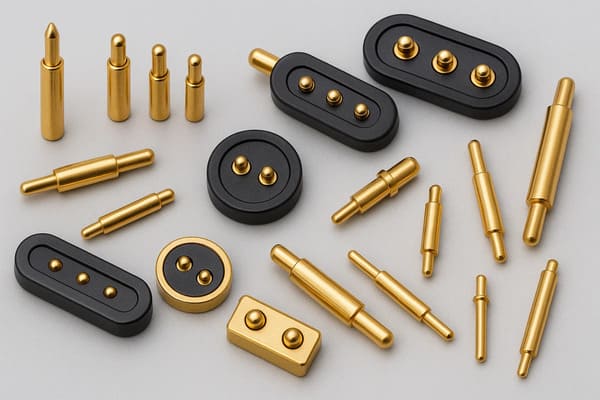
connector requirements can be measured, controlled and reproduced
through production.
Rule 1: Require a Controlled Engineering Specification Before Approving the Supplier
The first sign of a mature custom connector supplier is not the size of its
product catalog.

It is whether the supplier can convert the customer's application into a
controlled engineering specification.

For a magnetic pogo pin interface, that specification may include:- connector outline;
- Pin Map;
- pin pitch;
- installed height;
- pogo pin free height;
- working stroke;
- mechanical datums;
- mating target geometry;
- magnet polarity;
- PCB, FPC, wire or cable termination;
- materials or surface finishes where they are critical;
- electrical and mechanical acceptance requirements.
The Drawing Should Become the Interface Contract
Once the prototype is approved, the engineering drawing should define which
characteristics are allowed to vary and which cannot change without review.

This creates a common reference between:


    Customer Engineering
    ↔
    Supplier Engineering
    ↔
    Quality
    ↔
    Production
A Golden Sample Is Not Enough
A physical reference sample can be useful for confirming:- appearance;
- mating feel;
- connector fit;
- basic functional behavior.
However, a sample cannot define:- dimension tolerances;
- working-stroke limits;
- acceptable contact-force range;
- surface-finish requirements;
- magnet polarity;
- lot acceptance criteria;
- engineering revision.
The golden sample should therefore support the specification rather than
replace it.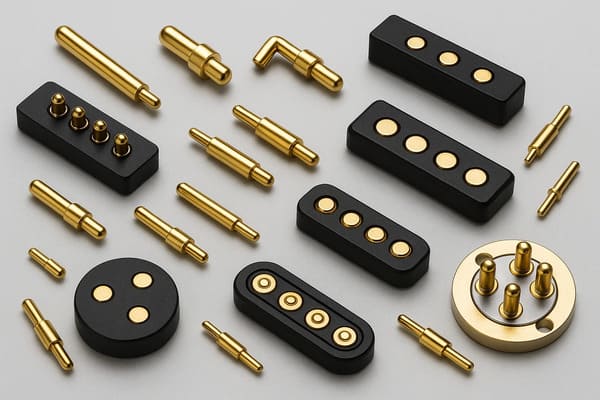
mounting and target specifications. These requirements should be
controlled by the approved design documentation.
Rule 2: Convert Connector Performance into Measurable CTQs
A supplier cannot control a requirement that has never been translated into
a measurable characteristic.

These critical characteristics are often treated as
CTQs — Critical to Quality.| Engineering Function | Possible CTQ | Possible Measurement |
|---|---|---|
| Mechanical Position | Pitch / installed height / datum position | Dimensional inspection |
| Spring Compliance | Working stroke | Height / displacement measurement |
| Contact Mechanics | Force at defined compression | Force-displacement measurement |
| Electrical Path | Resistance or voltage drop | Defined electrical test |
| Magnetic Interface | Polarity / retention behavior | Polarity and force inspection |
| Mating Target | Flatness / position / surface requirement | Dimensional and material inspection |
| Termination | Solder / FPC / wire / cable characteristics | Process-specific inspection |
Do Not Use One Generic Contact-Resistance Number
Electrical measurements only become useful when the measurement condition
is defined.

For example, resistance can vary with:- working stroke;
- mating-target condition;
- measurement location;
- contact force;
- temperature;
- termination structure.
The supplier and customer should therefore agree on both:

the acceptance value and the test method.
AOI Is Only One Inspection Tool
Automated optical inspection can be useful for:- visible assembly features;
- orientation;
- selected dimensions;
- missing or misplaced components.
AOI does not automatically measure:- internal spring force;
- force at working stroke;
- internal contact behavior;
- contact resistance under load;
- temperature rise;
- lifecycle degradation;
- magnetic behavior in every load direction.
Each CTQ should therefore have a suitable measurement or inspection method.Rule 3: Qualify the Production Process, Not Just the Prototype
A prototype is usually produced under higher engineering attention than a
normal mass-production part.

Engineers may manually:- select components;
- adjust assembly;
- inspect individual samples;
- rework cosmetic or dimensional problems.
These activities can hide process variation.

Pilot production should therefore ask:


    Can the normal production process repeatedly manufacture the approved
    connector without relying on extraordinary manual adjustment?
Prototype Success vs Process Capability
| Prototype Question | Production Question |
|---|---|
| Does the sample fit? | What is the dimensional distribution across the lot? |
| Does it conduct? | What is the electrical distribution across production? |
| Does the magnetic force feel correct? | Can polarity and retention remain controlled lot to lot? |
| Can it be assembled? | What is the process yield and rework rate? |
| Does one unit survive testing? | How does variation affect population performance? |
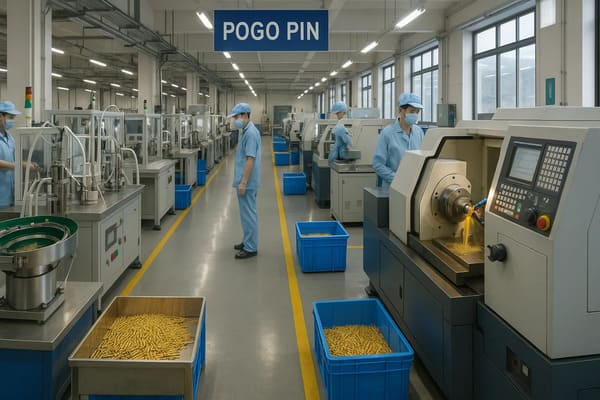
repeatedly produce the approved connector inside the required tolerance
window.
Tape-and-Reel Does Not Automatically Mean SMT-Ready
Some pogo pins and connector assemblies can be supplied in tape-and-reel
packaging.

Packaging format does not by itself confirm compatibility with the
customer's SMT process.
For surface-mount structures, review:
- PCB pad geometry;
- pick-up surface;
- nozzle access;
- component center of gravity;
- coplanarity;
- reflow compatibility;
- solder paste volume;
- post-reflow installed height.
Production Validation Should Include the Real Mating Target
The pogo pin and its mating target form one contact system.

A connector qualified against one laboratory target may behave differently
with the actual production target because of changes in:- flatness;
- surface finish;
- position;
- working stroke;
- housing tolerance.
Production validation should therefore use a representative target and
complete assembly wherever practical.
Rule 4: Audit Capacity, Traceability and Supply Continuity Separately
A large factory does not automatically mean a secure supply chain.

Capacity is frequently misunderstood because four different numbers are
combined into one marketing claim.| Capacity Type | Meaning |
|---|---|
| Aggregate Factory Capacity | Total nominal output across products and production lines |
| Available Capacity | Capacity that is not currently allocated to other programs |
| Project Capacity | Output achievable for the specific connector revision |
| Reserved Capacity | Capacity formally planned or protected for the customer project |
These numbers should not be treated as equivalent.Ask Which Process Is the Real Bottleneck
A connector may pass through:


    Machining
    →
    Plating
    →
    Molding
    →
    Magnet Assembly
    →
    Connector Assembly
    →
    Electrical Test
    →
    Final Inspection
    →
    Packaging


The total output is limited by the process that constrains the actual
product.

Therefore, procurement teams should ask:- Which production line will manufacture our connector?
- Which processes are internal?
- Which processes are outsourced?
- Which process determines project throughput?
- How much capacity can be reserved?
- What happens during seasonal demand peaks?
Traceability Matters When a Problem Appears
Reliable manufacturing does not mean defects can never occur.

It means that when an abnormality occurs, the supplier can identify what
changed and which product is affected.
Depending on project requirements, traceability may include:
- production lot;
- drawing revision;
- material lot;
- plating batch;
- magnet lot;
- assembly date;
- inspection result;
- shipment lot.

project-specific and reserved production capacity.
Rule 5: Require Formal Change Control Before Mass Production
One of the most underestimated supplier risks appears after the product has
already passed qualification.

A magnetic pogo pin connector can change if the supplier changes:- spring material;
- plunger or barrel material;
- contact plating;
- mating-target finish;
- magnet source;
- magnet coating;
- housing resin;
- adhesive;
- tooling;
- assembly equipment;
- manufacturing site;
- critical sub-supplier.
A Previously Qualified Connector Can Become a Different Connector
Even when the external dimensions remain unchanged, a material or process
change can affect:- contact force;
- contact resistance;
- working stroke;
- wear behavior;
- magnetic retention;
- reflow behavior;
- environmental performance;
- lifecycle.
Therefore, the supplier agreement should define which changes require:- notification;
- customer review;
- new samples;
- partial requalification;
- full requalification.
Check Whether Quality Certificates Actually Apply
A certificate logo on a supplier website should not automatically be
interpreted as product qualification.
If a quality-system certificate is required, verify:
- legal company name;
- manufacturing-site address;
- certificate number;
- issuing body;
- validity;
- scope;
- whether the quoted product is manufactured within that scope.
Quality-system certification and connector-performance validation are two
different requirements.
Five-Gate Manufacturer Qualification Process
The five rules can be converted into a practical approval workflow.| Gate | Required Evidence | Decision |
|---|---|---|
| Gate 1 — Design | Approved interface concept and controlled drawing | Can the supplier understand and document the design? |
| Gate 2 — CTQ | Critical characteristics and test methods | Can performance requirements be measured? |
| Gate 3 — Pilot | Representative production samples and process data | Can the process reproduce the approved design? |
| Gate 4 — Supply | Capacity plan, traceability and process route | Can the project be supplied at the required scale? |
| Gate 5 — Control | Revision and engineering-change procedure | Can the approved design remain controlled over time? |
Supplier Audit Checklist for Magnetic Pogo Pin Projects
| Audit Area | Questions to Ask |
|---|---|
| Engineering | Can you review Pin Map, working stroke, target and tolerance stack? |
| Drawing Control | How are drawing numbers and revisions controlled? |
| CTQs | Which characteristics are critical to this connector? |
| Measurement | How is each CTQ inspected or tested? |
| Prototype | Which prototype processes differ from mass production? |
| Pilot Run | What production data will be collected before approval? |
| Materials | Which materials or surface finishes are specification-controlled? |
| Outsourcing | Which processes are performed by external suppliers? |
| Traceability | Can affected lots be identified after a field problem? |
| Capacity | What project-specific capacity can be allocated? |
| Change Control | Which changes require customer notification or approval? |
| Continuity | What are the major supply-chain bottlenecks and backup plans? |
Red Flags When Choosing a Magnetic Pogo Pin Manufacturer
Be cautious when a potential supplier:
- provides a current rating without asking about working stroke or temperature;
- claims a data rate only from pin count;
- claims IP68 without identifying the tested connector configuration;
- gives a mating-life number without test conditions;
- cannot provide a controlled drawing revision;
- cannot explain which characteristics are CTQs;
- treats the approved sample as the only production specification;
- cannot identify which processes are outsourced;
- quotes factory-wide capacity as guaranteed project capacity;
- cannot explain its engineering-change procedure.
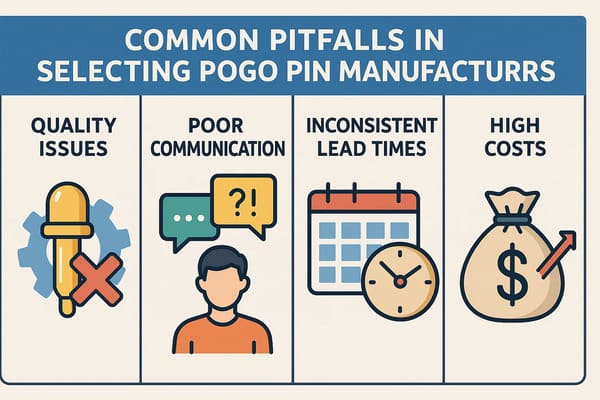
variation, undocumented changes or project-capacity constraints begin
to affect production.
What Should You Send a Manufacturer Before Requesting a Quote?
A supplier cannot provide a meaningful engineering quotation from a product
photo alone.| RFQ Input | Information to Provide |
|---|---|
| Product Architecture | Which two assemblies need to connect? |
| Available Space | X, Y and Z connector envelope |
| Pin Map | Power, return, detection, ID and signal functions |
| Voltage / Current | Continuous, peak and duty-cycle conditions |
| Signals | Required control or communication channel |
| Working Stroke | Minimum, nominal and maximum compression |
| Mating Tolerance | X-Y-Z and angular variation |
| Magnetic Requirement | Capture, retention and separation behavior |
| Environment | Temperature, water, sweat, dust, oil or chemicals |
| Lifecycle | Expected mating profile and end-of-life criteria |
| Volume | Prototype, pilot and annual production forecast |
| Project Files | 2D drawing, 3D model, PCB layout or enclosure assembly |
Frequently Asked Questions
How do I find a reliable magnetic pogo pin manufacturer?
Look beyond factory size and prototype appearance. Evaluate drawing control,
CTQs, test capability, pilot-production repeatability, project-specific
capacity, traceability and engineering-change control.
What makes a pogo pin manufacturer reliable?
Reliability means the supplier can repeatedly manufacture the approved
connector within its defined mechanical, electrical and quality limits while
maintaining controlled processes, traceability and revisions.
Is a large pogo pin factory automatically more reliable?
No. Factory scale can support production, but quality depends on process
capability, specifications, inspection, traceability and change control.
How should I evaluate pogo pin production capacity?
Separate aggregate factory capacity from available capacity,
project-specific capacity and capacity actually reserved for the program.
Is AOI enough to inspect magnetic pogo pin connectors?
No. AOI is useful for selected visual characteristics, but contact force,
resistance, magnetic behavior, temperature rise and lifecycle performance
may require separate measurements.
Does tape-and-reel mean a pogo pin is SMT compatible?
No. PCB pad geometry, pick-up surface, reflow compatibility, coplanarity,
solder process and post-reflow installed height must also be considered.
Should a pogo pin supplier provide a controlled drawing?
Yes for a custom production program. The approved drawing should identify
the connector revision, critical dimensions, Pin Map, working stroke and
other project-specific requirements.
Is a golden sample enough for mass production?
No. It can support appearance and fit evaluation, but it cannot replace a
controlled dimensional, material, electrical and quality specification.
Why is engineering change control important?
Material, plating, magnet, resin, tooling or manufacturing-process changes
can alter connector performance even when the external dimensions remain
unchanged.
Should supplier certificates be verified?
Yes. When a project requires certification, verify the legal entity,
manufacturing site, issuing body, validity and certificate scope rather
than relying only on a logo shown on a website.
How should I qualify a magnetic pogo pin supplier before mass production?
A practical sequence is technical RFQ, drawing review, engineering sample,
CTQ validation, pilot production, process review, capacity confirmation and
controlled production release.
What information should I send a magnetic pogo pin manufacturer?
Provide the product architecture, available space, Pin Map, voltage,
current, signal requirements, working stroke, mating tolerance, magnetic
behavior, environment, lifecycle requirement, production forecast and
available engineering files.
Request a Magnetic Pogo Pin Manufacturing Review
Explore

    CTP custom magnetic connector solutions

for removable charging, docking and modular product interfaces.

Review

    pogo pin and spring-contact connector solutions

for project-specific contact layouts and mounting structures.

Learn more about CTP engineering and manufacturing capabilities on the

    About Us page
.

Submit your drawings, Pin Map, voltage, current, working stroke,
environmental requirements and production forecast through the

    Get Quote & Samples page
.
Qualifying a magnetic pogo pin manufacturer for a new OEM project?
Send CTP your connector envelope, Pin Map, working stroke, voltage,
current, mating target, magnetic requirements and production forecast.
The interface can be reviewed before quotation so that prototype and
production requirements are based on the same engineering definition.
Final electrical performance, lifecycle, environmental protection,
production capacity and lead time should be confirmed against the
approved connector revision and project-specific validation plan.