Introduction
Need a secure, long-lasting, and efficient way to deliver power to your low-voltage devices? A 2-pin DC power connector remains one of the most widely deployed interfaces for direct current (DC) electricity transmission. From powering standard CCTV surveillance arrays to integrating rugged industrial automation control panels, choosing the right electrical interface directly dictates your system’s uptime, reliability, and thermal stability.
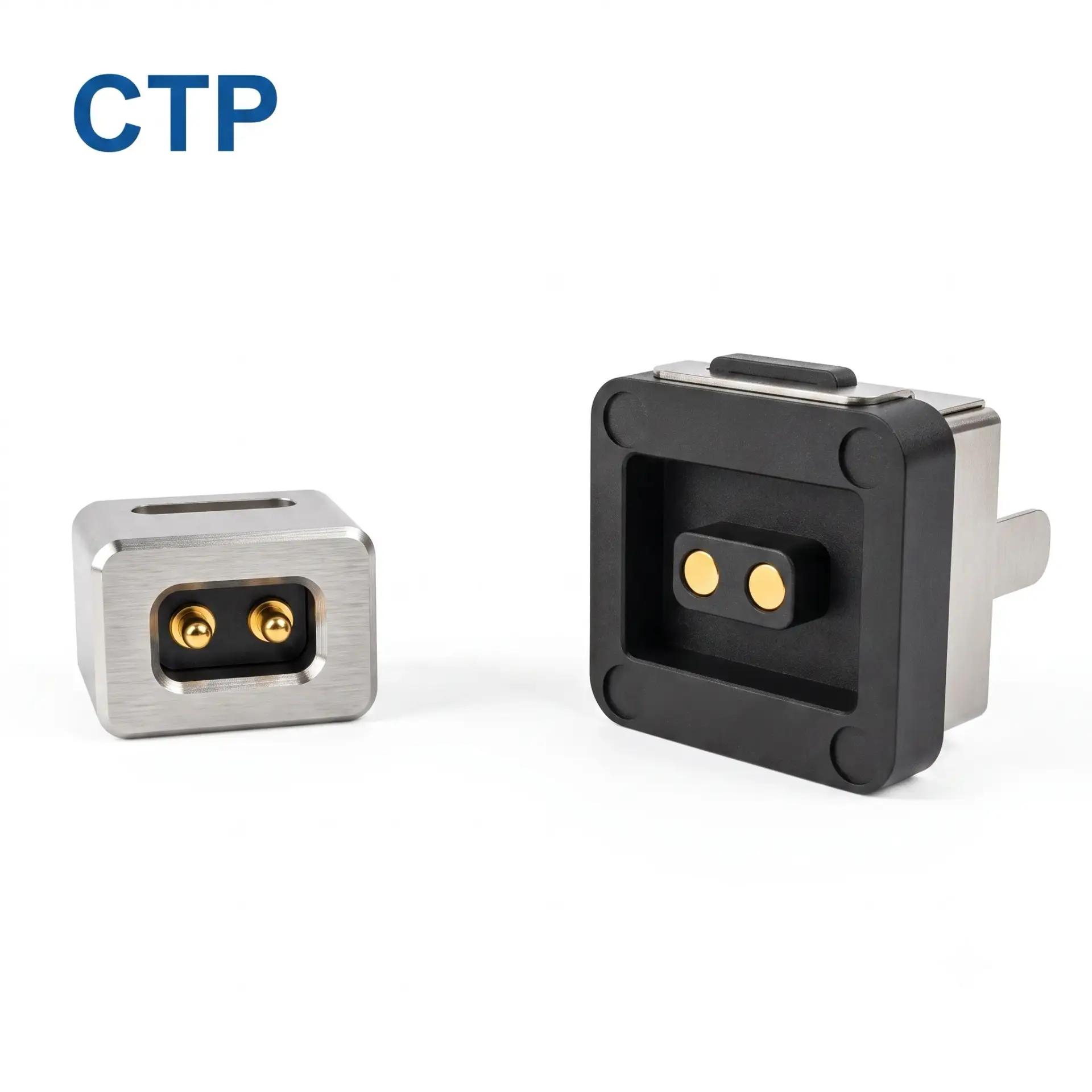
Figure 1: CTP Custom High-Current 2-Pin Magnetic DC Power Connector (12V/5A Rated)
In this comprehensive engineering guide, we will break down the core mechanics of 2-pin DC connectors, analyze critical selection constraints (such as contact resistance and mating cycles), and explore how modern 2-pin magnetic pogo pin alternatives are reshaping hardware design for smart wearables, medical devices, and IoT hardware.
What Is a 2-Pin DC Power Connector?
At its core, a 2-pin DC power connector is a two-pole plug-and-socket interconnect designed to establish a closed-loop electrical pathway between a power source and a load.
[Positive Terminal (+)] ---> [Contact Pin / Blade] ---> [Secure Housing]
[Negative Terminal (-)] ---> [Contact Sleeve/Receptacle] ---> [Locking Mechanism]
Standard industrial and consumer variants typically feature:
- Two Dedicated Terminals: One positive (+) and one negative (-) pole, strictly configured to prevent polarity reversal.
- Insulated Housing: Engineered from high-performance polymers (e.g., PA66 or LCP) rated at UL94V-0 flame retardancy to prevent electrical arcing and thermal degradation.
- Retention Mechanisms: Ranging from simple friction-fit barrel styles (such as 5.5×2.1mm or 5.5×2.5mm plugs) to screw-locking, bayonet, or snap-on interfaces for high-vibration applications.
Operating typically within the 12V to 48V DC threshold, these connectors form the backbone of modern low-voltage power distribution.
Critical Technical Features to Look For in a 2-Pin Connector
When sourcing electronic components, relying on vague marketing claims can lead to catastrophic field failures, micro-sparks, or thermal runaway. Engineers must audit the following strict DFM (Design for Manufacturing) and electrical criteria:
1. Voltage & Current Ratings (Ampacity Constraints)
Never run a connector at 100% of its rated capacity. For optimal circuit safety, implement a minimum 20% safety margin (derating factor).
- Standard Low-Power: 12V–24V DC, rated at 1A to 3A (ideal for consumer routers, smart home hubs).
- Heavy-Duty / High-Amp: Up to 48V DC, supporting continuous currents from 5A to a project-defined high-current requirement (required for AGVs, power tools, and industrial drives).
2. Contact Resistance & Material Metallurgy
High contact resistance converts electricity into heat, degrading the connector housing over time.
- Premium Metallurgy: Look for precision-machined brass or copper alloy base materials.
- Plating Thickness: Demand gold plating (e.g., 3μ” to 30μ”) or thick nickel plating. This ensures an ultra-low contact resistance of < 20mΩ max, preventing corrosion and maintaining signal integrity through thousands of mating cycles.
3. Environmental Protection (IP Ratings)
For outdoor deployment, moisture ingress will cause rapid galvanic corrosion.
- Indoor Layouts: Standard open-ended friction-fit terminals.
- Harsh Environments: Specify an IP67 or IP68 waterproof rating. These designs utilize internal silicone O-rings and over-molded cable assemblies to withstand water submersion and dust penetration.
2-Pin DC Connectors vs. Modern Magnetic Alternatives
While traditional 2-pin barrel or snap-on DC connectors are cost-effective for static, fixed installations, modern hardware design often demands greater durability, faster mating, and sleek form factors. This is where 2-pin magnetic connectors (utilizing spring-loaded pogo pins) excel.
By combining rare-earth a project-specified magnet grade neodymium magnets with precision pogo pin contacts, magnetic interconnects allow for seamless, zero-force blind mating while offering an exponentially longer operational life.
| Technical Feature | Traditional 2-Pin DC Barrel / Plug | 2-Pin Pogo Pin Connector | CTP Advanced 2-Pin Magnetic Connector |
|---|---|---|---|
| Connection Method | Manual mechanical insertion | Friction / Compression fit | Automatic magnetic alignment |
| Mating Cycles (Lifespan) | ~2,000 to 5,000 cycles | ~10,000 to 20,000 cycles | 50,000 to 100,000+ cycles |
| Contact Resistance | < 30mΩ to 50mΩ | < 25mΩ | < 15mΩ to 20mΩ (Ultra-Stable) |
| Breakaway Safety | None (Risk of port damage if pulled) | None | Instant breakaway (Zero port damage) |
| Waterproof Design | Difficult / Bulky | Moderate | Seamless Project-Specific IP Target Integration |
| Space Footprint | Large (Deep PCB profile required) | Ultra Low Profile | Ultra Low Profile & Customizable Shapes |
🔥 Upgrading from Traditional DC Plugs?
Discover how CTP’s newly launched 12V 5A 2-Pin Magnetic DC Power Connector elevates next-gen hardware design with automatic NdFeB alignment, anti-vibration stability, and 50,000+ mating cycles.
When to Specify a Traditional 2-Pin DC Connector:
- Fixed, static power infrastructures (e.g., stationary industrial control panel setups).
- Internal board-to-board power links that are rarely disconnected.
- Extreme cost-sensitive consumer appliances where user interaction is minimal.
When to Upgrade to a 2-Pin Magnetic Interconnect:
- Smart Wearables & IoT: Smartwatches, AR/VR headsets, and fitness trackers requiring ultra-compact profiles.
- Medical Equipment: Portable ventilators and patient monitors requiring fast, sterile, and error-free blind mating (IEC 60601 compliant environments).
- High-Frequency Charging Docks: Handheld industrial scanners, data terminals, and mobile robots undergoing hundreds of charging cycles daily.
Industrial Applications of High-Performance 2-Pin Interconnects
Industrial-grade power delivery demands heavy-duty construction capable of resisting continuous mechanical shock, wide temperature fluctuations (-40°C to +105°C), and chemical exposure. High-quality 2-pin connectors are foundational in the following sectors:
- Industrial Automation & Robotics: Transmitting stable DC current to field-level sensors, proximity switches, and multi-axis robotic actuators.
- Renewable Energy Grid Infrastructure: Low-voltage DC distribution links in localized solar photovoltaic tracking systems and battery storage modules.
- Medical & Laboratory Diagnostics: Ensuring zero-fault power supply to critical testing instruments and handheld point-of-care telemetry devices.
- Surveillance & Smart Security: Weatherproof IP67-rated 2-pin links ensuring 24/7 continuous operation for outdoor PTZ cameras and infrared illuminators.
Installation & Electrical Safety SOP (Standard Operating Procedure)
To achieve zero-defect field performance, engineers and assembly technicians must adhere to strict installation protocols:
- Enforce Absolute Polarity Verification: Always utilize a digital multimeter to confirm positive and negative terminal matching before applying loads. Reverse polarity can instantly destroy downstream ICs.
- Incorporate Strain Relief Mechanisms: Wire-to-board and wire-to-wire connections must feature over-molded strain relief boots or mechanical cable clamps to prevent pulling stresses from fracturing the solder joints.
- Deploy Proper Insulation: Utilize polyolefin heat-shrink tubing over exposed wire splices to eliminate micro-shorts and protect copper strands from atmospheric oxidation.
- Strictly Adhere to Ambient Temperature De-rating: If your operating environment exceeds 60°C, the maximum allowable current carrying capacity of the 2-pin connector drops. Refer to the manufacturer’s thermal de-rating curve chart.
Conclusion: Sourcing Your 2-Pin Power Solutions
Selecting the optimal 2-pin power connection architecture requires balancing electrical ampacity, environment constraints, and desired cycle life. For legacy, non-vibrating fixed installations, high-quality traditional 2-pin DC plugs from premium global distributors represent a standard solution.
However, if your next-generation hardware architecture demands premium aesthetic integration, robust waterproof sealing, ultra-low contact resistance, and a lifetime reaching up to a model-specific cycle-life target validated under defined test conditions, upgrading to a custom magnetic pogo pin solution is the premier choice.
Partner with CTP Electronics
As an ISO 9001 certified manufacturer of custom connector solutions, CTP Electronics delivers cutting-edge interconnect solutions tailored to your exact parameters. We provide:
- Prototype Timing After Engineering Review for standard samples and fast-turnaround DFM reviews.
- Customization Modules: Tailored 2-pin to multi-pin high-current magnetic charging connectors (supporting up to 10A+).
- Strict Quality Control: 100% CCD automated optical inspection and micro-ohm level dynamic contact resistance testing.
Accelerate Your Interconnect Design with CTP
Whether you require standard 2-pin configurations or custom high-current magnetic modules, our engineering desk offers Prototype Timing Confirmed After Engineering Review dispatch and full DFM reviews.
🛠️ B2B Component Procurement Checklist
- Confirmed operating Voltage (V) and Current (A) with a 20% safety margin.
- Evaluated environment needs (Standard Indoor vs. Project-Specific IP Target Waterproofing).
- Audited mating cycle requirements (Friction barrel plug vs. 50k+ cycle magnetic pogo pin).
- Verified compliance certifications (RoHS, REACH, UL94V-0 Flame Retardancy).
- Review the manufacturer’s current ISO 9001 certificate and its scope alongside the project-specific connector requirements.