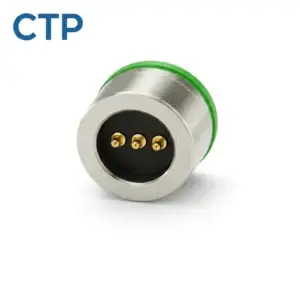
Your next product version may need a smaller housing, a different board connection or a cable that reaches a new accessory position. The magnetic interface can still be a useful part of the design. A custom cable gives you ways to adapt the assembly around those changes.
At CTP, we offer choices in contact arrangement, cable length, branch structure, housing and opposite-end termination. Those choices are valuable during the first development, and they can also help when the product evolves. Cable assembly revision control gives each agreed version a clear identity, so a useful design change does not become an unclear reorder.
The appeal for an OEM buyer is simple: you can work from a recognizable cable structure and develop the details the new device needs. Our wire-ended, USB-connected, branched and double-ended formats provide different starting points for that conversation.
A custom magnetic cable gives the next version room to improve
A product often improves through several small decisions. The board moves a little farther inside the enclosure. The cable entry shifts to make the device easier to hold. A removable accessory needs a shorter lead. None of those changes necessarily means the entire connection idea has to be abandoned.
Our cable customization options let the team look at the parts of the assembly affected by the new design. Lead length can relate to a different board position. A branch can reach a new module location. Housing and strain-relief choices can reflect the revised route beside the device.
The practical benefit is a more focused development discussion. You can explain what the existing structure does well and what the next version needs to do differently. That gives the cable review a concrete starting point instead of treating every update as an unrelated product search.
Compatibility still belongs to the agreed mechanical and electrical design. A similar appearance is not a guarantee that two versions are interchangeable. Clear version definition supports the flexibility of a custom cable by keeping the intended differences understandable.
Five wire leads can adapt to a board that moves within the housing
Our five-contact magnetic cable with individual leads, CTP-MCC-5P-LIN-WL-01, leaves several options at the internal end. The conductors can connect to a board, module or harness, with wire length and end processing developed for the project.
A five-lead assembly can follow a new board position
Imagine a handheld instrument being redesigned around a smaller enclosure. Its sensor board remains useful, but the internal mounting position changes. A wire-ended cable gives the team room to adjust the lead reach and connection route while keeping a defined magnetic face on the outside.
That can make the new arrangement easier to develop. The board team can retain a suitable connection method, while the mechanical designer places the external interface where it works with the new housing. The individual leads bridge those two choices.
The version record then identifies the actual assembly being ordered, including the agreed lead arrangement and termination. This turns an easily described customization into a specific product version, which is useful when the earlier device remains in service alongside the newer one.
Dual branches make a new module position easier to accommodate
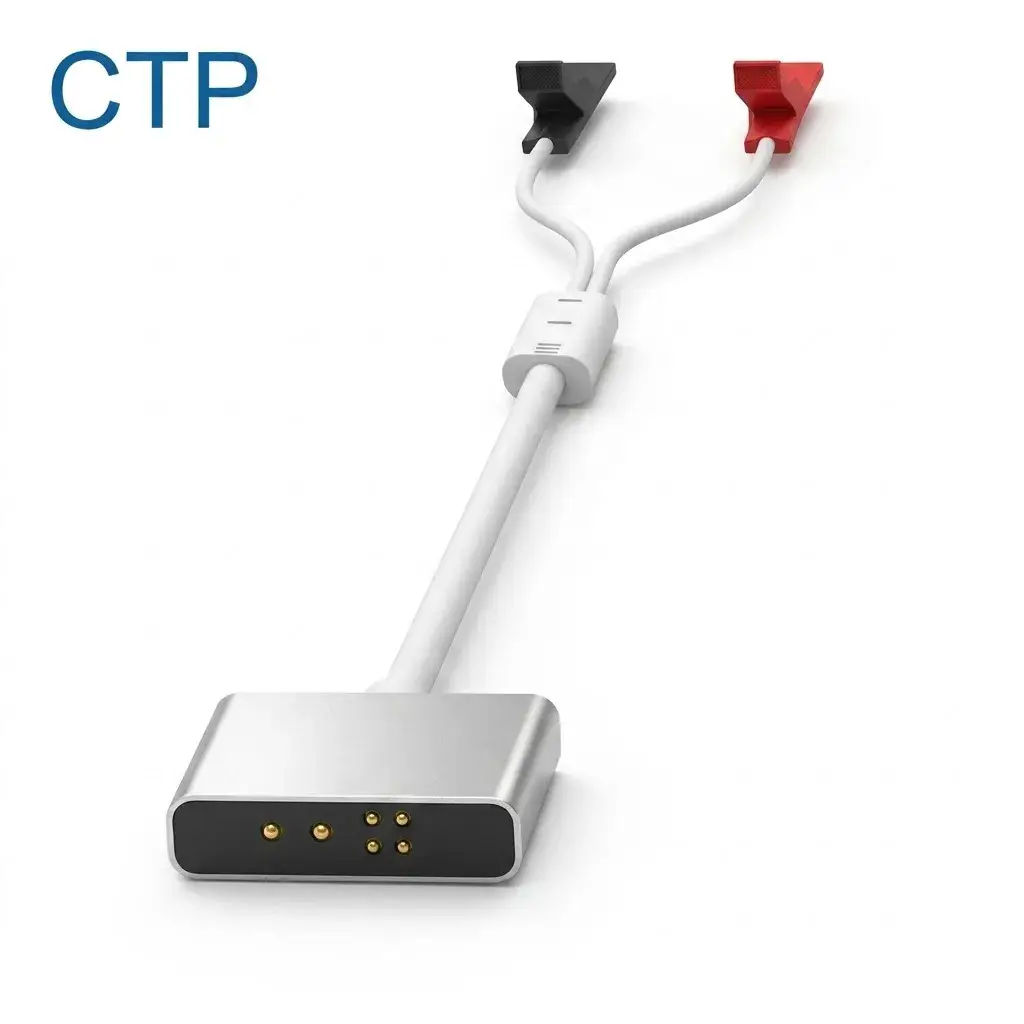
The six-contact magnetic cable with two branch terminations provides another kind of development freedom. Its main lead and branches can be reviewed around two internal destinations rather than one fixed endpoint.
Two branch lengths can evolve with a controller and sensor layout
One product version may place the sensor close to the main board. A later enclosure may move it closer to the measured area or make room for a larger display. The two-branch structure lets the cable discussion follow those physical changes.
The branch reaching the sensor can be considered for its new route, while the controller branch is reviewed for its own connection. Terminal structure, wire color and conductor requirements can also reflect the revised arrangement. These are practical customization choices tied to the product’s layout.
The benefit is an interconnect concept that can remain understandable as the device changes. The magnetic head presents the outside interface; the branches serve the locations behind it. Defining the new version clearly helps purchasing distinguish the revised harness from the earlier one.
USB-A and USB-C options help the accessory suit its surrounding equipment
A device may be used in more than one equipment arrangement. Some installations have an established USB-A connection; others call for a USB-C source. Our cable range offers both source-end formats with custom magnetic interfaces.
A familiar USB source end can belong to a device-specific cable
The four-contact USB-A magnetic cable combines a USB-A plug with a linear magnetic head. The four-contact USB-C assembly includes a USB-C plug, magnetic head and matching PCB-mount connector. They are different starting arrangements for the surrounding equipment and device integration.
For an OEM product offered with different accessories, this choice can be useful. The source-side connection can reflect the intended installation, while the magnetic interface is developed for the device. The electrical functions are defined for each complete assembly.
Changing the source plug is still an electrical design decision, especially where identification or communication functions are involved. The useful feature of the range is having recognizable formats to compare. The approved wiring then gives each version its actual meaning.
This is where cable assembly revision control supports the product offering. A buyer can identify which cable version belongs with which source arrangement and device configuration, instead of relying on a description such as “the magnetic charging cable.”

A double-ended magnetic cable can grow with a modular product
Our four-contact cable with magnetic interfaces at both ends is useful when the lead joins two product sections. It gives the team a complete interconnect concept to consider as the positions of those sections evolve.
A main unit and detachable module may sit close together in one arrangement and farther apart in another. Cable length and outlet directions can be reviewed around those positions. Each magnetic end can also be considered for the handling and retention required at its own side.
The advantage is being able to develop the two ends within the same assembly. Their wiring, orientation and cable route all relate to one intended connection. A revised module or housing can therefore be discussed in terms of that connection, rather than as a change to an isolated connector part.
The agreed version identifies the complete build. If a change affects electrical allocation or mating compatibility, that relationship needs to be made clear for the product. If the change is a route or length adjustment, the revised physical arrangement is still described as a specific assembly.
A clear product reference makes custom cable choices easier to discuss
Our catalog uses distinct product references for different cable structures. That gives a buyer and developer a concrete way to identify the starting arrangement: a five-lead linear cable, a USB-C assembly with a PCB mate, a six-contact branched harness or a double-ended magnetic interconnect.
This is useful because two cables can look broadly similar in a small photograph while serving different integration needs. A reference connects the conversation to the intended structure. The project drawing and specification then describe the customized version actually being developed.
For a product family, that clarity helps separate the basic cable format from the details of each device variant. The team can explain which assembly is being discussed and why a particular lead, branch or source connection is required.
It also gives repeat-order discussions a more reliable starting point. The request can identify the agreed build and its version, rather than asking someone to reconstruct the intended cable from an image or a remembered wire color.
Cable assembly revision control can keep useful variants distinct
Sometimes the new product does not replace the old one. Both may continue to be supplied for different equipment arrangements. A shorter cable might suit a compact stand, while a longer version remains useful in another installation.
Custom cable options make those variants possible. Clear version definition helps keep them understandable. The useful differences can be described in the terms that matter to the product: length, termination, branch arrangement, contact assignment or mating structure.
For a purchasing team, that means the cable can be ordered as a specific accessory for a specific configuration. For the product team, it means development freedom does not have to make the accessory range vague. The cable remains connected to the device arrangement it was developed to serve.
The project review brings the cable structure, electrical needs and installation together before sample development. With a recognizable starting format and a clearly described version, you can discuss the accessory in the context of the product it actually belongs with.
A revised internal lead can support a familiar outside connection
The person using the next version of a device may still want the connection experience they already understand. The magnetic face may remain in a convenient position even though the electronics behind it have moved. A custom cable gives the design team a way to explore that relationship between the familiar outside and the changed interior.
With the five-lead assembly, for instance, the internal reach and termination can be developed for the revised board position. The outside interface is reviewed for the intended mating part, while the lead arrangement reflects the new electronics. This keeps the discussion focused on the actual differences between the two builds.
A double-ended magnetic cable offers another example. A modular product might gain an accessory stand that changes the distance between its two sections. A different cable length or outlet arrangement can be considered for that placement, while the two magnetic interfaces are reviewed for their intended compatibility and handling.
For the product maker, the advantage is having several parts of the assembly available for development. You can work on the lead route, source connection, branch reach or mating structure according to what the new arrangement needs. The cable does not have to remain a fixed accessory while every other part of the product evolves around it.
A clear version identity then gives that flexibility a practical boundary. The cable for the new board or stand can be distinguished from the earlier build, and any interchangeability can be agreed for the actual parts. It becomes possible to offer a specific accessory for the revised product while keeping the earlier device’s requirements understandable.
That is useful for a product family as well as for a replacement generation. Different equipment positions can have different cable reaches or source ends, with each arrangement described in terms of the device it serves. The range remains purposeful because the differences correspond to real uses.
A clearly defined cable makes repeat orders more straightforward
The most useful repeat order is for a cable whose intended build is easy to identify. Its magnetic ends, conductors, branch routes and terminations all belong to the same agreed version. That makes the ordering conversation more specific than choosing a connector appearance alone.
The CTP magnetic cable collection provides the starting formats, and our custom development guide explains the relationship between the project requirements and the finished assembly.
Your next device version may need a different lead reach, another source plug or a new branch position. A clear cable definition lets those improvements remain connected to the product they serve. That is the practical value of combining custom cable choices with understandable revision control.