Choosing the right magnetic pogo pin manufacturer in China is primarily a project-matching decision. The best supplier for an individual spring-loaded contact may not be the best supplier for a complete magnetic connector, molded cable assembly or sealed device-side module.
Before comparing factory size, certificates or quoted capacity, engineers should first define what the supplier must actually design and manufacture. The evaluation should then test whether the supplier can understand the application, identify design risks, build representative samples and reproduce the approved structure using a controlled production process.
A low unit price, a large catalog or an attractive factory presentation does not prove that a manufacturer is suitable for a specific project. Supplier selection should be based on objective evidence connected to the actual connector architecture.
Choose a magnetic pogo pin manufacturer by matching its real process capabilities to your product, then verify the match through a controlled RFQ, DFM review, measurable sample program and production-process assessment. Do not award the project based only on price, certificates, catalog size or general factory capacity.
Start by Defining What the Manufacturer Must Deliver
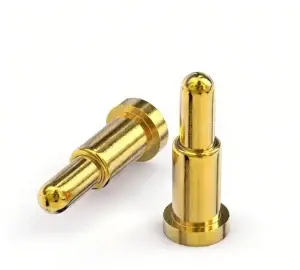
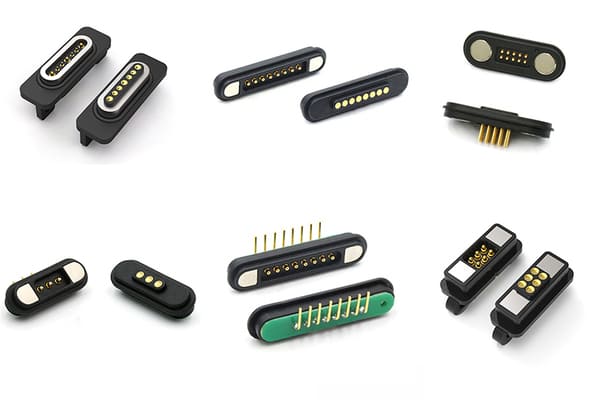
The term “magnetic pogo pin” may refer to several different products.
- an individual spring-loaded pogo pin;
- a plastic housing containing several pogo pins;
- a magnetic connector pair;
- a connector with PCB or FPC termination;
- a device-side magnetic charging module;
- a magnetic cable assembly;
- a molded, potted or sealed connector system.
Each product requires a different combination of engineering and manufacturing capabilities.
| Product type | Required capabilities | Common selection mistake |
|---|---|---|
| Individual pogo pin | Precision machining, spring design, plating control, dimensional and force inspection. | Selecting by external dimensions without checking stroke and force curves. |
| Pogo pin connector assembly | Contact manufacturing, housing, pin-height control, soldering and assembly fixtures. | Assuming a pin manufacturer can automatically control a complete multi-pin assembly. |
| Magnetic connector pair | Pogo pins, magnets, polarity control, housing tolerance, retention-force testing and mating analysis. | Reviewing magnet strength without evaluating total spring load and mating geometry. |
| PCB or FPC module | Connector assembly, PCB or FPC integration, soldering, routing and electrical testing. | Ignoring board-level current paths and assembly tolerances. |
| Magnetic cable assembly | Connector head, cable sourcing, soldering, overmolding, strain relief and cable testing. | Selecting a connector factory without verifying cable-assembly capability. |
| Sealed device module | Mechanical design, molding, gaskets, potting, cable entry and finished-module validation. | Assuming the connector component alone determines the final protection level. |
Manufacturer Type Should Match the Project Type
Not every legitimate supplier has the same business model. Buyers should avoid reducing the decision to “factory versus trading company” without examining who controls the critical processes.
Precision contact manufacturer
This type of supplier may be strongest in:
- individual pogo pins;
- machined receptacles;
- custom plunger geometry;
- spring-force development;
- contact materials and plating.
It may rely on partners for molded housings, cables or complete magnetic assemblies.
Connector assembly manufacturer
This supplier may specialize in:
- multi-pin connector modules;
- plastic housings;
- PCB or FPC integration;
- magnet installation;
- complete electrical testing.
Some internal contact components may be purchased from approved sub-suppliers.
Cable assembly manufacturer
This type may be strongest in:
- wire and cable selection;
- connector-head soldering;
- overmolding;
- strain relief;
- pull and flex testing;
- finished cable packaging.
It may not independently design the internal pogo pin structure.
Full-system development manufacturer
A full-system supplier may coordinate the pogo pins, magnets, housings, PCBs, FPCs, cables and molding processes as one project.
This can reduce supplier interfaces, but the buyer should still determine which processes are performed internally and which are outsourced.
The supplier does not need to perform every process internally. It must, however, understand the critical processes, control the approved sources and take responsibility for the finished product.
An Eight-Step Manufacturer Selection Process
- prepare a controlled project brief;
- test the supplier’s technical interpretation;
- review the quality of its DFM response;
- map the required production processes;
- run a measurable sample program;
- verify the product-specific manufacturing route;
- review tooling, intellectual property and commercial terms;
- score the suppliers using common criteria.
1. Prepare a Controlled Project Brief
Manufacturers cannot provide meaningful technical recommendations when the inquiry contains only a photo, pin count and target price.
A useful project brief should include:
- application and device type;
- connector function;
- pin count and proposed pin map;
- continuous and peak current;
- operating voltage;
- signal or data requirements;
- available connector dimensions;
- mating direction;
- working-compression target;
- permitted lateral and angular misalignment;
- retention or breakaway requirements;
- mounting and termination method;
- environmental exposure;
- expected mating frequency;
- prototype quantity;
- production forecast;
- 2D drawings, 3D models and PCB information.
Separate fixed requirements from open design variables
The inquiry should identify which characteristics are already fixed and which remain open to supplier recommendations.
| Requirement status | Example |
|---|---|
| Fixed | Maximum connector envelope, operating voltage or device-side mounting position. |
| Target | Preferred separation force, temperature rise or sample timing. |
| Open to recommendation | Pogo pin diameter, spring force, magnet dimensions or termination architecture. |
This distinction helps reveal whether the supplier is actually engineering the interface or merely copying the inquiry into a quotation.
2. Test How the Manufacturer Interprets the RFQ
The first supplier response can reveal more than a factory brochure.
A strong technical response should identify missing information and ask questions connected to connector performance.
Useful supplier questions may include:
- Is the stated current continuous or peak?
- What is the peak-current duration?
- Will the connector remain energized while unmated?
- Which contacts carry power, ground, detection and signals?
- Is the connector manually or automatically mated?
- What controls the final compression?
- Is controlled cable breakaway required?
- Can the device tolerate exposed conductive contacts?
- Is the connector expected to transmit a defined data protocol?
- Does the application contain metal particles, sweat, oil or cleaning chemicals?
A supplier that immediately provides a final price and promises performance without clarifying these items may not have evaluated the actual application.
3. Evaluate the DFM Response
Design for manufacturability should not be limited to statements such as “the drawing is manufacturable.”
A useful DFM review should connect the design to production and functional risks.
Mechanical DFM items
- pogo pin working compression;
- total spring load;
- magnetic air gap;
- housing flatness;
- pin pitch and position tolerance;
- lateral and angular mating error;
- mechanical stop position;
- cable-pull load path;
- assembly-tool access.
Electrical DFM items
- current path through contacts, PCB and cable;
- power and return allocation;
- parallel-contact current sharing;
- signal-return arrangement;
- partial and offset mating;
- unmated-contact safety;
- power-enable sequence;
- test access.
Production DFM items
- pogo pin insertion method;
- magnet-polarity control;
- soldering and thermal exposure;
- adhesive or potting control;
- molding and flash risk;
- installed-height measurement;
- fixture datums;
- packaging orientation.
A capable manufacturer should explain both what it recommends and why the recommendation reduces a measurable project risk.
4. Map the Required Manufacturing Processes
Factory capacity should be reviewed according to the process route for the exact product.
A magnetic connector project may include:
- precision contact machining;
- spring manufacturing or assembly;
- contact plating;
- plastic molding;
- PCB or FPC production;
- magnet sourcing and inspection;
- pogo pin installation;
- magnet installation and polarity control;
- soldering or welding;
- adhesive dispensing or potting;
- cable assembly;
- overmolding;
- electrical and mechanical testing;
- final packaging.
Ask who controls each process
| Process question | Why it matters |
|---|---|
| Is the process internal or outsourced? | Identifies sub-supplier and lead-time dependency. |
| Who owns the technical specification? | Shows whether the manufacturer can control changes and acceptance. |
| How is incoming material verified? | Confirms that purchased parts are not accepted only by supplier labels. |
| What is the process bottleneck? | Provides a more realistic capacity and lead-time assessment. |
| What happens if the source changes? | Reveals whether customer approval is required before a critical change. |
5. Use the Sample Program as a Selection Test
Samples should not be evaluated only by whether the connector powers on once.
A structured sample program can test both the design and the manufacturer’s engineering discipline.
Before sample production
Confirm:
- drawing revision;
- sample materials;
- which parts are prototype or production-intent;
- sample quantity;
- known deviations;
- inspection and test plan;
- expected delivery date.
Sample acceptance may include
- critical dimensions;
- pogo pin installed height;
- working compression;
- contact resistance;
- voltage drop under load;
- temperature rise;
- magnet polarity;
- retention and separation force;
- pin-map verification;
- straight, angled and offset mating;
- cable pull or flex where applicable;
- operation in the customer’s actual device.
Evaluate the supplier’s response to sample problems
Sample issues are not automatically evidence of a poor manufacturer. Custom products often require engineering iteration.
The more important questions are:
- Does the supplier separate symptoms from root causes?
- Are measurements provided?
- Does the revised drawing reflect the agreed change?
- Can the supplier explain the trade-off created by the revision?
- Are failed and good samples compared?
- Is the next sample build controlled to the new revision?
6. Verify the Product-Specific Process Route
A general factory tour may show impressive machines that are not used for the buyer’s product.
The more useful review follows the actual product route from incoming components to final packaging.
Incoming inspection
Review how the supplier controls:
- pogo pin components;
- magnets;
- plastic parts;
- PCBs and FPCs;
- wire and cable;
- adhesives and potting materials;
- plated parts.
Assembly control
Review:
- fixture identification;
- work-instruction revision;
- magnet-polarity prevention;
- pogo pin installed-height control;
- soldering or welding settings;
- adhesive amount and curing;
- rework controls;
- lot separation.
Final inspection and testing
Review whether the test method can detect the actual project risks.
Possible tests include:
- open and short detection;
- pin-map verification;
- contact resistance;
- voltage drop under a defined load;
- magnet polarity;
- retention force;
- cable pull;
- installed height;
- functional mating with an approved counterpart.
A continuity test alone may not detect high resistance, incorrect force, weak cable termination or an unstable magnetic structure.
7. Review Testing Capability Without Requiring Every Test In-House
A manufacturer does not need to own every environmental or analytical instrument. It must know which tests are required, how samples are prepared and how external laboratories are controlled.
Useful internal test capabilities may include:
- dimensional measurement;
- spring-force measurement;
- contact-resistance measurement;
- voltage-drop testing;
- temperature-rise testing;
- magnetic retention-force testing;
- polarity inspection;
- mating-cycle testing;
- cable pull and flex testing;
- functional electrical testing.
Possible external laboratory tests
- material composition analysis;
- specialized environmental exposure;
- salt-spray testing;
- vibration and shock qualification;
- finished-product ingress testing;
- protocol-specific signal testing;
- application-specific regulatory testing.
The manufacturer should be able to identify whether a report applies to the exact part number, material, revision and test condition.
8. Check Certificate Scope, Not Only the Logo
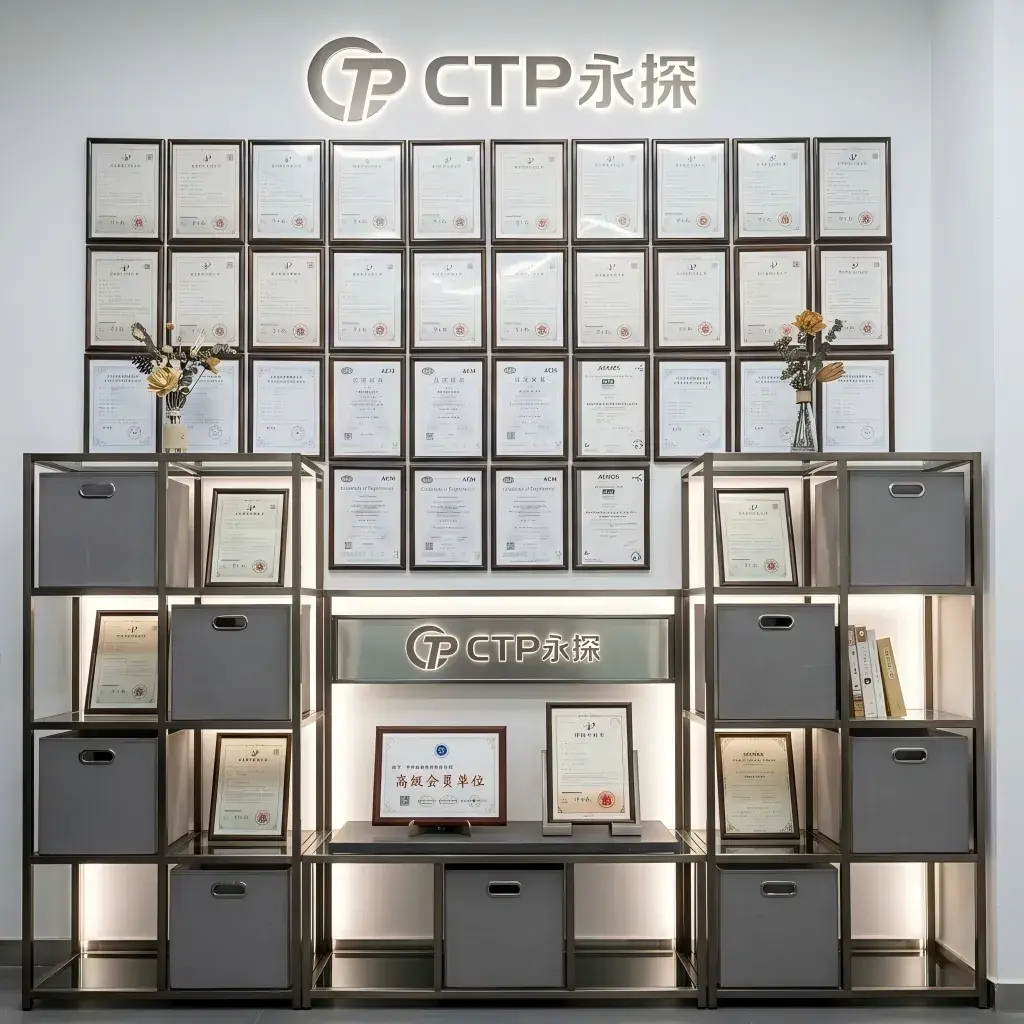
Quality-management and compliance documents can support supplier assessment, but they should not replace product evidence.
When reviewing a certificate, check:
- certificate number;
- issuing organization;
- validity date;
- company legal name;
- manufacturing-site address;
- scope of certification;
- whether the scope covers the relevant product or process.
A certificate does not automatically prove:
- the supplied connector meets the customer drawing;
- the connector supports a stated current;
- the product passes a specific environmental test;
- every sub-supplier is unchanged;
- the finished device meets industry regulations.
9. Review Tooling Ownership and Transfer Conditions
Custom magnetic connectors may require plastic molds, overmolding tools, assembly fixtures or electrical test fixtures.
Before awarding the project, confirm:
- what tooling is included in the quotation;
- who owns each tool;
- where the tooling is stored;
- who pays for maintenance;
- expected tool life;
- cost of replacement inserts;
- whether the tool is dedicated to the customer;
- whether it may be transferred;
- what technical documentation is available;
- how design revisions are charged.
A lower tooling price may exclude ownership, maintenance, replacement parts or transfer rights.
10. Evaluate Intellectual Property Controls Practically
An NDA is useful, but intellectual property protection also depends on everyday information controls.
Review how the manufacturer manages:
- customer drawing access;
- file revision and distribution;
- supplier access to customer information;
- sample and prototype storage;
- photography inside production areas;
- obsolete drawing disposal;
- customer-specific tooling identification;
- employee confidentiality obligations.
The level of control should match the sensitivity of the product. A simple catalog pin and a proprietary device interface may not require the same process.
11. Evaluate Capacity by Bottleneck, Not Factory-Wide Output
A factory’s total monthly production volume does not determine how quickly it can produce one custom magnetic connector.
The real bottleneck may be:
- custom pogo pin machining;
- plating capacity;
- mold availability;
- magnet installation;
- manual soldering;
- overmolding;
- adhesive curing;
- environmental testing;
- final electrical testing.
Capacity questions to ask
- What is the planned process route for this part?
- Which operation limits output?
- How many fixtures are available?
- Is the process shared with other products?
- What changes are required to double the volume?
- Will higher volume require new tooling?
- Which materials have the longest lead time?
- Is an alternative production line available?
A realistic answer should connect capacity to equipment, cycle time, yield, staffing and test time.
12. Compare Commercial Terms on the Same Basis
Supplier quotations should be normalized before comparison.
Confirm:
- drawing revision;
- quantity break;
- currency;
- Incoterms rule and named location;
- sample charges;
- NRE and tooling;
- included testing;
- packaging;
- payment terms;
- production lead time;
- warranty and nonconformance handling;
- quotation validity.
An inexpensive unit price may exclude fixtures, packaging, inspection or production-intent materials.
13. Use a Weighted Manufacturer Scorecard
A scorecard prevents one attractive feature, such as low price or rapid sample delivery, from dominating the decision.
The weighting should reflect project risk. The following is an example rather than a universal formula.
| Evaluation category | Example weighting | Evidence |
|---|---|---|
| Engineering fit | 20% | Technical questions, risk identification and architecture recommendations. |
| DFM quality | 15% | Drawing comments, tolerance review and production-risk analysis. |
| Sample evidence | 20% | Measured dimensions, electrical results and device-level performance. |
| Process capability | 15% | Process route, fixtures, controls and critical sub-suppliers. |
| Testing and inspection | 10% | Methods, fixtures, limits and records connected to project risks. |
| Capacity and delivery | 8% | Bottleneck analysis, lead time and expansion plan. |
| Commercial clarity | 7% | Transparent pricing, tooling terms, payment and packaging. |
| Communication | 5% | Response accuracy, revision control and escalation process. |
For a technically difficult custom connector, engineering and sample evidence should normally carry more weight than the initial unit price.
14. Distinguish Must-Pass Requirements from Scored Requirements
Some conditions should not be averaged into a score.
Examples of possible must-pass requirements include:
- ability to manufacture the required connector architecture;
- acceptance of the required NDA;
- agreement to customer change-notification requirements;
- ability to provide lot traceability;
- compliance with a mandatory material restriction;
- successful completion of a required sample test;
- support for the required annual volume;
- agreement on tooling ownership.
A supplier that fails a mandatory requirement should not win the project simply because it scores well in other categories.
Manufacturer Selection Warning Signs
Immediate performance supports before reviewing the application
Current, life, sealing and signal performance depend on the complete connector and device conditions.
Final pricing without a controlled drawing
The quoted product may not match the buyer’s assumptions regarding materials, tolerances or tests.
Technical responses focused only on magnet grade
Magnet grade alone does not determine retention, alignment or connector reliability.
Identical solution proposed for every industry
Wearables, industrial equipment, medical devices and automotive modules have different exposure and validation requirements.
Certificate logos without verifiable documents
Review issuer, validity, site and scope rather than screenshots alone.
No explanation of outsourced processes
Outsourcing is not automatically a problem, but the manufacturer should identify and control critical external processes.
Sample Evaluation with no revision or test record
An unidentified sample cannot serve as a controlled production reference.
Capacity stated only as a factory-wide monthly figure
Custom-product capacity depends on the specific manufacturing bottleneck.
Tooling quotation without ownership terms
The buyer may pay for tooling without obtaining dedicated use or transfer rights.
Every problem is attributed to customer assembly
A reliable manufacturer should support evidence-based comparison of supplier-side and customer-side causes.
Questions to Ask a Magnetic Pogo Pin Manufacturer
Engineering questions
- Which connector architecture would you recommend for this application?
- What information is still missing from our specification?
- How will the pogo pin working compression be controlled?
- How will total spring force and magnetic retention be balanced?
- How will reverse, offset and partial mating be managed?
- What electrical risks do you see in the proposed pin map?
- Which design characteristics require validation in the customer device?
Manufacturing questions
- Which processes are performed internally?
- Which components or processes are outsourced?
- How is pogo pin installed height measured?
- How is magnet polarity controlled?
- What production fixtures are required?
- How are reworked products identified?
- What is the bottleneck process for this part?
Quality and testing questions
- Which characteristics will be inspected on every lot?
- What test fixture will be used?
- How is contact resistance measured?
- Can voltage drop be tested under the intended load?
- How are measurement instruments and fixtures maintained?
- Which qualification tests require an external laboratory?
- How are failed samples investigated?
Commercial questions
- What is included in the NRE and tooling quotation?
- Who owns the tooling?
- What is the MOQ at prototype, pilot and mass-production stages?
- What is the lead time for samples and repeat orders?
- Which materials have long replenishment times?
- What changes require customer approval?
- What information will accompany each shipment?
When the Lowest-Price Manufacturer May Still Be the Right Choice
A low-price supplier is not automatically unsuitable.
The lowest-price option may be reasonable when:
- the product is a stable standard component;
- the technical specification is complete;
- the application risk is low;
- the buyer performs its own incoming inspection;
- the component is easy to replace;
- the supplier has provided acceptable sample evidence;
- tooling and engineering support are limited or unnecessary.
For a custom magnetic connector integrated into an expensive or difficult-to-service device, engineering capability and process control usually deserve greater weight.
What Evidence Should Be Collected Before Awarding the Project?
| Evidence category | Recommended evidence |
|---|---|
| Technical understanding | Clarification questions, DFM review and proposed connector architecture. |
| Sample control | Sample drawing revision, materials, known deviations and test results. |
| Manufacturing route | Process flow, internal and outsourced operations, fixtures and bottlenecks. |
| Quality control | Critical inspection items, test methods, limits and reaction process. |
| Commercial terms | Normalized quotation, tooling ownership, payment terms and lead time. |
| Supply continuity | Long-lead materials, backup equipment and sub-supplier dependencies. |
Frequently Asked Questions
How do I choose a magnetic pogo pin manufacturer in China?
Define the exact connector architecture, issue the same technical RFQ to shortlisted suppliers and compare their technical interpretation, DFM quality, sample evidence, process route, testing capability and commercial terms.
Should the manufacturer produce every component internally?
Not necessarily. A manufacturer may use approved specialist sub-suppliers. It should understand the critical processes, control the specifications and remain responsible for the finished product.
Is a large product catalog evidence of engineering capability?
A large catalog may provide useful starting platforms, but it does not prove that the supplier can meet a new project’s electrical, mechanical or environmental requirements.
Are quality-management certificates enough to approve a manufacturer?
No. Certificates can support the assessment, but project approval should also include controlled drawings, DFM evidence, sample results and verification of the actual production process.
How many suppliers should be sampled?
The appropriate number depends on project risk, development cost and schedule. Comparing a small number of technically qualified suppliers is normally more useful than requesting uncontrolled samples from many vendors.
Should I request Sample Evaluation?
Existing catalog samples can support early evaluation. A custom project should use controlled samples linked to a drawing revision, materials and measurable acceptance criteria.
How can I tell whether a supplier understands my application?
Review the questions it asks, the risks it identifies and whether its recommendations explain the trade-offs between current, compression, magnet force, space, environment and manufacturing.
How should factory capacity be verified?
Review the specific process route, equipment, fixture quantity, cycle time, yield, test time and material lead times for the proposed product.
Is the lowest unit price usually the lowest total cost?
No. Samples, tooling, inspection, yield, freight, inventory and field-service consequences can change the total cost per accepted product.
Can a manufacturer supports controlled quality requirements?
No universal zero-defect supports is credible. Buyers should instead require controlled processes, measurable acceptance criteria, traceability and effective corrective action.
Conclusion
Choosing a magnetic pogo pin manufacturer in China should begin with the actual product architecture rather than a general factory ranking.
An individual pogo pin, multi-pin connector, magnetic module and molded cable assembly require different combinations of machining, molding, PCB integration, magnet control, cable processing and testing.
The supplier-selection process should test how accurately each manufacturer understands the application, how effectively it identifies design risks and whether its samples are linked to controlled specifications and measurable results.
Factory size, automation and certificates can support the assessment, but they should be evaluated in relation to the specific product route. Capacity should be connected to the bottleneck process, while testing should address the actual electrical and mechanical risks of the interface.
CTP supports custom development of individual pogo pins, pogo pin connector assemblies, magnetic pogo pin connectors and magnetic cable assemblies.
For a manufacturer-fit review, submit the device application, pin map, current, voltage, connector space, mating conditions and production forecast through our Get a Quote & Samples page or email bella@ytanpogo.com. The required product architecture, development route and sample-validation plan can then be reviewed together.