Flexible Connectivity in Rehabilitation Robots: Medical Magnetic Connectors in Exoskeleton Devices
Flexible Connectivity in Rehabilitation Robots: Medical Magnetic Connectors in Exoskeleton Devices Stroke remains the leading

Flexible Connectivity in Rehabilitation Robots: Medical Magnetic Connectors in Exoskeleton Devices Stroke remains the leading

Smart Connectivity of Hospital Bedside Devices: Medical Pogo Pin Connectors in the IoMT In modern

Miniaturization Breakthrough in Hearing Aids: Nano-Coated Magnetic Pogo Pins Modern hearing aids are evolving toward

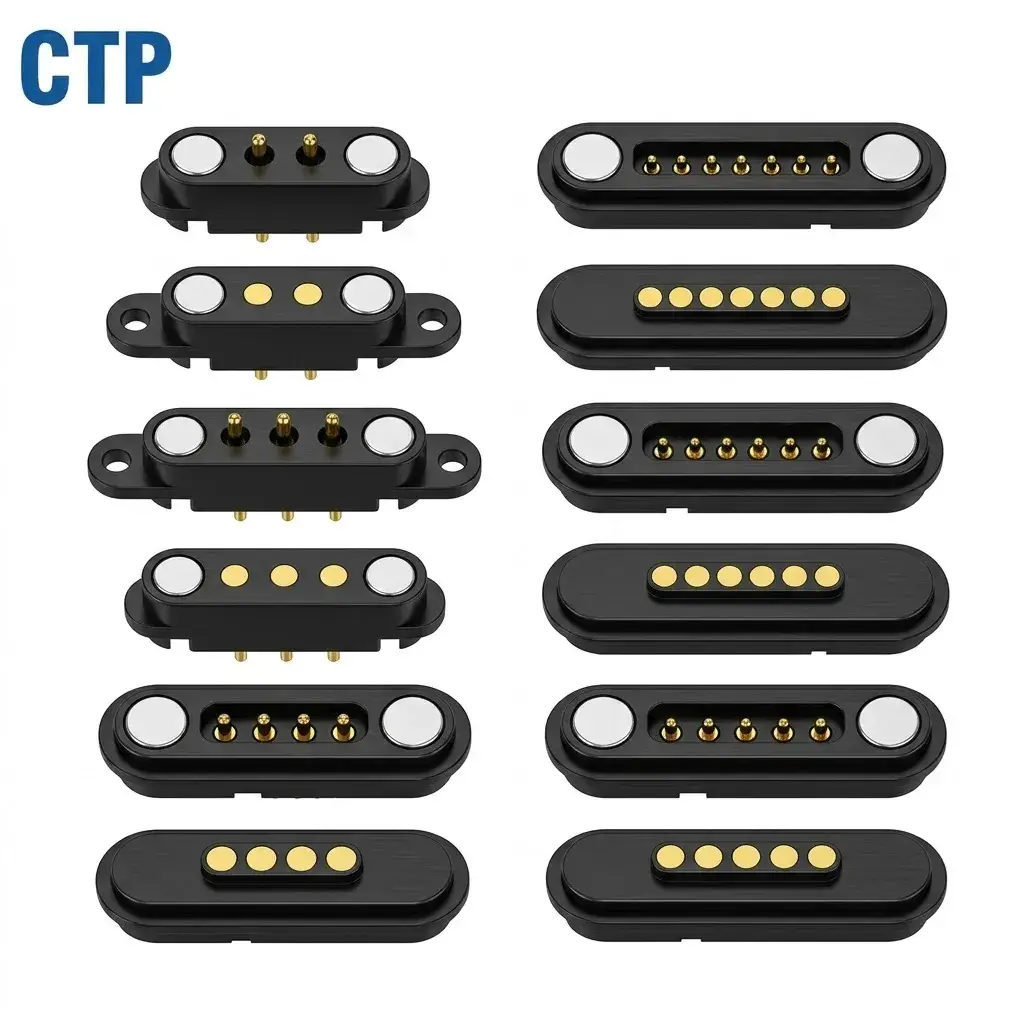
This article provides an in-depth exploration of the critical applications of Magnetic Pogo Pin technology in multi-parameter health patches for Remote Patient Monitoring (RPM) and its revolutionary impact on home healthcare models. As chronic disease management shifts from hospitals to home settings, health patches face significant challenges regarding long-term wear, simultaneous transmission of diverse signals, and disinfection compatibility. Through a systematic analysis of medical-grade Magnetic Pogo Pins—featuring ultra-low contact resistance ($\le$ 20mΩ), multi-pin array designs (4–12 pins) for parallel parameter acquisition, and IP68 waterproof sealing—this article explains how they have become the vital link between wearable patches and data/charging stations. It examines pin configurations for ECG, blood glucose, and temperature monitoring, demonstrating how features like magnetic auto-alignment and 100,000-cycle lifespans increase data integrity to 99.5% while reducing patient operational errors by 80%. The article argues that the reliability and biocompatibility of Magnetic Pogo Pins are essential for creating a seamless “hospital-to-home” health management loop.

The Miniaturization Breakthrough: Micro-Magnetic Pogo Pins in Smart Rings Among the family of wearables, the

The Wireless Charging Era: Redefining Gaming Peripherals For global gaming peripheral brands, delivering a seamless

Engineering Breakdown: The Physics of Magnetic Pogo Pins for Tablet Keyboards As hardware engineers evaluating

This article provides an in-depth exploration of the critical breakthroughs and engineering innovations of Magnetic Pogo Pin technology in the miniaturization of smart rings. Positioned as the “smallest wearable device,” smart rings face three core challenges: extreme space constraints (diameters <20mm, thickness 3-5mm), power management for micro-batteries, and user experience. Through a systematic analysis of 0.5mm diameter micro-Pogo Pins, the article explains how a "three-part" microstructure, multi-layer composite plating, and 0.01mm-level fit clearances break through miniaturization bottlenecks. It further analyzes the optimization of magnetic positioning systems—controlling field strength between 1200-1500 Gauss and separation force at 1.8-2.2 Newtons—to balance attraction with mechanical limits. Additionally, system-level innovations like "three-stage" smart charging for 20-50mAh batteries and IP67 sealing are discussed. The article argues that 0.5mm Pogo Pin breakthroughs enable smart rings to maintain a lightweight form while ensuring reliable connectivity, serving as the technical foundation for this category's mass-market transition.

When evaluating the electromechanical architecture of modern audio wearables, the integration of magnetic pogo pins

This article provides an in-depth exploration of the innovative applications and critical role of Magnetic Pogo Pin technology in the dynamic connectivity of foldable phone hinges. Beginning with the “dynamic connection” challenge—maintaining stable signal transmission across a hinge during tens of thousands of opening and closing cycles—the article analyzes specialized designs including ultra-thin structures, dynamic contact retention force, anti-fatigue springs, and shielding integration. It explains how these components become the vital lifeline connecting motherboards to foldable displays.

This article provides an in-depth exploration of how Magnetic Pogo Pin technology has become a key innovation in enhancing the user experience for smart wearables. Beginning with the “last centimeter” connection challenge—achieving reliable charging and data synchronization within limited space while meeting stringent requirements for waterproofing and durability—the article analyzes technical characteristics tailored for wearables: extreme miniaturization, magnetic-guided blind mating, waterproof sealing, and ultra-long lifespan.

As the consumer electronics industry marches toward the ultimate minimalist aesthetic, the concept of a
WhatsApp us