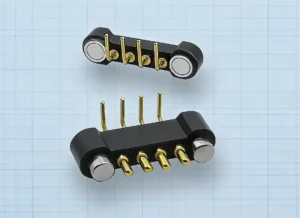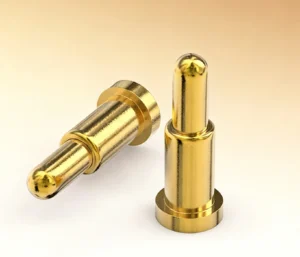
If you have ever wondered what is a pogo pin, the short answer is this, it’s a small, spring-loaded electrical contact that maintains a reliable connection under constant pressure, even when the two parts it connects move slightly or get connected and disconnected thousands of times. The name comes from its resemblance to a pogo stick, a plunger sits on top of a compressed spring inside a metal barrel, and that spring keeps pushing the plunger outward, so it always presses firmly against whatever it’s touching. It sounds like a simple idea, and in a way it is, but that simplicity is exactly why pogo pins have become one of the most widely used contact technologies in modern electronics, from the phone charger on your nightstand to the test equipment used on a factory floor.
What is a Pogo Pin: Actually Works
A pogo pin connector does one job extremely well: it keeps two electrical contacts touching each other with consistent pressure, no matter how many times they are connected and disconnected. Inside every pogo pin, a small coil spring pushes a plunger upward and out of a hollow barrel. When something presses down on that plunger, a charging dock, a test fixture, a mating connector, the spring compresses slightly, and that compression is what generates the contact force. As long as the spring has traveled left and hasn’t fatigued, the plunger keeps pushing back, which means the electrical connection stays solid even if there’s a little vibration, a little misalignment, or repeated use over months and years.
This self-adjusting behavior is really the whole story of why pogo pins exist. A rigid, non-spring-loaded contact only works well if everything lines up perfectly and stays that way. The moment there’s a slight gap, a bit of wear, or a manufacturing tolerance that isn’t quite exact, a rigid contact can lose connection. A pogo pin absorbs all of that automatically, because the spring is always doing the work of maintaining pressure.
Basic Anatomy of a Pogo Pin
A pogo pin looks simple from the outside, but there are really four parts working together. The barrel is the outer shell, usually machined from brass or a similar conductive metal, and it houses everything else while also often serving as the pin’s mounting structure. Inside the barrel sits the spring, almost always a precision coil spring, which is really the heart of the whole design, its force, its travel distance, and how many times it can compress and release before it weakens all determine how the pin performs over its working life.
On top of the spring sits the plunger, the part that actually makes contact with the mating surface, and plunger tips come in different shapes such as flat, rounded, crown, or pointed, chosen based on what the pin needs to touch and how much wear resistance is required. Finally, there’s the termination, which is how the pin connects into the rest of the circuit, this might be a solder tail for a printed circuit board, a wire lead, or a surface-mount pad, depending on how the connector is being integrated into a device.
Almost all of these components are plated, usually with gold over nickel, because gold resists oxidation and keeps electrical resistance low and stable over time. This plating detail matters more than people expect, since a pin with poor plating can develop resistance and reliability problems long before the mechanical spring itself ever wears out.
Common Types of Pogo Pin Connectors
Pogo pins show up in a few recognizable formats. Surface-mount pogo pins are soldered directly onto a PCB using standard reflow processes, which makes them a natural fit for compact consumer electronics where board space is tight. Through-hole pogo pins pass through a drilled hole in the board and are soldered on the opposite side, which tends to give a stronger mechanical mounting for applications that see more physical stress.
There are also cable-mounted pogo pins, where the pin is terminated to a wire rather than a board, which is common in cable assemblies and charging cables. And when multiple individual pins are arranged together in a housing to form a complete mating interface, that assembly is generally called a pogo pin connector, this is the format most people are actually picturing when they think of a magnetic charging cable or a docking interface, since it combines several pogo pins into one structured connector rather than using loose individual pins.
Pogo Pin Current Rating: What It Actually Tells You
One of the most common questions buyers have once they understand the basic concept is about pogo pin current rating, essentially, how much electrical current a given pin can safely carry without overheating or degrading. This rating depends on several things working together: the cross-sectional area of the contact path through the plunger and spring, the plating material and thickness, the contact resistance at the mating interface, and how well heat can escape from the pin during continuous use.
A single small pogo pin might be rated for well under an amp, while a larger pin designed specifically for power delivery, with a thicker plunger and lower-resistance path, can be rated for several amps or more.
It’s worth understanding that a current rating on a datasheet is only meaningful in the context it was tested under. A rating measured in open air at room temperature will look different from real-world performance inside an enclosed device housing where heat has nowhere to go. This is exactly why, when multiple pogo pins are combined into a magnetic connector for power applications, the actual safe current isn’t just the sum of each pin’s individual rating, the whole assembly needs to be evaluated together, including temperature rise across the full current path, not just at the pin in isolation.
Which Pogo Pins are Best Used
The reason pogo pins are everywhere once you start noticing them is that so many devices need a repeatable, reliable connection without a traditional plug-and-socket mechanism. Test and measurement equipment relies heavily on pogo pins in the form of test probes, since they need to make and break contact with circuit boards thousands of times during manufacturing testing without wearing out or damaging the board underneath.
Wearable electronics like smartwatches and fitness trackers use pogo pin connectors for charging because the pins allow a compact, tool-free docking interface that survives daily use. Magnetic charging cables for phones, tablets, and other consumer devices almost always use pogo pins behind the magnetic alignment mechanism, since the magnet handles positioning while the pogo pins handle the actual electrical connection. Industrial handheld devices, medical equipment, and battery-powered tools also use pogo pin connectors where a sealed, durable, frequently-disconnected interface is needed in a harsher environment than a typical consumer device would see.
Pogo Pin Connectors vs Traditional Connectors
Compared to a standard connector, like a plug that inserts into a socket, a pogo pin connector offers a few clear advantages in the right application. Because the spring inside the pin does the work of maintaining contact pressure, pogo pin connectors tolerate a small amount of misalignment or vibration far better than rigid contacts do. They also tend to be more compact, since a spring-loaded contact can be made very small while still providing dependable pressure, which matters a great deal in wearables and other space-constrained devices. And because there’s no insertion force required to physically push a plug into a socket, pogo pin interfaces are naturally suited to designs, like magnetic charging cables, where the user simply brings two surfaces close together and lets an assist mechanism, whether magnetic or mechanical, complete the alignment.
That said, pogo pins aren’t automatically the right choice for everything. Applications that need very high current in a small footprint, or connectors that will be permanently fixed and never disconnected, sometimes suit other connector technologies better. Choosing correctly usually comes down to how often the connection will be made and broken, how much space is available, and what current and signal requirements the design actually has.
How to Choose a Pogo Pin Manufacturer
Once you understand what a pogo pin is and how it behaves, the next practical question is who actually makes it well. Not every pogo pin manufacturer holds the same tolerances or uses the same quality of spring material and plating, and those differences show up as real reliability problems months or years down the line, long after a part looked fine in initial testing. A dependable pogo pin connector manufacturer should be able to explain their spring material and expected cycle life in specific numbers, show plating specifications rather than vague claims, and provide real test data for current rating and contact resistance rather than only a marketing figure.
They should also be willing to review your specific application, the current and signal requirements, the mating cycle expectations, the environmental conditions, before quoting a price, because a pogo pin that performs perfectly in a dry, room-temperature test environment can behave very differently in a device that goes outdoors, gets exposed to moisture, or is expected to survive tens of thousands of connect-and-disconnect cycles over its working life.
Conclusion
A pogo pin is a small, spring-loaded contact that solves a genuinely common engineering problem, how do you keep an electrical connection reliable when it has to be made and broken over and over again, sometimes across slight misalignment or years of use?
Once you understand the spring, plunger, and barrel working together, you start seeing pogo pin connectors everywhere, in test equipment, wearables, magnetic charging cables, and industrial devices. And once you are specifying one for your own product, the details that matter most are the ones that don’t always show up in a quick spec sheet: real cycle-life data, an honest current rating tested under realistic conditions, and a manufacturer who reviews your actual application instead of just quoting a generic part.
If you are working on a product that needs a custom pogo pin or magnetic pogo pin connector, CTP designs and manufactures these interfaces for OEM and ODM projects, supporting everything from the initial Pin Map and electrical requirements through sample validation and production. Reach out with your application details to start an engineering review before you commit to a design.