Engineering Summary:
A medical pogo pin connector can support charging, docking, accessory identification and selected electrical or data functions in a connected bedside device. It does not make the equipment IoMT-enabled by itself and does not independently supports clinical data accuracy, patient safety, EMC compliance, cybersecurity, biocompatibility or disinfection resistance. These properties depend on the complete medical device, its intended use, risk controls and validated system architecture.
A medical pogo pin connector can support charging, docking, accessory identification and selected electrical or data functions in a connected bedside device. It does not make the equipment IoMT-enabled by itself and does not independently supports clinical data accuracy, patient safety, EMC compliance, cybersecurity, biocompatibility or disinfection resistance. These properties depend on the complete medical device, its intended use, risk controls and validated system architecture.
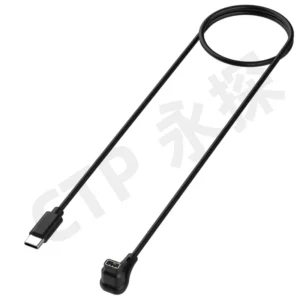
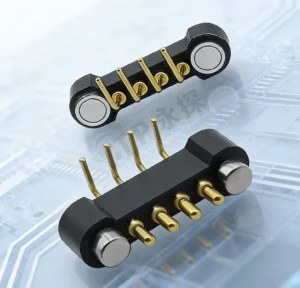
Connected bedside equipment may include patient monitors, infusion systems, mobile medical carts, detachable displays, charging docks, sensor accessories and other devices that exchange power or information within a healthcare environment.A spring-loaded connector can provide a compact and repeatedly mateable physical interface. Magnetic capture may assist the final approach, while pogo pins provide compliant contact against mating targets.
The value of this architecture depends on how the connector is integrated into the complete device. Engineers should evaluate its electrical state, mechanical seating, cleaning exposure, cable behavior, EMC environment, user workflow and failure consequences before selecting the final structure.
For an explanation of the underlying connector construction, review the
spring-loaded magnetic connector architecture guide
.What Role Does the Connector Play in an IoMT System?
The Internet of Medical Things describes a wider system in which medical devices may exchange information with other equipment, hospital networks, software platforms or remote services.

The pogo pin connector normally operates at the physical interface layer. Depending on the project, it may provide:- Device charging or DC power
- Docked-state detection
- Accessory or module identification
- Control or enable functions
- Selected analog or digital signals
- A proprietary wired communication channel
- Temporary programming or service access
Network addressing, protocol management, clinical data processing, encryption, authentication, software updates and hospital-network cybersecurity are normally implemented elsewhere in the device and system.| System Layer | Primary Function | Connector Responsibility |
|---|---|---|
| Patient or sensor interface | Acquire physiological or equipment data | Provide the defined electrical paths where the connector is part of that interface |
| Bedside medical device | Process, display, store or control information | Support power, accessory, docking or project-specific signal connections |
| Dock or accessory | Charge, identify, support or extend the device | Maintain the intended mating position and electrical contact state |
| Communication hardware | Transfer information through wired or wireless channels | Preserve the required physical electrical channel where wired contacts are used |
| Network and software system | Manage interoperability, security and data exchange | Outside the function of a passive connector |
Engineering Note:
A reliable physical contact does not prove clinical measurement accuracy, software interoperability or cybersecurity. Each system layer requires its own verification and validation.
A reliable physical contact does not prove clinical measurement accuracy, software interoperability or cybersecurity. Each system layer requires its own verification and validation.
First Define the Medical Interface Boundary
The connector requirements change significantly depending on where the interface is located and whether it is connected to the patient, operator, accessory or equipment enclosure.| Interface Location | Typical Function | Primary Questions |
|---|---|---|
| Patient-connected accessory | Sensor, lead, probe or patient-applied accessory | What electrical isolation, leakage, material and disconnection risks apply? |
| Equipment docking interface | Charging, data transfer or device support | How is full seating detected, and what happens during partial mating? |
| Removable equipment module | Battery, communication or functional module | How are module identity, power sequencing and incorrect insertion controlled? |
| Breakaway cable | Power, accessory or selected signal connection | What pull direction should cause release, and what happens after disconnection? |
| Service interface | Programming, calibration, testing or maintenance | Who can access it, and can it affect normal clinical operation? |
| Mobile medical-cart dock | Opportunity charging or equipment connection | How do movement, cable load, contamination and repeated docking affect the interface? |
A connector used only inside a protected docking station may have a different risk profile from a connector that is accessible to a patient or forms part of a patient-connected circuit.Do Not Treat Clinical Data Accuracy as a Connector Specification
A bedside device may acquire physiological information through sensors, electrodes, probes or other patient interfaces. The connector can affect continuity, contact resistance and noise coupling, but it is only one element in the measurement chain.

Clinical data accuracy may also depend on:- The sensor or transducer
- Patient-contact quality
- Analog front-end design
- Electrical isolation
- Filtering
- Sampling and conversion
- Calibration
- Signal-processing software
- Alarm and display logic
- The complete EMC environment
A low connector resistance does not prove that physiological information will be transmitted without distortion. The system must be evaluated from the patient or sensor interface through to the displayed, stored or transmitted information.Raw Analog Signals and Digitized Data Need Different Interfaces
A connector carrying low-level analog signals may require different contact allocation, shielding and return paths from one carrying already digitized data.| Signal Type | Design Focus |
|---|---|
| Low-level analog signal | Input impedance, reference path, common-mode noise, shielding and coupling from power contacts |
| Digital control or identification | Logic thresholds, false detection, ESD and partial-mating behavior |
| Serial communication | Physical layer, return path, termination and transient protection |
| High-speed data channel | Impedance, pair geometry, crosstalk, shielding, PCB transitions and complete channel performance |
Pin count alone cannot prove that a connector supports USB, Ethernet or a proprietary high-speed communication channel.Develop the Pin Map from the Device Functions
The number of pogo pins should be derived from the required electrical functions rather than selected first.| Possible Function | Questions to Define |
|---|---|
| Power input | Voltage, continuous current, peak current, duty cycle and temperature-rise limit |
| Power return | What is the return path in every credible mating condition? |
| Dock detection | Does the contact indicate initial presence or full seating? |
| Accessory identification | How does the host distinguish approved accessories or modules? |
| Power enable | What condition authorizes charging or operating power? |
| Analog signal | What level, bandwidth, reference and accuracy are required? |
| Digital communication | What physical layer, data rate, topology and protection are required? |
| Shield or chassis | How is the interface related to the enclosure and equipment grounding architecture? |
When the correct contact count or connector supply scope remains uncertain, continue to the

    magnetic pogo pin connector selection guide
.
Charging and Power Transfer Require System-Level Control
A bedside dock may supply power to charge a battery or operate an accessory. The connector must be evaluated as part of the complete power path.The path may include:
- External power supply
- Medical equipment power architecture
- Protection and control circuit
- Dock PCB or cable
- Connector termination
- Spring-loaded contact
- Mating target
- Device-side PCB
- Charging or load-management circuit
Define:
- Operating voltage
- Continuous and peak current
- Input capacitance and inrush behavior
- Permitted voltage drop
- Permitted temperature rise
- Whether exposed contacts are energized while unmated
- Short-circuit and overcurrent behavior
- Reverse-polarity risks
- What happens during incomplete seating
- What happens when the device is removed under load
The pogo pin connector does not independently establish medical electrical isolation, leakage-current performance or equipment safety. These must be addressed within the complete medical electrical system.Parallel Contacts May Not Share Current Equally
Multiple contacts may be connected in parallel, but current distribution can vary because of:- Different pogo pin compression
- Contact-resistance variation
- Mating-target flatness
- PCB copper resistance
- Contamination
- Unequal termination paths
Voltage drop and temperature should be evaluated at channel level when several contacts share the load.Partial Mating Is a Critical Device State
Magnetic capture does not prove that every pogo pin has reached the intended working stroke.| Condition | Possible Risk | Required Review |
|---|---|---|
| One edge enters first | Contact order differs from the nominal design | Approach angle and earliest-contact geometry |
| One pogo pin touches first | Power or signal is present without its intended return | Contact-height and target-position tolerances |
| Lateral offset | A contact reaches an adjacent pad or conductive housing feature | Pad dimensions, spacing and credible offset envelope |
| Magnetically held but not fully seated | False dock detection or intermittent charging | Independent full-seating confirmation |
| Contaminated interface | Uneven compression, resistance change or contact bridging | Cleaning, spacing and fault detection |
| Removal under load | Transient electrical behavior or interruption of an essential function | Power-removal sequence and stored-energy control |
Mechanical keys, asymmetric contact layouts, recessed pads, insulating barriers, accessory identification and controlled power enable may be combined where required.Magnetic Breakaway Requires a Defined Risk Analysis
A magnetic cable may release when pulled, which can reduce the amount of force transferred into the equipment in some applications.

However, an interface that releases too easily may interrupt charging, monitoring, communication or another required function. An interface that holds too strongly may move the device, damage the cable or transfer force into the equipment.
Define:
- Normal cable direction
- Credible accidental-pull directions
- Equipment mass and mounting method
- Required normal retention
- Acceptable release direction
- Electrical state during separation
- Consequence of an unintended disconnection
- Required alarms or fallback behavior
- Whether the released cable can strike a patient or another object
Engineering Note:
“Breakaway” should not automatically be described as fail-safe. Its suitability depends on what the connected device is doing when separation occurs.
“Breakaway” should not automatically be described as fail-safe. Its suitability depends on what the connected device is doing when separation occurs.
Design the Interface Around the Clinical User Workflow
Bedside equipment may be operated by nurses, physicians, technicians, patients, carers or cleaning staff. Each user may interact with the connector differently.Relevant usability questions include:
- Can the intended connector be identified under low-light conditions?
- Can it be connected while the user is wearing gloves?
- Can an incorrect accessory reach the contacts?
- Does magnetic attraction create a false impression of full seating?
- Can the device provide clear docked, charging or fault feedback?
- Can the user disconnect the interface without pulling the equipment?
- Can cables become entangled with other bedside equipment?
- Can cleaning staff access the entire mating surface?
- What happens when the connector is touched or contaminated?
| User Expectation | Engineering Requirement |
|---|---|
| Easy connection | Defined approach direction, allowable offset and user force |
| Clear confirmation | Reliable seated-state detection and visible or audible feedback |
| Easy removal | Defined intentional release force and gripping method |
| Correct accessory use | Mechanical coding, electrical identification or both |
| Safe cleaning | Accessible surfaces and documented cleaning state |
Cleaning, Disinfection and Sterilization Are Different Requirements
Bedside equipment may be wiped or disinfected according to the manufacturer’s validated instructions. That does not mean every component must withstand every hospital chemical, immersion process or sterilization method.The connector review should define:
- Cleaning or disinfection agent
- Concentration
- Application method
- Contact or dwell time
- Frequency
- Drying method
- Mated or unmated state
- Electrical state during cleaning
- Number of representative exposure cycles
- Post-exposure acceptance criteria
Potentially affected elements include:
- Contact and target surfaces
- Housing polymers
- Adhesives
- Potting materials
- Gaskets
- Magnet coatings
- Cable jackets
- Legends and labels
Do not use “sterilization resistant” when the actual requirement is routine surface disinfection. Sterilization processes introduce different material, temperature and process requirements.Ingress Protection Does Not Prove Chemical Resistance
An IP classification addresses protection provided by a defined enclosure under a specified test condition.It does not automatically establish:
- Resistance to alcohol, chlorine, iodine or another chemical
- Suitability for sterilization
- Long-term corrosion performance
- Protection in every mated and unmated condition
- Protection of the complete customer device
The protection boundary may include the connector insert, pogo pin mounting, magnet installation, adhesive, gasket, cable entry, overmolding and equipment enclosure.

Any IP statement should identify the tested assembly, mating state, enclosure configuration, test method and acceptance criteria.
Biological Safety Depends on Actual Body Contact
Not every connector in medical equipment requires the same biological evaluation.

The manufacturer should first determine whether connector materials have direct or indirect body contact during intended use and foreseeable misuse.
Consider:
- Which materials are accessible
- Who may touch them
- Type of body contact
- Contact duration
- Frequency of contact
- Material composition
- Manufacturing residues
- Cleaning and disinfection residues
- Wear particles or degradation products
A material being nickel-free, gold-plated or described as medical grade does not independently prove biological safety.

Where biological evaluation is applicable, it should be performed on the relevant final device or material system within the medical-device risk-management process.
EMC Performance Belongs to the Complete Medical Equipment
Bedside environments may contain wireless equipment, switching power supplies, electrosurgical equipment, motors, chargers and multiple connected devices.

Connector-level EMC performance depends on:- Pin Map
- Power and signal return paths
- Cable construction
- Shield termination
- Enclosure bonding
- PCB layout
- Filtering
- ESD and transient protection
- Contact stability during movement
- The equipment operating mode
A metal shell does not automatically create a complete shield. A low-resistance pogo pin does not prove immunity to radiated or conducted disturbances.Do Not Assume Suitability Near MRI Equipment
A connector containing permanent magnets or ferromagnetic parts should not be described as MRI-compatible solely because it is intended for medical equipment.

Suitability in or near an MRI environment requires a separate review of the complete equipment, materials, magnetic interaction, intended location and applicable site controls.
Physical Data Integrity and Cybersecurity Are Different
The physical interface may influence continuity, signal quality and link availability. Cybersecurity concerns authentication, software integrity, access control, updates, vulnerability management and protection of data and functions.| Requirement | Connector Contribution | System Responsibility |
|---|---|---|
| Electrical continuity | Contact path and working compression | Monitoring and fault response |
| Signal integrity | Contact geometry and physical transition | Complete PCB, cable and transceiver channel |
| Accessory identification | Provide one or more identification contacts | Authentication logic and authorization decision |
| Cybersecurity | No inherent protection in a passive contact | Hardware, firmware, software, network and lifecycle processes |
| Clinical data integrity | Maintain the intended physical electrical path | Sensor, processing, storage, communication and display system |
A proprietary connector may reduce accidental use of a standard accessory, but physical incompatibility should not be treated as cybersecurity.Common Bedside Interface Architectures
| Application | Possible Connector Role | Primary Engineering Focus |
|---|---|---|
| Patient monitor dock | Charging, dock detection and selected data | Full seating, EMC, cleaning and device support |
| Infusion-device dock | Power, charging or module identification | Power state, incorrect docking and essential-function risk |
| Mobile medical cart | Opportunity charging and accessory connection | Movement, cable routing, repeated docking and cleaning |
| Bedside interaction terminal | Charging or detachable cable connection | User handling, accidental pulling and exposed contacts |
| Removable sensor module | Power, identification and selected signals | Signal path, accessory detection and contamination |
| Medical battery module | Power and identification | Inrush current, polarity, current sharing and removal state |
| Service or calibration interface | Programming, testing or diagnostics | Access control, fixture alignment and separation from normal use |
Each architecture requires its own Pin Map, risk analysis, mechanical structure and validation plan. There is no universal “medical connector” configuration.When May a Magnetic Pogo Pin Interface Be Appropriate?
| Project Requirement | Possible Value |
|---|---|
| Repeated docking or charging | Spring-loaded contacts can provide compliance across a defined mating range |
| Limited manual dexterity or access | Magnetic capture may assist the final approach |
| Custom device shape | The housing and target layout can be developed around the enclosure |
| Accessory identification | Additional contacts can support detection and identification logic |
| Controlled cable release | Magnetic retention may be tuned for an application-specific release behavior |
| Accessible mating surface | Flat targets may improve inspection and cleaning access |
When May Another Connector Be More Appropriate?
A conventional or standardized connector may be preferable when the project requires:
- A positive lock that must not release
- A standardized medical accessory ecosystem
- A qualified high-speed communication interface
- A fully enclosed contact system
- No exposed energized contacts
- Very low custom-development cost
- Operation in a strong magnetic environment
- Compatibility with existing service procedures and accessories
Magnetic mating should be selected because it solves a defined user-interface or integration problem, not because it is assumed to be safer or more reliable in every medical application.Project-Specific Risk Review
| Potential Failure | Possible Effect | Possible Design Inputs |
|---|---|---|
| Unintended disconnection | Loss of charging, data or another device function | Retention, alarms, fallback state and cable routing |
| Connector does not release | Equipment movement or cable damage | Release direction, equipment mass and pull scenario |
| Partial mating | Intermittent contact, false detection or power fault | Guides, stops, detection and power authorization |
| Wrong accessory | Incorrect voltage, signals or device behavior | Mechanical coding and electrical identification |
| Cleaning damage | Corrosion, swelling, cracking or seal failure | Defined agents, exposure cycles and post-test inspection |
| Metallic contamination | Incomplete seating or bridged contacts | Magnet position, spacing, covers and cleaning access |
| Contact-resistance increase | Voltage drop, heating or signal interruption | Working stroke, materials, contamination and monitoring |
| EMC disturbance | Incorrect data, interruption or loss of essential performance | Returns, shielding, protection, PCB layout and equipment testing |
| Unauthorized data access | Loss of confidentiality, integrity or device control | System cybersecurity controls rather than passive connector design |
Recommended Validation Plan
| Requirement | Possible Evaluation |
|---|---|
| Mechanical fit | Connector, dock, enclosure, cable and device dimensional review |
| Working stroke | Minimum, nominal and maximum pogo pin compression |
| Mating behavior | Approach, capture, seating, intentional removal and accidental pulling |
| Partial mating | Tilted, offset, one-contact-first and retained-but-unseated conditions |
| Electrical path | Contact resistance, voltage drop and temperature rise |
| Power control | Inrush, current limiting, short circuit and removal under load |
| Signal path | Noise, channel performance and communication recovery where applicable |
| EMC | Complete equipment emissions and immunity in representative operating modes |
| Cleaning and disinfection | Defined chemical, concentration, method, cycles and acceptance criteria |
| Ingress protection | Defined final enclosure in the specified mating condition |
| Repeated operation | Project-defined mating cycles with post-test electrical and mechanical checks |
| Cable durability | Pull, flex, torsion, strain relief and accidental-release behavior |
| Contamination | Representative liquid residue, dust and metallic particles |
| Usability | Representative users, tasks, lighting, gloves and error scenarios |
| System recovery | Device response after disconnection, reconnection and communication loss |
Test levels, sample configuration and acceptance criteria should be defined from the intended use, applicable standards, product risk analysis and target market.Information Required for an Engineering Review
| Requirement Group | Information to Provide |
|---|---|
| Device | Device type, intended use and connector location |
| Interface boundary | Patient-connected, operator-accessible, dock, module, cable or service interface |
| Pin Map | Power, return, detection, identification, control, signal and shield contacts |
| Power | Voltage, continuous current, peak current, duty cycle and charging conditions |
| Signals | Analog or digital function, level, bandwidth and accuracy requirement |
| Communication | Physical layer, protocol, data rate, cable and complete channel requirement |
| Mechanical | Available dimensions, approach direction, guides, stops and removal direction |
| Magnetic behavior | Capture, normal retention and intentional or accidental release requirements |
| Cleaning | Agent, concentration, method, frequency and electrical state |
| Environment | Temperature, moisture, contamination, movement and nearby equipment |
| Body contact | Accessible materials, contact type, duration and frequency where applicable |
| Risk and compliance | Applicable standards, intended markets and performance criteria |
| Files | 2D drawings, 3D models, PCB layout, schematic, cable drawing and enclosure information |
| Commercial | Prototype quantity, expected production volume and project stage |
Common Engineering Mistakes
| Mistake | Possible Consequence | Better Approach |
|---|---|---|
| Calling the connector an IoMT solution | Networking, interoperability and cybersecurity responsibilities are ignored | Define the connector as one physical interface within the system |
| Claiming accurate vital-sign transmission from contact resistance alone | The complete measurement chain is not evaluated | Validate the sensor-to-output signal path |
| Calling materials biocompatible without contact assessment | The biological-safety claim lacks intended-use context | Evaluate actual body contact and the final material system |
| Equating IP rating with disinfection resistance | Chemical damage may occur despite passing an ingress test | Validate the actual cleaning agents and exposure cycles |
| Calling a breakaway connector fail-safe | Unintended disconnection consequences are overlooked | Define normal retention, release and device fallback behavior |
| Assuming magnetic capture proves full seating | False charging or intermittent contact | Use mechanical stops and independent seated-state detection |
| Assigning a data protocol by pin count | Signal-integrity or interoperability failure | Validate the complete physical communication channel |
| Assuming suitability near MRI equipment | Magnetic and equipment-environment risks are not assessed | Perform a separate complete-system review |
| Ignoring cybersecurity because the link is wired | Connected-device vulnerabilities remain unmanaged | Apply device and lifecycle cybersecurity controls |
| Publishing universal life or maintenance savings | Claims do not match the final device or hospital workflow | Report a defined product, test condition or documented case study |
Engineering Reference Sources
The applicable editions, national requirements and product-specific standards should be confirmed for the final medical device.-
IEC 60601-1 — Basic safety and essential performance of medical electrical equipment
-
IEC 60601-1-2 — Electromagnetic disturbances, requirements and tests
-
ISO 14971 — Application of risk management to medical devices
-
IEC 62366-1 — Application of usability engineering to medical devices
-
ISO 10993-1 — Biological safety evaluation within a risk-management process
-
IEC 60529 — Degrees of protection provided by enclosures
-
FDA — Cybersecurity in Medical Devices: Premarket Submission Guidance
Frequently Asked Questions
Does a pogo pin connector make a bedside device part of the IoMT?
No. It may provide a physical power or data connection, but IoMT functionality also requires communication hardware, software, interoperability, network integration and cybersecurity controls.Can medical pogo pin connectors carry patient-monitoring signals?
They may carry project-defined analog or digital signals, but suitability depends on the complete signal chain, isolation, grounding, shielding, contact state and system validation.Does low contact resistance supports accurate vital-sign data?
No. It is only one factor. Sensor performance, analog electronics, filtering, calibration, software and EMC also influence the final result.Are magnetic medical connectors automatically safer?
No. Magnetic capture or breakaway behavior can solve specific usability or mechanical problems, but the risks of unintended disconnection, partial mating and incorrect accessories must still be evaluated.Are all medical pogo pin connectors biocompatible?
No. Biological safety depends on the final materials, manufacturing process, body-contact type, duration, exposure and risk evaluation.Does an IP68 connector withstand hospital disinfectants?
Not automatically. Ingress protection and chemical compatibility are separate requirements and require different validation.Can a magnetic connector be used near MRI equipment?
Suitability should not be assumed. Permanent magnets, ferromagnetic materials and the complete equipment configuration require a separate review for the intended environment.Can a magnetic connector replace a standard medical data connector?
It may be used for a proprietary interface, but it does not automatically reproduce the protocol compliance, interoperability or accessory ecosystem of a standardized connector.How should full seating be detected?
The design may use a dedicated detection contact, mechanical switch, identification circuit or another validated method that is independent of initial magnetic capture.What information is needed for a custom medical connector review?
Provide the intended device function, interface location, Pin Map, electrical conditions, signals, communication requirements, dimensions, cleaning process, body-contact conditions, risk requirements and available drawings.Prepare Your Bedside Device Interface Project
Review the

    custom magnetic connector catalog

for current connector structures, or compare

    pogo pin connector assemblies

when a magnetic mating function is not required.

Additional design and application resources are available in the

    CTP connector engineering guides
.

Submit the device application, Pin Map, electrical conditions, cleaning requirements and available drawings through the

    Get Quote & Samples page
.


    CTP can review the connector supply scope, contact allocation, working stroke, mating targets, magnetic arrangement, PCB or cable termination and enclosure interface. Final medical-device safety, clinical performance, biological evaluation, EMC, cybersecurity and regulatory compliance remain part of the complete device manufacturer's risk-management and validation process.