Two magnetic charging cables can look identical and still behave very differently after six months of daily use. The difference is almost always in the construction: what the conductor is made of, how the jacket is built and how well the overmold protects the connector. This guide explains magnetic charging cable construction layer by layer, so you can judge durability, charging speed and safety before you buy or source a cable.
Magnetic Charging Cable Construction:
A magnetic charging cable is built from three main parts: the conductor (copper wires that carry power and data), the jacket (the outer layer that protects against bending, abrasion and heat) and the overmold (the molded casing that seals the connector and relieves strain where the cable meets the plug). Pure copper conductors, a flexible jacket such as TPE or nylon-braided TPE, and a well-bonded overmold are the combination that most improves durability and charging performance.
What Is a Magnetic Charging Cable?
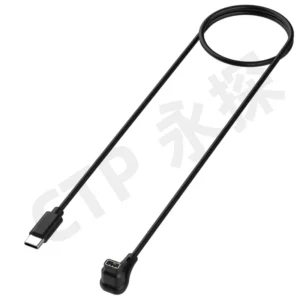
A magnetic charging cable attaches to a device through a magnet instead of a plug that needs to be inserted. The cable itself is a normal power or data cable. The difference is the magnetic connector at the tip, which snaps onto the device and aligns the contacts automatically.
How Does a Magnetic Connector Work?
Inside the connector, magnets pull the tip into position against matching contacts on the device. Most designs use spring-loaded pogo pins that press against flat contact pads. Once connected, power flows through the pins, and some designs also carry data. Because the connection is not locked by a plug, the cable can release safely when it is tugged, which reduces port damage.
The Anatomy of a Magnetic Charging Cable
From the inside out, a typical cable contains:
- Conductors: copper wires for power and, if needed, data
- Insulation: a thin plastic coating around each conductor
- Fillers and strength members: fibres that add shape and pulling strength
- Shielding (optional): foil or braid to reduce interference on data cables
- Jacket: the outer protective sheath
- Magnetic connector and overmold: the tip assembly, sealed and strain-relieved
Conductor Gauge (AWG) and Charging Speed
Wire thickness is measured in AWG, where a smaller number means a thicker wire. Thicker power conductors lose less energy as heat, which matters for a fast charging cable. Typical power conductors range from roughly 20 to 28 AWG depending on the current rating and cable length. Longer cables and higher currents need thicker wire. Cables rated for 5 A on USB-C also require a chip inside the connector, called an e-marker, to signal their capability.
Stranding and Flex Life
A conductor made of many fine copper strands bends far better than a few thick strands or a solid wire. Higher strand counts spread the bending stress and delay fatigue breaks, which is one of the biggest factors in cable durability.
Insulation, Shielding and Strength Members
• Insulation: PVC, PE, PP or FEP, colour-coded to identify each wire.
• Data pair: twisted together to keep data signals stable.
• Shielding: aluminium foil and braid on data-capable cables to reduce interference.
• Strength members: aramid or polyester fibres that take the pulling load so the copper does not.
Overmold: Where Most Cables Fail or Last
The overmold is the molded plastic around the connector and the first few centimetres of cable. It looks like a simple cover, but it does three jobs.
What Does the Overmold Do?
• Strain relief: gradually transitions from the stiff connector to the flexible cable so bending does not concentrate at one point.
• Sealing: blocks dust, sweat and moisture from the solder joints and internal parts.
• Structure: locks the connector, cable and internal parts into one rigid assembly.
vermold Materials
Common overmold materials are PVC, TPE and TPU, and sometimes silicone. Using a material compatible with the jacket helps the overmold bond to it, for example TPE with TPE, which reduces gaps and peeling. A tapered or ribbed strain-relief boot spreads the bending load over a longer length.
Why the Cable-to-Connector Junction Matters
Bending is concentrated where the cable meets the connector. A short, stiff, poorly bonded overmold lets the conductors flex at the same spot every time, and they eventually fatigue and break. A longer, tapered, well-bonded overmold is one of the clearest signs of good magnetic charging cable construction.
The Magnetic Tip: Magnets, Pogo Pins and Housing
The magnetic end has extra parts that ordinary cables do not:
• Magnets: usually neodymium, sized to hold firmly without making it hard to remove.
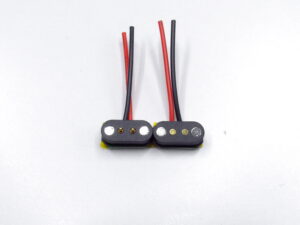
• Pogo pin contacts: spring-loaded pins, ideally gold-plated or similarly plated for low resistance and wear resistance.
• Housing: aluminium alloy, zinc alloy or engineered plastic that holds everything in alignment.
• Current rating: the pogo pin design limits how much current the connector can carry, so match it to your device.
Frequently Asked Questions
What is a magnetic charging cable made of?
It is made of copper conductors, plastic insulation, a protective jacket such as TPE, PVC or nylon braid, and a magnetic connector with magnets and pogo pins that is sealed by an overmold.
What is the best conductor material for a charging cable?
Pure copper is the best choice because it carries current efficiently and handles repeated flexing well. Copper-clad aluminium costs less but has higher resistance and breaks more easily.
What is an overmold on a cable?
An overmold is a molded plastic casing around the connector and the end of the cable. It provides strain relief, seals out dust and moisture and holds the parts together.
Which cable jacket is best: TPE, PVC or nylon braided?
TPE offers soft flexibility and good durability, PVC is lower cost but stiffer, and nylon braided adds abrasion resistance. The best choice depends on your priorities for feel, durability and cost.