A replaceable sensor head should be easy to exchange without making its connection feel delicate. The person using the instrument should be able to locate the module, seat it and recognise that it belongs in that position. Inside the housing, the connector also needs a sensible route to the electronics.
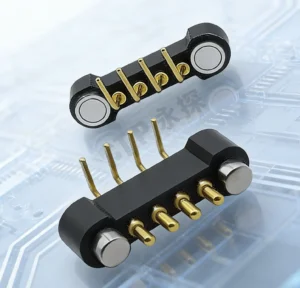
A magnetic connector for replaceable sensor modules can combine a detachable mating face with a flexible or board-mounted connection. CTP offers magnetic FPC modules, circular contact arrangements and non-magnetic spring-contact assemblies for different versions of that idea. The best starting point depends on where the sensor sits, how it is retained and which electrical functions must cross the removable interface.
A magnetic sensor-module interface should begin with the swap
Consider a handheld instrument with a sensing head that is removed for storage or exchanged for another approved head. The connection should support that action without asking the user to pull on an internal wire. The housing can guide the head while the magnetic elements assist mating and the spring contacts meet their targets.
Those jobs should remain distinct. Magnets do not define contact assignments, and they do not make an interface safe to connect while powered. If the module needs identification, calibration information or a controlled connection sequence, those functions belong in the circuit and product validation.
A five-contact FPC module lets the main board sit elsewhere
Our five-contact magnetic FPC module, catalogue reference CTP-P3911, combines a small magnetic contact interface with a flexible circuit tail. That arrangement is useful to explore when the receiving electronics cannot sit immediately behind the module’s mating face.
The practical advantage is packaging freedom. A designer can place the sensor connection where the user needs it, then develop the flexible route toward the main board. The FPC’s permitted bend, installation support and termination still need to be defined for the chosen assembly; its flexibility is not an invitation to crease it during a swap.
Seven contacts provide another allocation for a more complex head
The CTP seven-contact magnetic FPC module, CTP-P3916, brings a different contact count into a flex-connected format. It is worth reviewing when a sensor head has more separately assigned functions than the five-contact arrangement can accommodate.
The extra positions might serve the project’s defined power, reference, detection or signal paths. They do not establish the sensing protocol or a guaranteed data rate. Reviewing the connector with the sensor’s actual pin assignment keeps the mechanical convenience tied to a usable electrical design.

A circular sensor connection gives the housing another proportion
Not every removable head has room for a long interface. A round sensing cartridge may need a connection contained within its base. Our five-contact circular magnetic module, CTP-P3922, offers a compact circular arrangement with a physical orientation feature to consider in the mating design.
The circular module’s orientation feature can support a clear seated position
A shaped notch or guide is useful when the device needs a defined angular relationship. Its exact role should be shown with the two mating parts and the surrounding housing. A circular exterior alone should never be treated as proof that the electrical interface can rotate freely while connected.
For a compact environmental sensor cartridge, the round contact area may fit the available base more naturally than an elongated row. For a wider sensing head with an offset board, an FPC-connected structure may be the easier route. Our range lets those two packaging ideas be compared before the enclosure is committed to one opening.
A guided sensor cartridge may not need magnetic retention
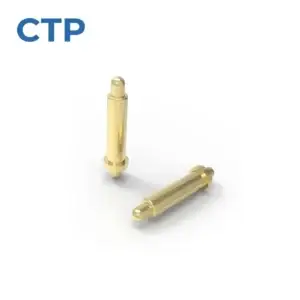
If the product already uses rails, a latch or a fastened cover to locate and retain its sensor, a non-magnetic contact block can be a sensible complement. Our three-contact pogo pin assembly, CTP-P3885, holds three spring-loaded contacts within one housing and contains no magnets.
This format keeps the mechanical retention with the product and the electrical contact with the connector. It can suit a cartridge that slides to a controlled stop, provided the three assigned paths meet the circuit’s needs. It is not a substitute for a higher-contact-count interface simply because the housing looks compact.
Imagine a replaceable sensing board inside a larger serviceable enclosure. The enclosure guides can establish its installed position, leaving the spring-contact block to meet the matching targets. That can preserve an existing mechanical concept rather than adding magnetic attraction where it does not help the user’s action.
Bring the removable head and its receiving half into one supplier review
CTP develops custom connector structures and complete contact assemblies for OEM and ODM devices. For a replaceable sensor project, that means we can discuss the mating parts, flexible or board-side connection and installation space as a coordinated interface. The selected structure can then be defined by its drawing and sample configuration.
With an FPC-connected head, decide which half stays inside the instrument when the sensor is removed. The flexible tail should follow its protected installation route; it should not become the handle used to remove the sensor. With the three-contact cartridge arrangement, show where the rails stop the module and how the matching targets meet the plungers. Those are different product layouts, and our range makes it possible to discuss each on its own merits rather than force both projects into the same magnetic cable head.
Start with the head in both its removed and seated positions. Add the contact functions, the route to the electronics and the way the product retains the head. Our sensor-interface article offers further application context, but the useful decision is specific to your instrument: which connection makes the intended swap clear while fitting naturally inside the device?