Choosing between a magnetic connector and USB-C is one of the most consequential interface decisions an OEM product team makes. The wrong choice can mean warranty failures from port wear, IP rating problems in outdoor or medical use, or unnecessary cost from over-specifying a connector the application doesn’t need. This guide compares magnetic connectors and USB-C across the engineering criteria that actually matter sealing, mechanical life, signal capability, cost and integration effort so you can match the interface to your device rather than default to whatever is most common.
What Is a Magnetic Connector?
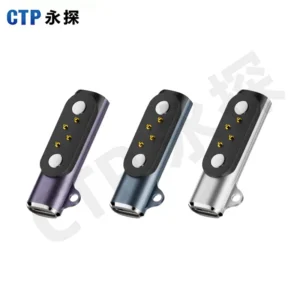
A magnetic connector is a two-part interface typically a male and female half that uses embedded magnets to pull the contacts into alignment and hold them together during charging or data transfer. Unlike a friction-fit port, the connection is made and broken by proximity rather than insertion force.
How Magnetic Connectors Work
Each half of the connector carries a magnet ring or magnet pair along with electrical contacts, usually Pogo Pin spring contacts on one side and flat or plated pads on the other. When the two halves come close, the magnetic field pulls them into the correct orientation and seats the contacts under spring pressure. Because there’s no plug shaft entering a socket, the device-side port can be fully sealed, and the connector detaches cleanly under lateral pull instead of transmitting force into the device housing.
Common Applications
Magnetic connectors are widely used in smart wearables, medical monitoring devices, handheld industrial terminals, e-mobility accessories and smart home hardware anywhere sealing, frequent connect/disconnect cycles, or breakaway safety matter more than raw data bandwidth.
What Is USB-C and Where It’s Used?
USB-C is a standardized, reversible connector defined by the USB Implementers Forum, built for a friction-fit plug-and-socket connection. It has become the default port on smartphones, laptops, tablets and most modern consumer electronics.
USB-C Power & Data Capabilities
USB-C supports USB Power Delivery (USB-PD) up to 240W in the latest spec, and depending on the underlying protocol (USB 3.2, USB4, Thunderbolt) can carry data at multi-gigabit speeds alongside DisplayPort video output. For devices that need high-bandwidth data transfer or video pass-through in a single cable, USB-C remains the strongest option available.
Limitations in Harsh Environments
The trade-off is the open port itself. A USB-C receptacle is a cavity into the device enclosure, which means dust, moisture and repeated insertion cycles all act directly on the mechanical contacts inside. Achieving high IP ratings with an exposed USB-C port requires additional sealing components (rubber flaps, gaskets, sealed receptacles), which add cost and are a common point of field failure if the flap is damaged or left open.
Magnetic Connector vs USB-C: Key Differences
This is where the two interfaces diverge most. A magnetic connector’s device-side contact can sit behind a sealed, flush surface no cavity is required so IP67/IP68 ratings are straightforward to achieve and maintain over the product’s life. USB-C requires a mechanical seal around the port opening itself; the rating is only as good as that seal, and it degrades faster with repeated use in wet or dusty conditions.
Durability & Mating Cycle Life
USB-C connectors are typically rated for around 10,000 insertion cycles under the spec, but real-world wear depends heavily on insertion angle and user handling off-axis force is a common cause of internal pin damage. Magnetic connectors, particularly those built on Pogo Pin contacts, are commonly validated for tens of thousands of mating cycles because there’s no shaft-and-socket friction; the spring contacts simply compress and release. Magnetic connectors also detach automatically under lateral pull (breakaway behavior), which protects both the connector and the device housing from cable-snag damage a failure mode USB-C has no answer for.
Data Transfer Speed Comparison
USB-C wins decisively here. A well-implemented USB-C interface can move data at several gigabits per second and carry display signals. Magnetic connectors can carry data too, but pin count and contact reliability at higher pin density set a practical ceiling they’re generally engineered for charging plus moderate-speed signal or low-to-mid-speed data (UART, I2C, low-speed USB), not high-bandwidth video or storage transfer.
Cost & Manufacturing Complexity
USB-C receptacles are a mature, high-volume commodity, so unit cost is often lower at the component level but achieving a sealed, ruggedized USB-C implementation adds gasket, flap and testing cost that narrows the gap. Custom magnetic connectors involve tooling for the mating structure and Pin Map, but for OEM volumes this is a one time engineering cost that pays off in fewer field failures and a simpler sealing strategy.
Ease of Use (Blind-Mate vs Insertion)
Magnetic connectors are self-aligning the user doesn’t need to see the port or orient a plug, which matters for wearables docked in low light, medical devices used by patients with limited dexterity, or industrial terminals docked one-handed. USB-C, even in its reversible form, still requires the user to align and insert the plug into a socket.
When to Choose a Magnetic Connector
Wearables & Smart Devices
Smartwatches, fitness trackers and smart rings are charged and uncharged daily, often near water (sweat, showers, rain). A sealed magnetic charging interface avoids the port-wear and moisture-ingress problems a daily-cycled USB-C port would face.
Medical Equipment
Devices that require IP-rated enclosures for cleaning and disinfection, or that need a breakaway connection for patient safety, are strong candidates for magnetic interfaces the sealed contact surface simplifies both compliance and cleaning protocols.
Outdoor / Industrial Devices
Handheld terminals, e-mobility accessories and equipment docked in dusty or wet environments benefit from the flush, sealed nature of a magnetic connector, along with the breakaway protection during accidental cable pulls.
Frequently Asked Questions (FAQ)
Is a magnetic connector as durable as USB-C?
In terms of mechanical mating cycles, a well-engineered magnetic connector generally outperforms USB-C, since there’s no plug-socket friction and the breakaway design protects against snag damage that would otherwise stress a USB-C port.
Can magnetic connectors support fast charging?
Yes. Magnetic connectors can be designed for higher current paths including DC power delivery well beyond typical USB levels by increasing pin contact area and using multiple power pins, though this needs to be specified during the Pin Map and structure design stage.
Are magnetic connectors waterproof?
The connector itself can achieve high IP ratings when the device-side contact is sealed into a flush surface. Actual waterproofing depends on the full enclosure design, not the connector alone.
Conclusion: Choosing the Right Interface for Your Product
Neither interface is universally "better" the right choice depends on what your device needs to prioritize. If your product lives in wet, dusty or frequently-docked conditions and needs breakaway safety, a custom magnetic connector is usually the stronger engineering choice. If your device needs high-speed data or video and benefits from universal charger compatibility, USB-C remains the right call. Many OEM devices even combine both: a magnetic connector for daily charging and an internal USB-C port for occasional data transfer or firmware updates.
If you’re evaluating this decision for a device in development, submit your application details, electrical requirements and available space — our engineering team can help confirm whether a magnetic interface, USB-C, or a hybrid approach fits your project best.