
Custom Magnetic Connectors for Medical Devices & Healthcare Equipment
CTP develops custom magnetic pogo pin connectors and magnetic cable assemblies for portable medical equipment, monitoring accessories, diagnostic tools, rehabilitation devices and charging or docking systems. Each design is reviewed around electrical load, signal requirements, cleaning chemicals, sealing, size, mating cycles and controlled breakaway force.
- Custom pin layout
- Power, detection and selected data
- Controlled magnetic breakaway
- PCB, FPC and cable mounting
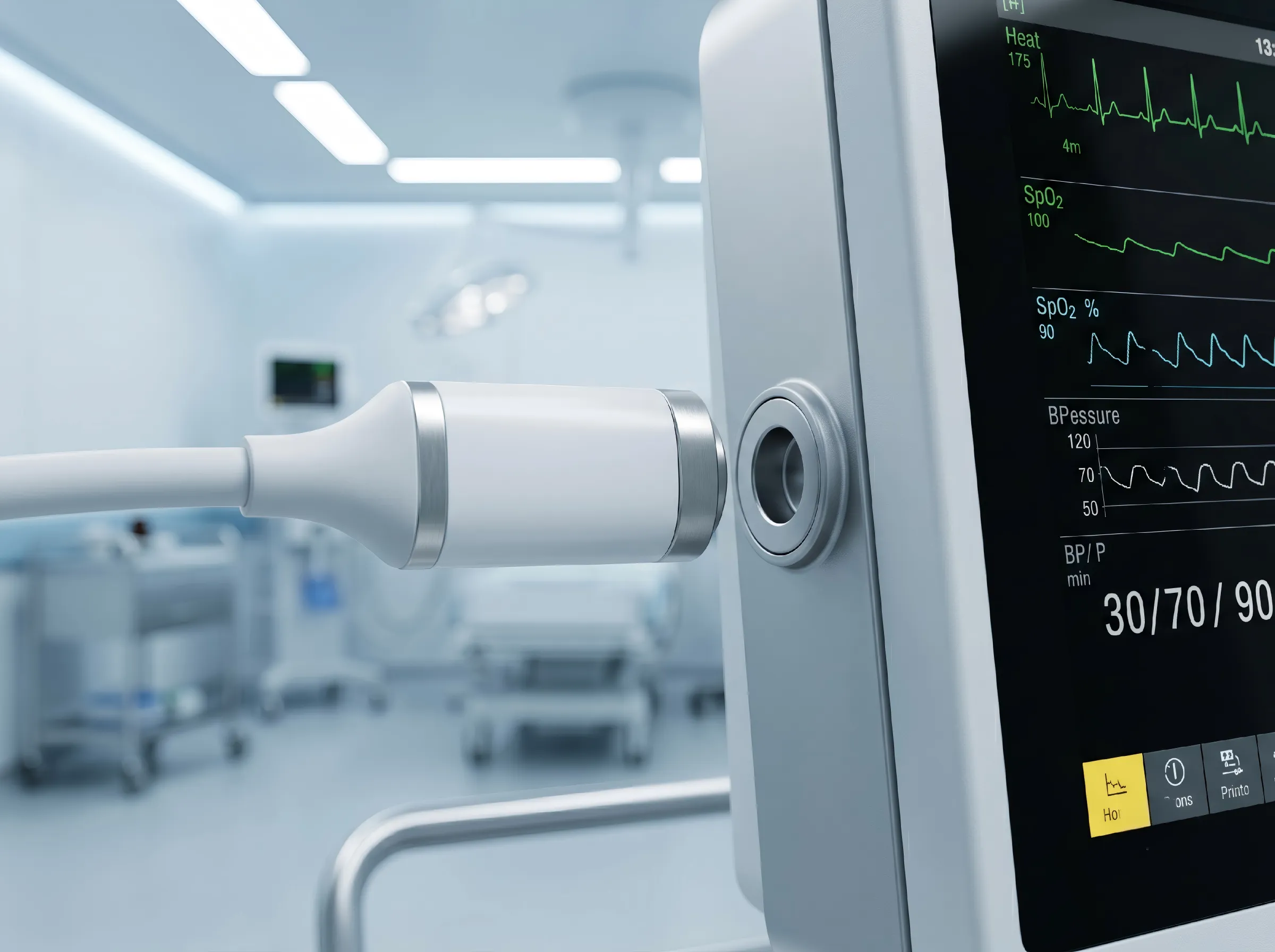
What Is a Magnetic Connector for Medical Devices?
A medical-device magnetic connector combines spring-loaded contacts with magnetic alignment or controlled release. It can simplify repeated docking, reduce insertion force and allow a cable or module to disconnect under a defined pull condition.
The connector should be designed as part of the complete device system. Contact geometry, insulation, magnet arrangement, cable strain relief, housing materials, cleaning exposure, signal requirements and user interaction must be reviewed together.
Six Factors That Shape a Reliable Medical Connector
A connector for healthcare equipment must be evaluated against the actual electrical, mechanical, cleaning and user-interaction conditions.
Controlled Breakaway Force
Magnet size, grade, spacing and mechanical guidance determine holding and release behavior. The target force should be specified in newtons and verified on the complete cable and device assembly.
Stable Electrical Contact
Current, voltage, duty cycle, contact resistance, spring force and working compression influence temperature rise and connection stability. Requirements should be defined before selecting the pin structure.
Cleaning & Disinfection Exposure
Specify the cleaning agents, concentration, contact time, wiping frequency and expected service life. Plastics, plating, adhesives, overmolding and cable jackets must be reviewed against those conditions.
Water, Dust & Corrosion Control
Protection depends on the complete mated interface, housing and cable outlet. Humidity, condensation, fluid splash, sweat and corrosion requirements should be included in the project specification.
Compact Blind Mating
Magnetic alignment can support repeated docking in limited space. Pin pitch, polarity, anti-reverse features, mating tolerance and side-load protection must be coordinated with the device enclosure.
Power, Detection & Selected Data
Separate contacts can be assigned to power, ground, charging detection, control or selected data channels. Signal integrity requirements and cable construction must be reviewed for the intended interface.
Where Magnetic Pogo Pin Interfaces Can Be Evaluated
These are application directions, not fixed off-the-shelf medical specifications. Every project requires separate design review and validation.
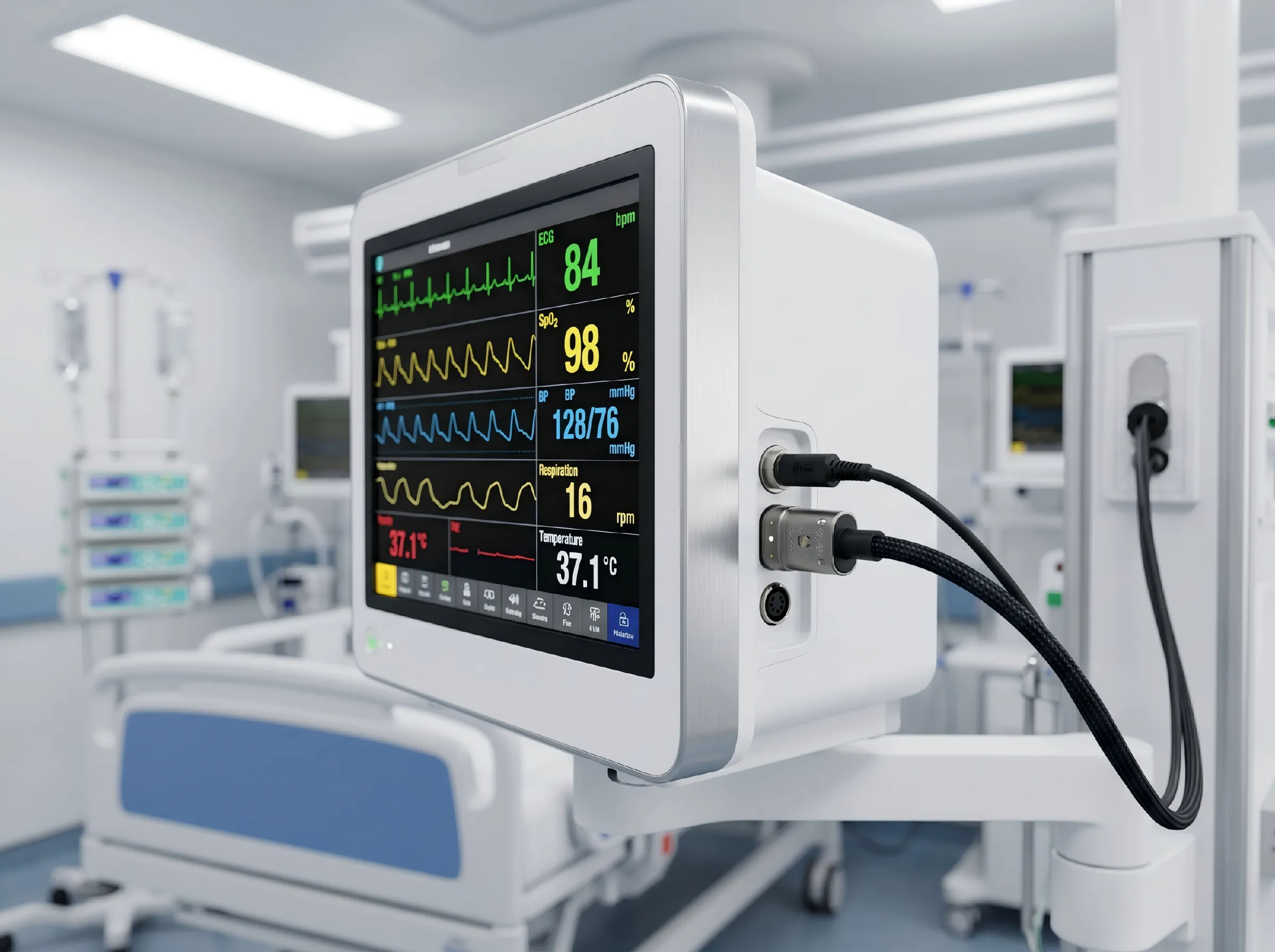
Patient Monitors & Bedside Accessories
Controlled-breakaway cable and docking concepts can be evaluated for low-voltage power, identification and selected signal connections where repeated connection and cable-release behavior are important.
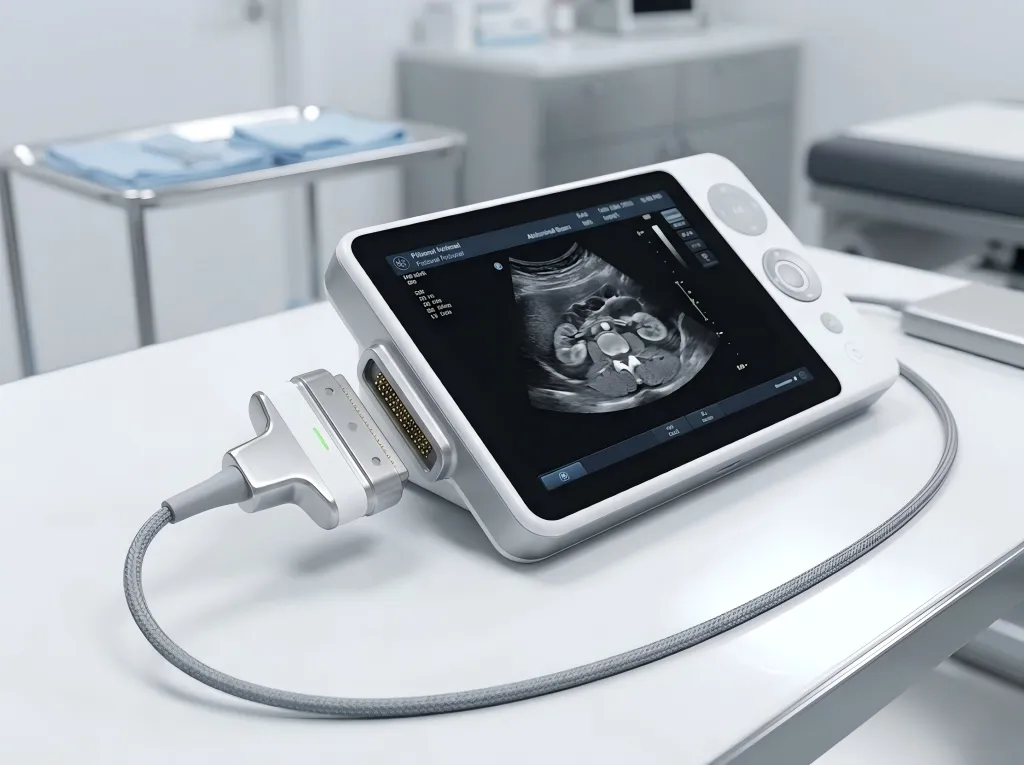
Diagnostic Tools & Portable Equipment
Multi-pin magnetic interfaces can support docking, charging, accessory detection and selected data functions when the bandwidth, shielding and contact assignment are clearly specified.
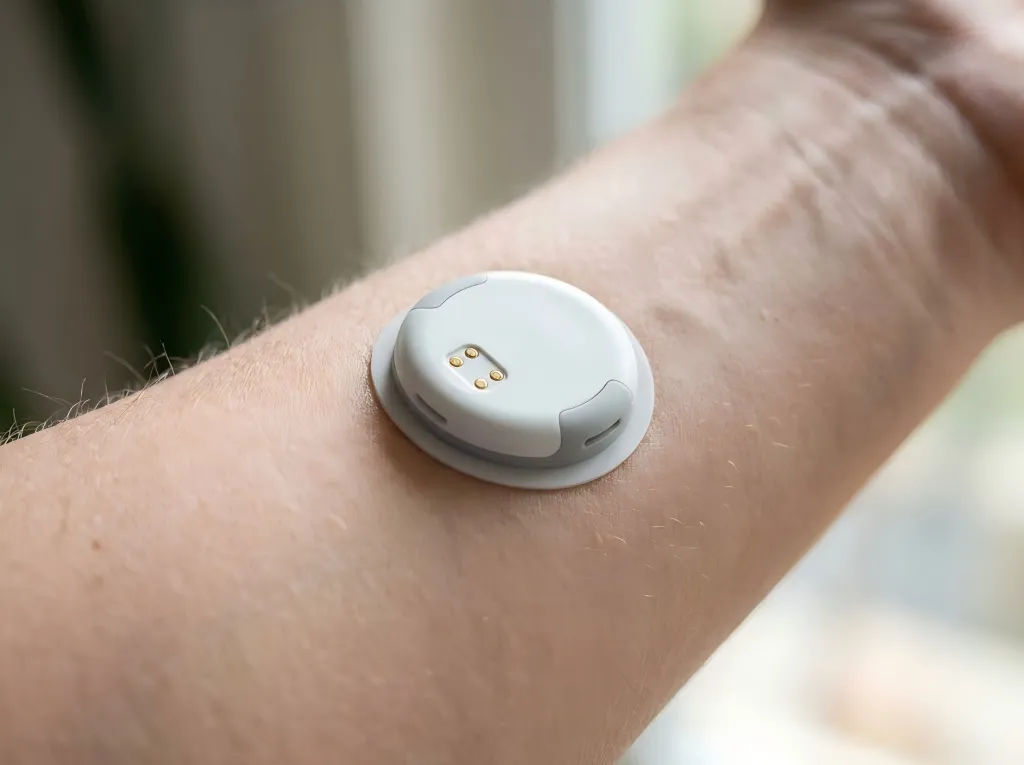
Charging Docks for Compact Devices
Low-profile charging and communication interfaces can be developed for wearable or portable devices. Any skin-contact or biocompatibility requirement must be defined and validated separately by the device maker.
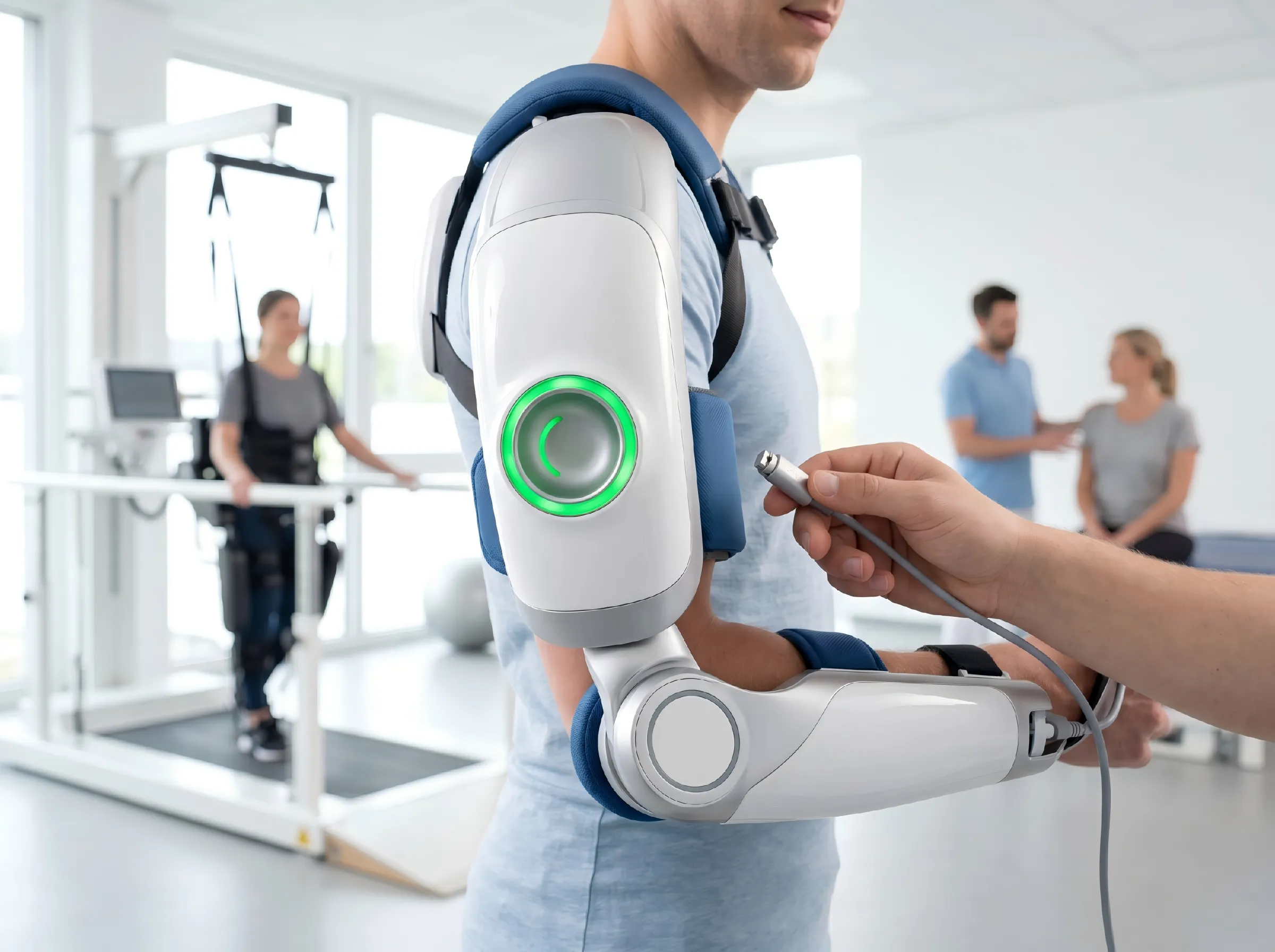
Easy-Alignment Charging & Docking
Magnetic self-alignment can reduce precise insertion effort for charging docks, controllers and removable modules, subject to the required retention force and user-risk assessment.
Images show representative application concepts and do not imply medical certification, customer endorsement or approval for a specific clinical use.
Information Needed for a Medical Connector Review
Providing these inputs early helps determine whether an existing structure can be adapted or a custom connector is required.
| Project input | What to provide | Why it matters |
|---|---|---|
| Electrical requirements | Voltage, continuous and peak current, duty cycle, pin assignment and allowable temperature rise | Determines contact structure, conductor size and electrical validation |
| Signal requirements | Signal type, data rate, shielding, grounding and acceptable interruption | Guides pin spacing, return paths, cable construction and test planning |
| Mechanical envelope | 2D/3D drawing, mating area, PCB/FPC position, connector height and tolerance | Defines pitch, alignment, anti-reverse features and mounting method |
| Magnetic behavior | Target holding force, release direction and acceptable breakaway behavior | Guides magnet layout, housing retention and user-interface design |
| Cleaning and environment | Cleaning agents, wiping cycle, humidity, fluids, sweat, dust and storage conditions | Influences plastics, plating, sealing, adhesives and cable-jacket selection |
| Lifecycle and quality | Mating cycles, cable pull, inspection criteria, documentation and change-control needs | Supports durability tests and production-control planning |
| Project volume | Prototype quantity, pilot quantity, annual volume and target schedule | Supports tooling, process and production-planning decisions |
From Device Requirements to Production Validation
Submit Requirements
Send drawings, pin assignment, electrical load, signal needs, cleaning conditions, mounting space and expected volume.
Engineering & DFM Review
Review contact compression, magnets, housing, cable strain relief, anti-reverse features and manufacturing feasibility.
Prototype & Project Tests
Produce samples and agree on electrical, mechanical, cleaning and environmental tests for the intended device application.
Pilot & Mass Production
Finalize drawings, inspection criteria, approved materials, process controls and production requirements before release.
Continue Your Connector Selection
Medical Device Magnetic Connector Questions
Can a magnetic connector carry power and data?
Yes. Separate contacts can be assigned to power, ground, charging detection, control or selected data channels. The signal type, data rate, shielding and grounding requirements must be reviewed before confirming the design.
Can the magnetic breakaway force be customized?
Yes. Magnet dimensions, grade, arrangement, air gap and mechanical guidance can be adjusted. The required holding and release force should be defined in newtons and verified on the final device and cable assembly.
Can the connector withstand alcohol or hospital disinfectants?
Compatibility depends on the exact chemical, concentration, contact time, wiping frequency, plastics, plating, adhesive, seal and cable-jacket materials. Send the cleaning protocol so suitable materials and tests can be evaluated.
Is the connector waterproof or suitable for sterilization?
No universal claim can be made without a defined assembly and test condition. Water resistance depends on the mated interface, device housing and cable outlet. Sterilization compatibility must be reviewed against the exact process, temperature, chemicals and cycle count.
Are the materials biocompatible?
Biocompatibility depends on the specific material, contact type, duration and final device use. Skin-contact or patient-contact materials must be identified and validated according to the device manufacturer's regulatory and test requirements.
What files should I send for an engineering review?
Send a 2D or 3D drawing, installation space, pin assignment, voltage and current, signal requirements, target magnetic force, cleaning protocol, expected mating cycles, prototype quantity and annual volume.