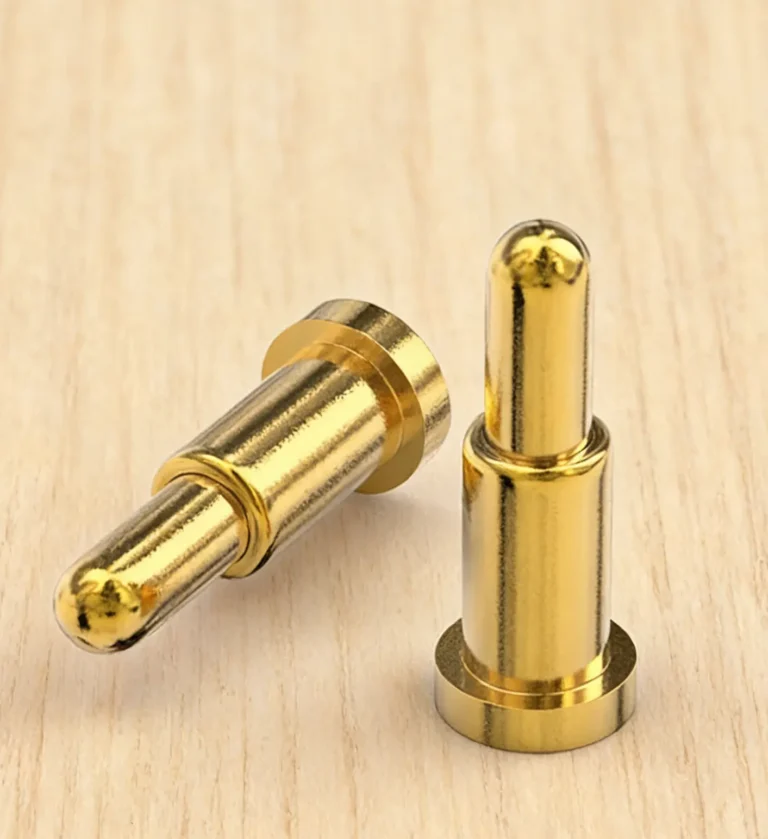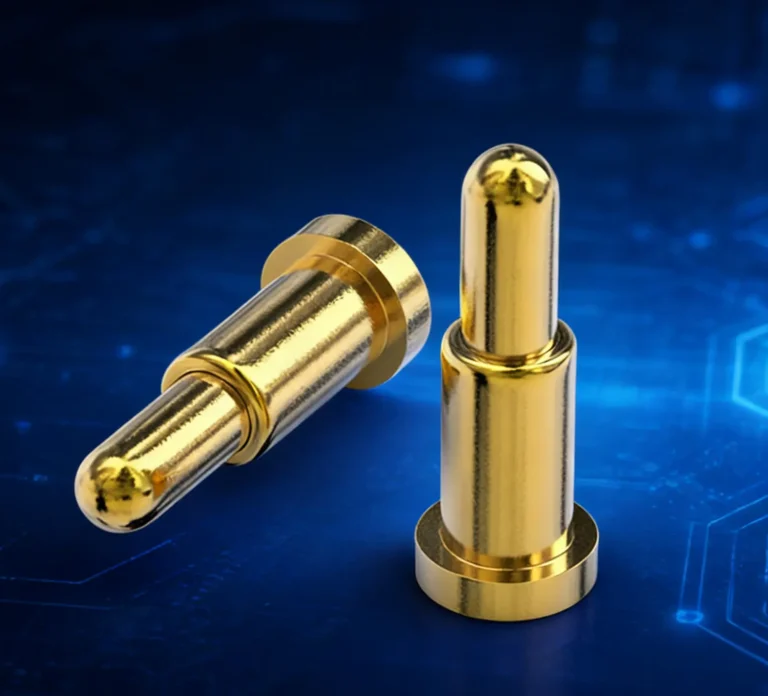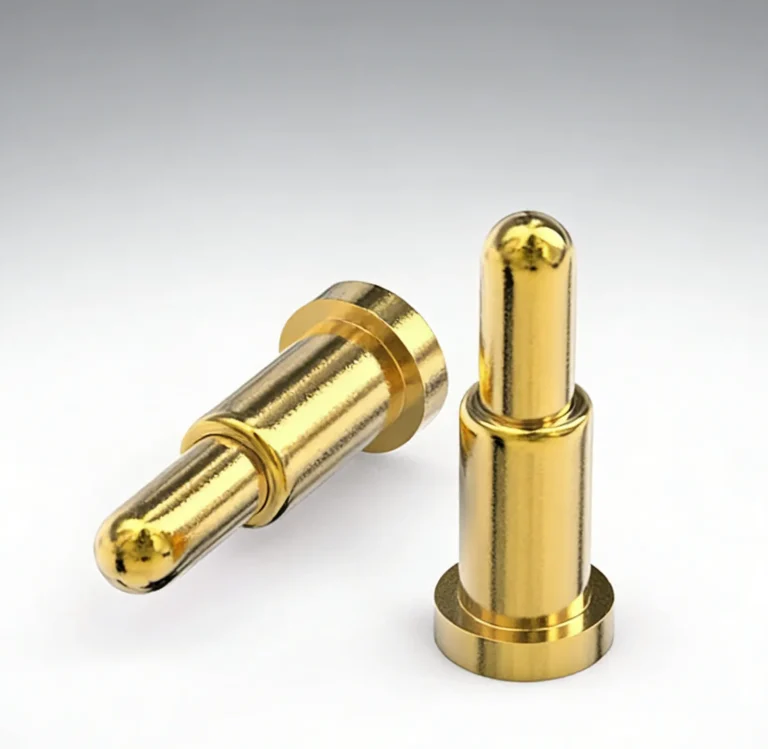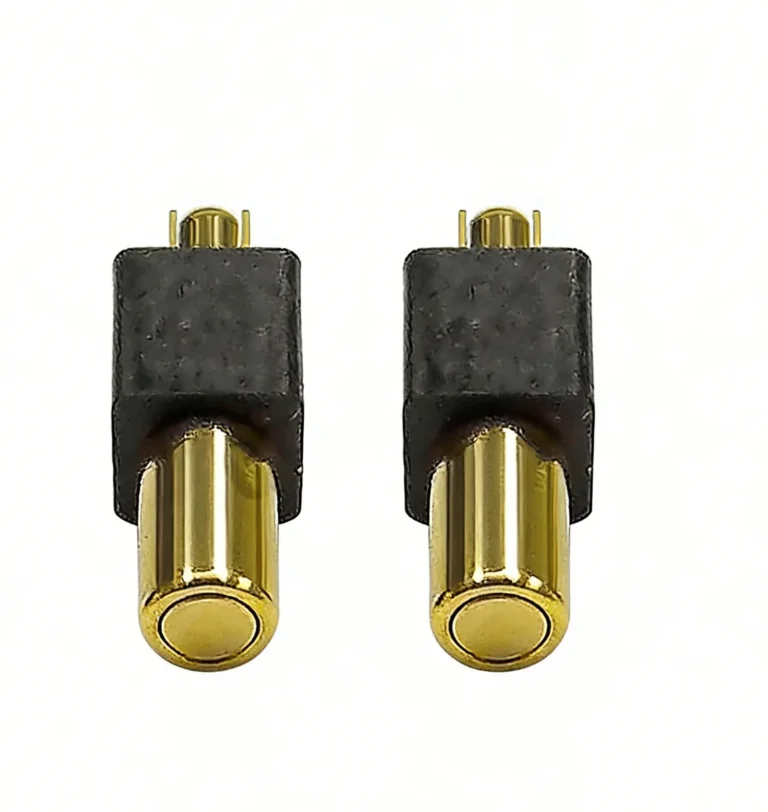
The Connection Challenge of the Multi-Task EraIn the era of Industry 4.0, industrial robots are evolving from single-purpose machines into versatile workstations. By rapidly switching end-effectors—such as welding guns, grippers, and laser scanners—a single robot can perform an entire sequence of manufacturing steps. Collaborative projects, such as those by Stäubli and TPR, demonstrate robots drilling, detecting benchmarks, and validating processes all within a single cycle.However, this flexibility places immense stress on the physical interface. Tool changers must support high-current power (up to 30A) for actuators while simultaneously protecting high-speed data (EtherCAT) from electromagnetic interference. Traditional aviation plugs often fail due to mechanical wear and the time-consuming "align-and-twist" process, which can take up to 90 seconds. High-current Magnetic Pogo Pins are solving these bottlenecks, providing a 16-to-50 pin interface that combines massive power delivery with the speed of magnetic auto-alignment.Technical Analysis: Engineering for the End-Effector30A High-Current Carrying Capacity: Standard Pogo Pins often overheat under high loads. High-current variants utilize a "slanted surface + ball" architecture. An internal insulating ball forces current to bypass the sensitive spring, flowing directly through the pin barrel. This prevents spring annealing and ensures stable 30A transmission without heating or contact failure.Multi-Signal Parallelism: Modern changers must manage power, fieldbus data (Profinet/EtherCAT), and pneumatic lines. Multi-pin arrays (30–50 contacts) allow for dedicated power and signal layouts, using ground isolation to suppress high-current noise on sensitive sensor feedback.Million-Cycle Durability: In high-speed lines, robots may switch tools thousands of times annually. While traditional plugs hit their limit at 50,000 cycles, Pogo Pins easily exceed 100,000 cycles due to their low-friction spring design, significantly lowering long-term maintenance costs.Harsh Environment Resilience: From welding sparks to grinding dust, end-effectors operate in "war zones." Fully sealed magnetic interfaces achieve IP67/IP69K ratings, ensuring reliable operation even in environments saturated with cutting fluids or metallic powder.Millisecond Auto-Alignment: Magnetic force enables "blind mating." As the robot wrist approaches the tool library, the magnetic field captures and aligns the interface instantly, eliminating the need for manual precision or technical intervention.Application Cases: From Logistics to AerospaceHandling Robot Grippers: In distribution centers, robots must swap grippers for different cargo sizes. Magnetic interfaces achieve "unnoticed replenishment" and rapid tool swaps, ensuring 24/7 operation.Welding Torch Quick-Change: On automotive lines, robots switch torches to reach difficult weld points. Magnetic Pogo Pins prevent quality issues caused by the loose connections common in high-vibration welding environments.Inspection Sensor Swapping: Quality stations use robots to switch between vision sensors and ultrasonic probes. Pogo Pin arrays ensure stable contact (resistance $\le$ 20mΩ) with board test points without damaging delicate solder joints.Grinding and Polishing: The IP69K sealing of magnetic interfaces allows robots to switch abrasive tools in environments filled with fine particulate matter without risking electrical shorts.Technical Specifications for Tool Changer Pogo PinsDual-Redundancy: The Gold Standard for ReliabilityTo ensure zero-failure operation on critical lines, manufacturers have introduced Dual-Redundancy features:Dual-Magnet Systems: Even if one set of magnets is compromised by debris, the second set maintains the connection during rapid robot acceleration.Dual-Circuit Protection: Independent main and backup circuits prevent a single point of failure from stopping the entire production line.Pilot Contact Sequencing: Shorter "pilot pins" engage first to perform a digital handshake, ensuring the system is ready before the high-current power pins are energized.Future Outlook: Digital Twins and StandardizationThe evolution of this technology is moving toward Smart Tool Changing. Future Pogo Pins will integrate micro-sensors to monitor their own health in real-time, feeding data into a Digital Twin of the factory. We also expect to see the standardization of 30A–50A magnetic interfaces, allowing different robot brands and end-effectors to operate within a unified, open-source automation ecosystem.Conclusion: Empowering Flexible ManufacturingThe success of flexible manufacturing depends on the reliability of the "handshake" between the robot and its tool. High-current Magnetic Pogo Pins—with their massive power capacity, million-cycle durability, and IP69K protection—are the enabling force behind this transition.By replacing slow, manual plugs with intelligent, self-aligning magnetic interfaces, manufacturers are realizing the true potential of multi-tasking robots. Behind every automated weld and every autonomous cargo move, these tiny contacts are silently guarding the rhythm of modern industry.