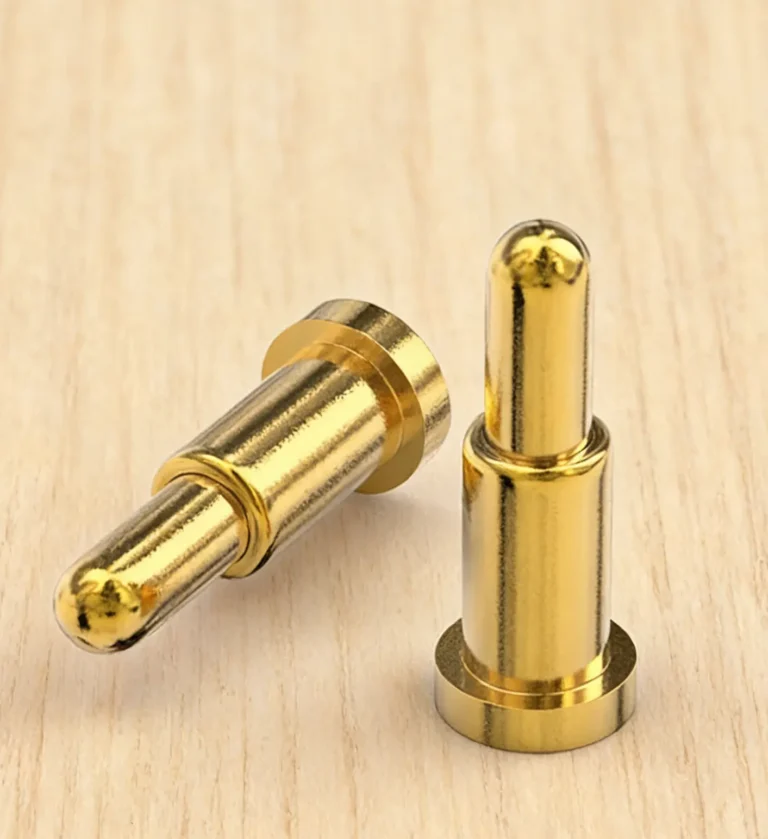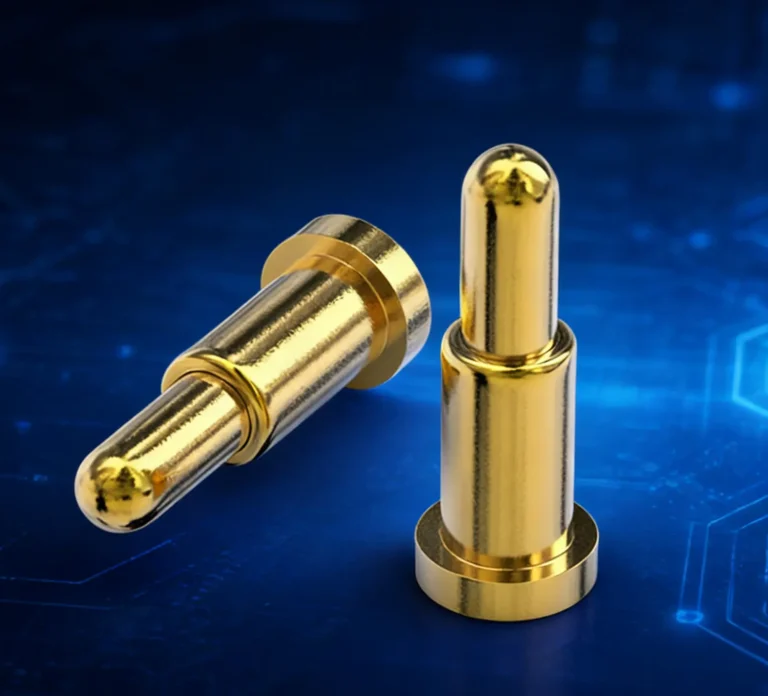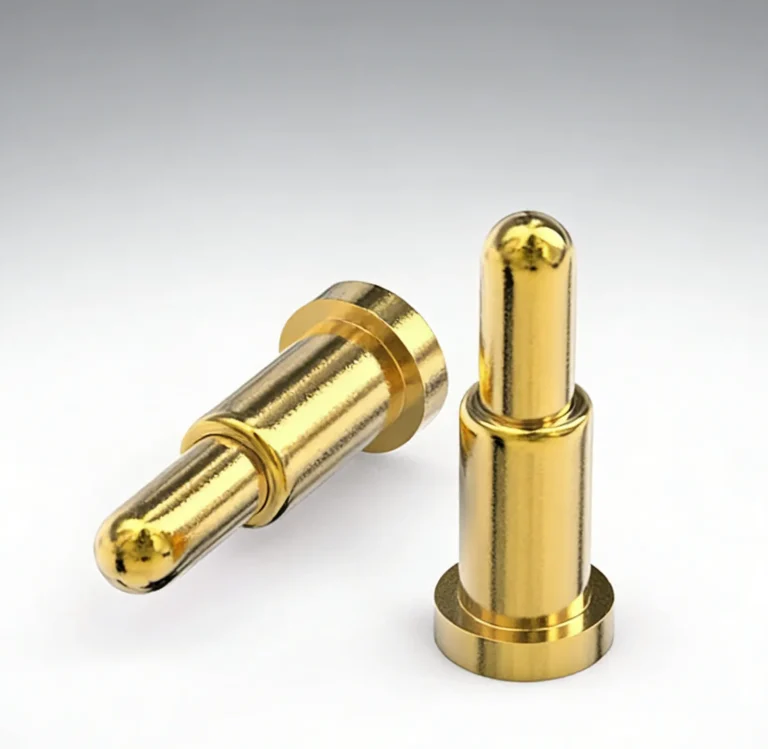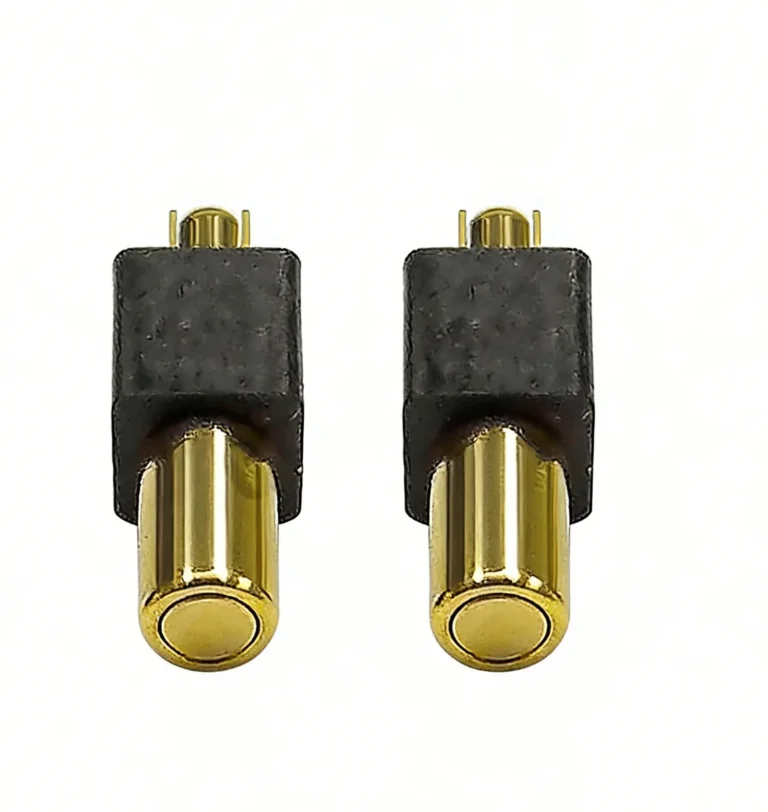
The Modular Revolution and Connection Challenges
In the "brain" of the factory—the PLC control cabinet—the trend is shifting from integrated blocks to flexible, modular units. Power, CPU, I/O, and communication modules must now be swappable online without shutting down the system—a requirement known as "hot-swap" capability.
Traditional Euro-style connectors, however, are poorly suited for this revolution. They are prone to mechanical wear over repeated cycles, and the act of pulling a live module can create electrical arcs that erode contacts and damage sensitive electronics. Furthermore, manual alignment in cramped cabinets can take a technician 15–30 minutes per module. Industrial-grade Magnetic Pogo Pins are solving these pain points. By reducing replacement time to under 30 seconds and maintaining 99.8% stability under high-vibration factory conditions, they are defining the new standard for industrial connectivity.
Technical Analysis: Requirements for PLC Interconnects
Hot-Swap Safety & Arc Suppression: This is the critical barrier for online maintenance. Magnetic Pogo Pins utilize pilot contact sequencing. Shorter "pilot pins" make contact first and break last, allowing the system to perform a digital handshake and pre-charge loads before the main power pins engage. This effectively eliminates the arcs that typically plague traditional connectors.
Signal Integrity in High-Density Arrays: PLC backplanes must handle dozens of signals, from microvolt analog inputs to high-speed digital buses. Multi-pin Pogo arrays (up to 50 pins) allow for dedicated power/signal layouts with ground isolation, ensuring a stable contact resistance of 30–50mΩ and preventing crosstalk.
Space Optimization: As modules shrink, so must the connectors. Magnetic Pogo Pins offer a 30% smaller footprint than traditional connectors (with minimum dimensions around 3.2mm × 1.8mm), freeing up valuable PCB real estate for processing components.
Industrial Ruggedness: To survive oil mist, dust, and humidity, these pins feature multi-stage sealing for IP67 protection. Gold-plated beryllium copper contacts ensure the interface remains corrosion-free over a 20,000 to 100,000-cycle lifespan.
Application Scenarios: Plug-and-Play Efficiency
Power Module Hot-Swap: High-current magnetic pins (up to 30A) allow power units to be swapped without a total system shutdown, ensuring 24/7 uptime.
CPU-to-Backplane Links: CPU modules require high-speed data exchange (10Gbps+). Shielded magnetic Pogo Pins provide the EMI protection necessary for real-time motion control and industrial Ethernet (EtherCAT/Profinet).
I/O Module Expansion: Magnetic auto-alignment allows non-specialist personnel to "snap" new I/O modules into place instantly, facilitating rapid process adjustments for small-batch flexible production.
Communication Upgrades: Standardized magnetic interfaces provide the physical foundation for the rapid deployment of IO-Link or 5G communication modules as factory requirements evolve.
Empirical Data: Efficiency and Reliability Gains
Design Innovations: The "Smart Joint"
Magnetic Force Balance: Industrial pins are typically calibrated to 8–15N of magnetic force—strong enough to resist vibration but easy enough for a human hand to disconnect.
Mechanical Coding (Foolproofing): Different magnet arrangements for power vs. I/O modules ensure that a module can only be inserted into its correct slot, eliminating the risk of accidental electrical damage.
Dual-Circuit Redundancy: High-reliability modules use independent main and backup circuits, ensuring that even if one pin encounters debris, the system remains operational.
User Value: Operational Resilience
The transition to magnetic Pogo Pins translates to zero-downtime maintenance. Because modules are "plug-and-play," skill requirements for maintenance staff are lowered, and production lines can be expanded or repaired while they are running. In the Industry 4.0 era, where order changes are frequent, this flexibility is a core competitive advantage.
Future Outlook: Toward Predictive Maintenance
The next generation of magnetic PLC connectors will integrate micro-sensors to monitor temperature and vibration at the contact point. This data will be mapped to a Digital Twin, allowing the system to alert operators before a connection fails. When combined with the IO-Link protocol, these connectors will not just be "dumb" wires, but intelligent nodes in the industrial network.
Conclusion: The Foundation of Flexible Manufacturing
Modular PLC design is only as strong as its weakest link. By replacing rigid, wear-prone connectors with intelligent, self-aligning Magnetic Pogo Pins, manufacturers are building the resilience needed for the future. Whether it is a 30-second module swap in a high-pressure line or the seamless expansion of a smart factory, these tiny contacts are the silent guardians of industrial uptime.