Introduction: The Acid Test of Live Performance
In the high-stakes arena of live performance, the most critical audio signals travel wirelessly, intimately coupled to the performer’s body. In-ear monitor (IEM) transmitters and receivers nestle against skin under clothing, while wireless microphone packs are clamped to belts or strapped to limbs. This proximity subjects the equipment to a relentless, corrosive bath: human sweat. More than just water, sweat is a complex electrolyte containing salts (primarily sodium chloride), lactic acid, urea, and minerals. When this solution seeps into the charging and data ports of critical gear, it initiates a silent, destructive electrochemical process that leads to the most common and frustrating failure in touring wireless systems: connector corrosion and subsequent charging failure. While the show must go on, the technology often falters, not from a lack of signals, but from the chemistry of exertion. Defeating this enemy requires a fundamental re-engineering of the connection interface, moving from exposed ports to hermetically sealed, magnetically activated systems.
The Industry Pain Point: The Silent Death of the Micro-USB Port
For over a decade, the industry standard for charging and data on body-pack equipment has been some variant of a micro-USB or similar small-form-factor port. This has proven to be an Achilles’ heel. These ports are fundamentally unsealed cavities. After weeks of a strenuous tour, the following scenario is grimly familiar:
Sweat migrates into the port, coating the thin gold plating on the internal pins.
As the device is used and charges, the electrolyte facilitates galvanic corrosion between different metals in the connector.
The corrosion creates resistive, non-conductive layers on the contacts.
Initially, charging becomes intermittent. Eventually, it fails completely. The $1,000 wireless pack is now a “brick” because of a $0.05 connector.
The result is frantic overnight repairs, costly spare units, and a deep-seated anxiety among monitor engineers and audio technicians. Charging a rack of 40 IEM receivers after a show shifts from a routine task to a lottery of which units will light up. This is the unsustainable reality that demands a sealed solution.
Sealed Magnetic Pogo Pin Design: A Fortified Interface
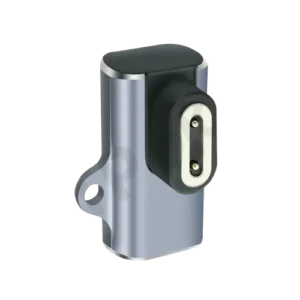
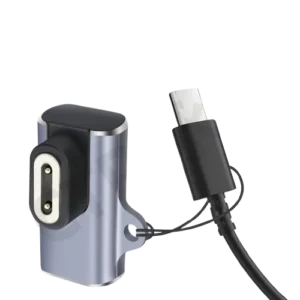
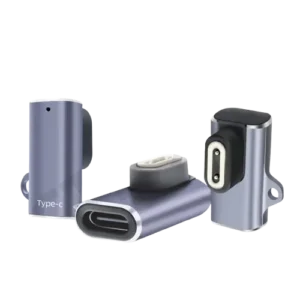
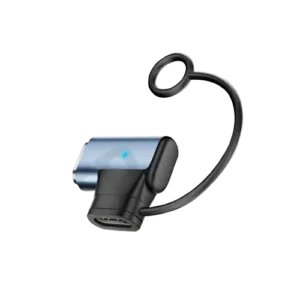
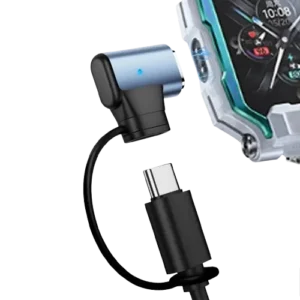
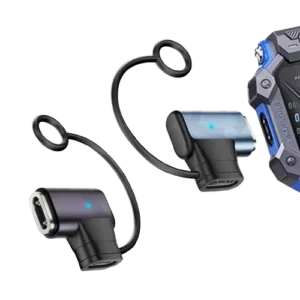
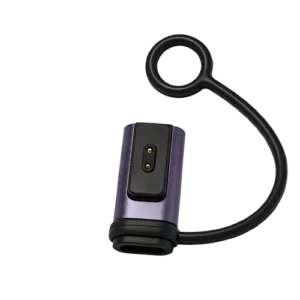
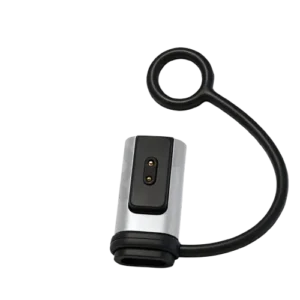
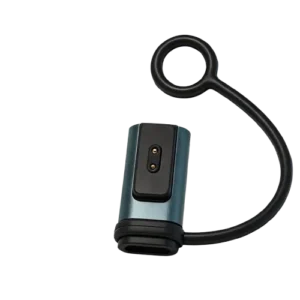
The solution lies in abandoning the open-port architecture altogether and adopting a sealed Magnetic Pogo Pin interface. This is not a simple magnetic adapter; it is a complete subsystem designed from the outset for environmental impermeability. Its protection is achieved through a defense-in-depth strategy, targeting the path of liquid ingress:
Primary Barrier: The Compressed Gasket (O-Ring Seal): The core of the seal is a precision-molded silicone or fluorosilicone O-ring that sits in a machined groove surrounding the entire Pogo Pin array on the device. When the magnetic charging dock or cable head mates with the device, the first point of contact is this O-ring. The magnetic force provides the perfect, evenly distributed compression to create a watertight and dust-tight seal (the basis for IP67 and IP68 ratings) before any electrical pins make contact. This seals the perimeter.
Secondary Barrier: Internal Potting and Encapsulation: Defending the rear of the connector is equally critical. The solder joints where the Pogo Pins connect to the device’s internal printed circuit board (PCB) are vulnerable to wicking—where moisture creeps along the wire strands or PCB traces. To prevent this, the entire rear cavity of the connector is potted. A liquid epoxy or urethane resin is injected, filling all air gaps and completely encapsulating the solder joints and wire leads. Once cured, this forms a solid, inert block that is impervious to moisture and provides excellent mechanical strain relief.
Tertiary Defense: Hydrophobic Nanocoatings: On the external face of the device, where the Pogo Pin contacts are flush-mounted, a transparent hydrophobic nano-coating can be applied. This ultra-thin layer, often based on fluorinated compounds, dramatically increases the surface’s contact angle. Sweat droplets bead up and roll off, minimizing the amount of liquid that even sits on the surface during the brief moment between wiping the device and docking it.
The Magnetic Advantage in Sealing: The magnetic mating process itself aids reliability. The strong, consistent pull ensures the O-ring is compressed fully every time, eliminating user error in achieving a proper seal. There is no “partially plugged in” state that leaves a gap for contamination.
Cleaning and Maintenance: From Delicate Ritual to Routine Wipe
The sealed design radically transforms post-show maintenance. With traditional ports, cleaning is a delicate, risky procedure involving compressed air, isopropyl alcohol, and cotton swabs—and even then, corrosion inside the port may be irreversible.
With a sealed magnetic interface, the process is gloriously simple. After the show, a technician can take a damp cloth with a mild disinfectant and wipe down the entire device, including the connector face, with zero risk. There is no hole for liquid to enter. The equipment can even be briefly rinsed if necessary (within its IP rating guidelines), shook off, and docked immediately. This reduces turnaround time, eliminates a tedious chore, and ensures every unit starts the next show in a hygienic, electrically pristine state.
System Reliability Boost: Managing Risk at Scale
For a major tour carrying 50-200 channels of wireless, the charging and data-sync process is a core logistical operation. Reliability is not a feature; it is a system requirement. Sealed magnetic interfaces turn charging from a point of failure into a point of certainty.
Monitor engineers can trust that every unit placed on the charging rack will successfully charge and sync show data. This reliability allows for better power cycling, deeper diagnostics, and predictable readiness. It eliminates the “shadow inventory” of extra units kept solely because a percentage are expected to fail due to charging issues. By virtually eliminating this failure mode, the entire wireless ecosystem becomes more predictable, manageable, and cost-effective.
User Trust: The Foundation of Artistic Performance
Ultimately, the technology must disappear. An artist wearing IEMs or a lavalier microphone cannot be preoccupied with whether their gear will fail. They need absolute, subconscious trust in their tools. A visibly robust, sealed connector that reliably “snaps” to charge every night builds this trust.
When a guitarist sees their tech casually wipe down their wireless pack and snap it onto a charger without a second thought, it conveys confidence. When a vocalist knows their pack has survived a soaking performance night after night, it allows them to focus entirely on their connection with the audience, not their connection to the charger. This psychological assurance is invaluable. In an industry where confidence is currency, a connector that never fails due to the rigors of performance is not just a component—it’s a keystone of professional trust.
Conclusion: Sealing the Weakest Link
The evolution of professional wireless audio has been a story of increasing RF stability, digital clarity, and spectral efficiency. Yet, the physical interface to the device has remained a glaring vulnerability. Sealed Magnetic Pogo Pin technology directly attacks this last major weak link.
By combining the intuitive, forgiving connection of magnetism with a multi-layered, militaristic sealing strategy, it creates an interface that is not only easier to use but is also orders of magnitude more resilient. It acknowledges the brutal reality of the stage environment and engineers a solution that thrives within it. This shift represents more than incremental improvement; it is a foundational step toward the long-sought goal of truly rugged, relentlessly reliable wireless audio systems. In the battle against sweat, corrosion, and uncertainty, the future is sealed, magnetic, and utterly dependable.