The Promise of 10,000 Cycles: Why Magnetic Pogo Pins Are the Ideal Choice for Durable Toys

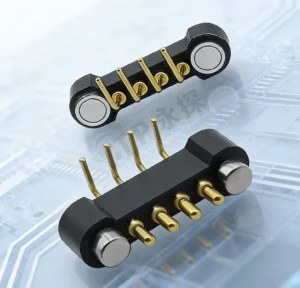
This article provides an in-depth analysis of how Magnetic Pogo Pins elevate the durability of toy connection interfaces to tens of thousands of cycles through revolutionary mechanical and electrical design. It addresses the chronic wear issues of traditional interfaces at an engineering level and demonstrates, from commercial and environmental perspectives, that this seemingly minor component upgrade is a key strategy for creating highly reliable educational toys, safeguarding long-term brand value, and promoting sustainable industry development.

Read More »

When Blocks Go Electric: How Magnetic Pogo Pins Power the Next Generation of Smart Building Blocks

This article explores how Magnetic Pogo Pin technology, serving as a bridge between the physical and digital worlds, is fundamentally reconstructing the interaction paradigm of smart building blocks through “connect-and-play” power and data exchange. It simplifies complex circuit connections into intuitive operations akin to stacking blocks, enabling children to seamlessly construct intelligent structures with light, sound, and motion. In the process, they naturally acquire principles of electronics and modular systems thinking, unleashing unprecedented creative potential.

Read More »

Magnetic-STEAM-Toy-Safety-Revolution

This article delves into how Magnetic Pogo Pin technology, through its revolutionary low-voltage enclosed design, fundamentally addresses electric shock hazards and mechanical insertion/removal injuries inherent in traditional STEAM toys. It builds a solid safety barrier for children’s innovative education, ensuring true peace of mind during exploration and learning.

Read More »

Consumer Electronics’ Invisible Connector: How Pogo Pins Break Through Device Slimming Design Bottlenecks

This article focuses on the pivotal role of Pogo Pin technology in the extreme slimming trend of consumer electronic devices. It begins by analyzing how traditional connectors have become a major obstacle as smartphones, wearables, and ultra-thin laptops pursue millimeter-level reductions in thickness. Through technical analysis, it explains how Pogo Pins, leveraging their miniaturization advantages of vertical compression and the elimination of lateral insertion/wear, bring revolutionary changes to internal space layout. By examining cutting-edge application cases—such as signal transmission in foldable phone hinges, contacts in TWS earbud charging cases, and hidden keyboard interfaces in laptops—the article provides a detailed demonstration of how Pogo Pins enable highly reliable connections while simultaneously helping devices achieve higher waterproof ratings and structural integrity. Furthermore, it explores the profound impact of this technology on user experience (e.g., longer port lifespan, more stable fast charging) and product aesthetics (e.g., seamless, port-less unibody designs). Finally, it looks ahead to how advancements in materials science and precision manufacturing will empower Pogo Pins to drive consumer electronics toward a truly “port-less” future.

Read More »

Modular Revolution in Scientific Instruments: How Magnetic Pogo Pins Simplify Lab Equipment Integration

This article provides an in-depth exploration of how Magnetic Pogo Pin technology is spearheading a modular revolution in scientific instruments, fundamentally simplifying the integration, maintenance, and升级 of laboratory equipment. It begins by dissecting core pain points in traditional labs, such as signal interference, operational hazards, and equipment inflexibility stemming from cable clutter and proprietary interfaces. Through specific scenarios—including hot-swappable mass spectrometer ion sources, rapidly interchangeable PCR thermocycler blocks, and plug-and-play microscope cameras—the article systematically explains how modular design based on Magnetic Pogo Pins transforms complex procedures into safe, intuitive “magnetic” operations. A key focus is placed on the high-fidelity signal transmission and advanced ground-loop noise suppression techniques employed by this technology to safeguard scientific data integrity. Its cross-disciplinary applicability and transformative potential are further argued through examples in cutting-edge fields like synchrotron radiation, cryo-electron microscopy, and quantum computing. Finally, the article prospects its profound impact on reducing custom instrumentation costs, fostering global research collaboration, and accelerating scientific discovery through the establishment of open hardware interface standards.

Read More »

Modular Revolution in Scientific Instruments: How Magnetic Pogo Pins Simplify Lab Equipment Integration

This article explores how Magnetic Pogo Pin technology serves as a key enabler for the modular revolution in scientific instruments, simplifying the integration and reconfiguration of laboratory equipment. It begins by dissecting core pain points in traditional labs caused by cable clutter and numerous interfaces, including signal crosstalk, operational hazards, and equipment inflexibility. The article then systematically explains the modular design philosophy based on Magnetic Pogo Pins, demonstrating through concrete scenarios—such as hot-swapping mass spectrometer ion sources, rapidly changing PCR thermocycler blocks, and plug-and-play microscope cameras—how it transforms complex instrument maintenance and upgrades into intuitive, safe “magnetic” operations. A key focus is placed on analyzing how the technology ensures high-fidelity data transmission and noise suppression by optimizing signal paths, enabling single-point grounding, and integrating shielding, thereby safeguarding scientific data integrity. Cross-disciplinary applicability is argued through use cases in cutting-edge fields like synchrotron radiation, cryo-electron microscopy, and quantum computing. Finally, the article prospects its profound impact on lowering the barrier to custom instrumentation, fostering global research collaboration, and accelerating scientific discovery through the establishment of open hardware interface standards.

Read More »

Smart O&M for Renewable Energy: Application of Magnetic Pogo Pins in Photovoltaic Panel Cleaning Robots

This article delves into the critical application of Magnetic Pogo Pin technology in the smart operation and maintenance (O&M) of photovoltaic (PV) power plants, specifically within automated panel cleaning robot systems. It begins by analyzing the dual core challenges faced by cleaning robots operating autonomously in the vast, complex environments of large-scale solar farms: mobile power supply and real-time data transmission. The article then systematically explains how magnetic docking technology between the robot and an automatic charging station simultaneously solves the problems of energy replenishment and the synchronous upload of cleaning status and performance data. Supported by concrete data, it demonstrates how this solution enables 24/7 uninterrupted robot operation, thereby increasing the plant’s overall power generation efficiency by 8-15%. The paper further dissects key technical details implemented to withstand harsh outdoor conditions, such as UV-resistant encapsulation and wide-temperature-range compensation structures. Finally, by comparing field application data from a desert plant in Dubai and a high-altitude project in Qinghai, China, it vividly illustrates the technology’s universality and exceptional reliability across diverse global climates.

Read More »

Rapid Military Deployment: Dustproof and Waterproof Connectivity Solutions of Magnetic Pogo Pins in Field Equipment

This article provides an in-depth exploration of how military-grade Magnetic Pogo Pin connectivity technology offers a revolutionary solution for the rapid deployment and reliable connection of equipment on the modern battlefield. It systematically analyzes the extreme demands of field environments on device interfacing, including the need for reliable, second-level mating under conditions of dust, rain, vibration, and electromagnetic interference. By detailing its engineering compliance with stringent military standards such as MIL-STD-810G for shock/vibration, IP68 for ingress protection, and EMP hardening, the article explains the inherent robustness of the technology. It focuses on dissecting the unique tactical advantages it delivers: enabling blind operation at night or in foul weather, self-cleaning capability in sandy/dusty environments, and superior resistance to electromagnetic interference. Through concrete equipment case studies involving tactical vest power modules, field radio docking stations, and armored vehicle peripheral interfaces, it demonstrates how the technology enhances individual soldier and platform combat effectiveness. Ultimately, the article argues for the profound national defense significance of this technology in comprehensively improving equipment adaptability, simplifying logistical maintenance complexity, and strengthening forces’ rapid reaction capabilities.

Read More »

Seamless Smart Home Connectivity: How Hidden Magnetic Pogo Pin Designs Optimize Living Spaces

This article explores how hidden Magnetic Pogo Pin designs serve as a key technology for achieving “seamless connectivity” and spatial aesthetics in smart homes. It begins by analyzing the core modern desire for wireless, visually clean living spaces and its conflict with traditional wiring and exposed interfaces. The paper then delves into the technology’s invisible integration solutions through fully embedded designs in smart lighting (e.g., magnetic track lights), wall power outlets, modular furniture, and decorative panels, enabling device powering, control, and data exchange with “zero visual intrusion.” It focuses on the revolutionary user experience it delivers: exposed electrode-free design ensures child safety, while magnetic, intuitive operation lowers the barrier for elderly users. The article further discusses its integration with open smart home protocols like Matter, enabling “touch-to-connect” automatic provisioning and device discovery. Finally, it prospects a future where whole-house magnetic power track systems replace traditional fixed wiring, painting a picture of a truly flexible, clean, and intelligent living space.

Read More »

Deep-Sea Magnetic Pogo Pin / Underwater Robot Connector

This article delves into Magnetic Pogo Pin connector technology specifically designed for extreme deep-sea environments, termed “Magnetic Joints” for underwater robots. It begins by outlining the core challenges connectors face at depths of 6000 meters, including extreme hydrostatic pressure, corrosive seawater intrusion, and long-term reliability demands. The paper then focuses on two key innovative designs: ceramic-encapsulated Magnetic Pogo Pins that provide electrical insulation and pressure resistance, and a pioneering pressure-self-balancing fluid sealing structure that leverages ambient pressure to enhance sealing effectiveness. Through concrete application examples such as Remotely Operated Vehicle manipulator modules, seafloor observatory junction boxes, and manned submersible battery swap systems, it demonstrates how this technology enables rapid, reliable modular connection and energy replenishment for underwater assets. The article further explains its rigorous validation process through international maritime certifications like DNV GL and field testing. Finally, it analyzes the significant economic value of this technology in extending mission duration, reducing operational costs, and advancing marine resource exploration and development.

Read More »

Aerospace-Grade Reliability: Extreme Environment Adaptation of Magnetic Pogo Pins in Satellite Modular Design

This article explores how aerospace-grade Magnetic Pogo Pin technology provides a revolutionary extreme-environment connectivity solution for satellite modular design. It systematically analyzes the severe challenges faced by satellites in orbit, including ultra-high vacuum, extreme thermal cycling, intense particle radiation, and microgravity. By delving into the scientific principles behind specialized materials such as samarium-cobalt magnets and gold-plated rhodium alloy contacts, it elucidates how this technology maintains exceptional magnetic and electrical stability in the space environment. Through practical case studies of International Space Station experiment module interfaces and CubeSat stack connections, the article reveals the pivotal role of Magnetic Pogo Pins in enabling “space Lego”-like rapid assembly and on-orbit servicing. It further discusses risk mitigation strategies implemented through multi-redundant contact design and on-orbit failure simulation testing. Finally, the article prospects how this technology can reduce manufacturing costs and enhance reliability, laying the groundwork for the construction of large-scale commercial modular satellite constellations and the development of the space economy.

Read More »

New Paradigm for EV Charging: How High-Current Magnetic Pogo Pins Solve Charging Gun Wear Challenges

This article explores how high-current Magnetic Pogo Pin technology is ushering in a revolutionary new paradigm for electric vehicle (EV) charging. It begins by dissecting the core industry challenges posed by traditional charging guns, namely contact wear, poor connection due to mechanical mating, and associated safety risks. The paper then delves into the key technological breakthroughs achieved by Magnetic Pogo Pins capable of carrying currents exceeding 500A, covering innovative thermal management design, effective arc suppression techniques, and robust integration of magnetic and electrical circuits. By examining its application in cutting-edge scenarios such as precise docking for wireless charging piles, high-speed battery pack connection in swap stations, and flexible adaptation for charging robots, the article reveals how this technology is reshaping the form factor of charging infrastructure. Supported by empirical data, the technology can reduce system energy loss by over 15% and achieve an ultra-long lifespan exceeding 100,000 cycles. Finally, the article highlights its ongoing involvement in shaping industry standards like GB/T 20234 and CHAdeMO 3.0, positioning it as a critical enabler for future high-reliability, high-efficiency charging solutions.

Read More »